

3.5 Gram Eighth Bags
3.5 gram mylar bags are designed to securely package and protect an eighth of cannabis while preserving freshness, potency, and aroma. Made from durable, high-barrier mylar, these bags feature airtight, child-resistant closures that help shield products from moisture, oxygen, and light while supporting cannabis packaging compliance. Available in a variety of finishes, sizes, and custom branding options, wholesale 3.5 gram mylar bags provide a professional, retail-ready packaging solution for cannabis flower and other products.
Filters
7 products
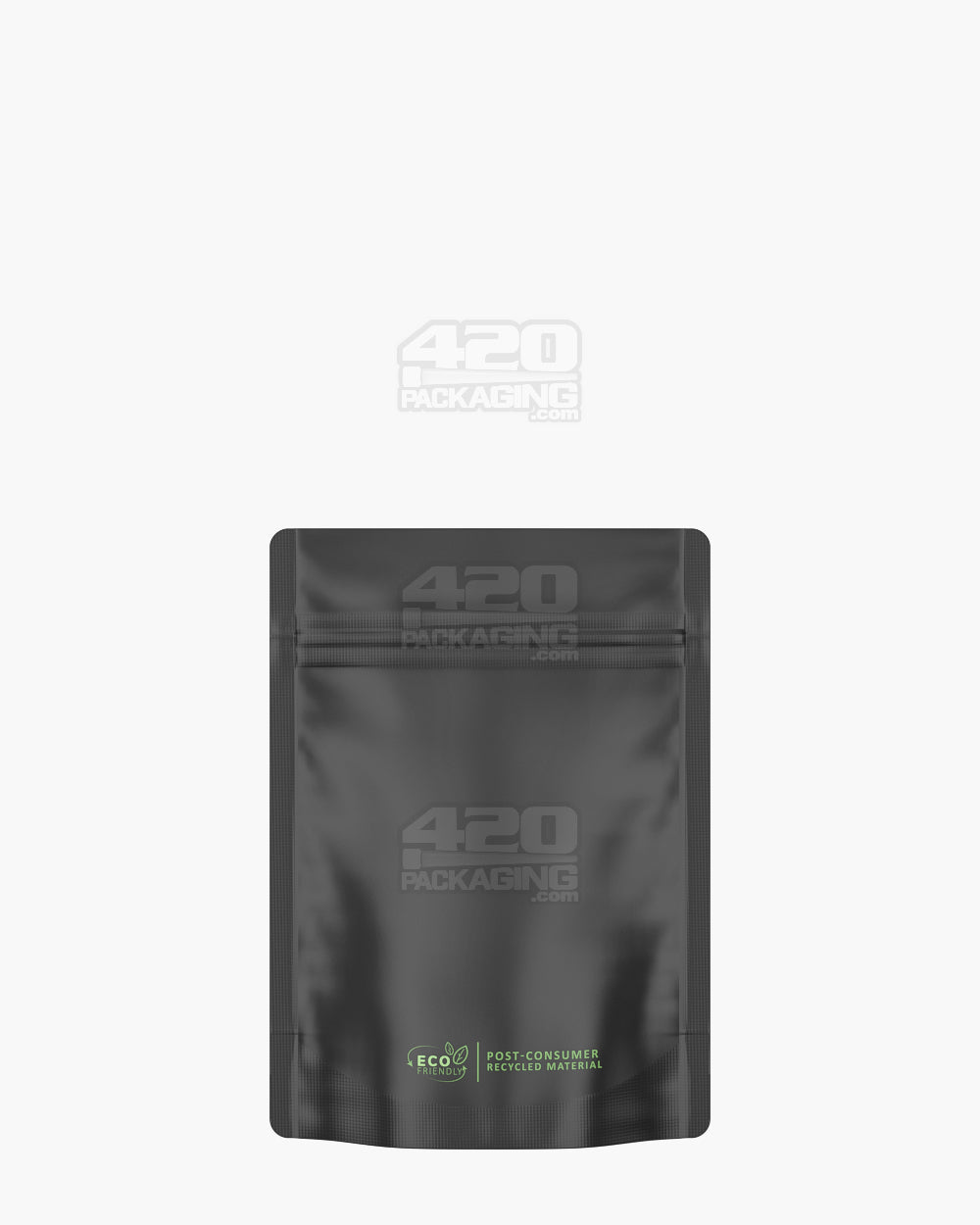




3.5 gram Mylar bags are flexible cannabis packaging pouches designed for the familiar eighth-ounce flower category. Marijuana Packaging supplies wholesale eighth weed bags for cultivators, processors, manufacturers, dispensaries, and cannabis brands preparing individual flower portions for retail. The assortment includes standard resealable pouches, specialized child-resistant closures, opaque and windowed designs, and tamper-evident packaging options.
The best eighth Mylar bags do more than hold 3.5 grams of cannabis. They must accommodate the actual shape of the buds, preserve enough room for reliable closing and sealing, and provide usable space for required labels and branding. A packaging format that works for compact flower may perform differently with larger, less dense buds. For commercial buyers, selecting the right 3.5 gram weed bags means evaluating the filled package, its closure mechanism, first-opening protection, material performance, and total cost per finished eighth.
Wholesale 3.5 Gram Mylar Bags for Cannabis Flower
The eighth is a widely used cannabis flower retail format. Packaging for this quantity must provide enough usable interior space for the buds without becoming unnecessarily large or difficult to handle.
Flexible Mylar pouches are useful for this application because they combine lightweight construction with a broad surface for labeling, branding, and product identification. Depending on the design, they can also provide specialized opening mechanisms, protective laminated films, and a first-opening seal.
These characteristics make 3.5g Mylar bags relevant to commercial operations producing repeated runs of individually packaged flower.
What Makes an Eighth Bag Different From a General Weed Bag?
An eighth bag is selected around a particular product quantity and the practical requirements of that quantity.
For a one-gram portion, the package may need only a compact interior. An ounce package must accommodate substantially more flower. An eighth occupies a middle position where the bag needs to hold several buds, or potentially one relatively large bud, while maintaining a proportionate retail presentation.
The differences affect more than capacity. They influence how operators fill the pouch, where the product settles, and whether the closure can function without interference.
The broader cannabis Mylar bags collection addresses multiple pouch capacities and applications. This page focuses on the decisions particular to eighth-ounce cannabis flower packaging.
Commercial Advantages of a Dedicated 3.5g Pouch
- Proportionate packaging: A suitable pouch accommodates an eighth without excessive unused space.
- Efficient filling: A repeatable bag format allows packaging operators to develop consistent procedures.
- Product protection: Compatible films and seals can help limit unwanted environmental exposure.
- Closure flexibility: Different configurations support conventional or specialized child-resistant opening systems.
- Retail presentation: Solid and windowed bags support different branding and product-visibility preferences.
- Labeling space: Front and back panels provide room for product identification and required information.
- Wholesale standardization: Businesses can use an approved pouch format across different flower strains and production batches.
These advantages depend on choosing the correct construction. A pouch that looks suitable when empty may behave differently after the intended flower is added and the package is closed.
Choosing the Right Eighth Bag for Your Flower
The first practical question when buying eighth weed bags is whether the intended flower actually fits.
Although 3.5 grams describes a familiar cannabis quantity, it does not establish a fixed volume. Cannabis flower varies in density, bud structure, trim condition, and the amount of space between individual pieces.
How Much Weed Fits in a 3.5 Gram Mylar Bag?
A 3.5 gram Mylar bag is marketed for approximately 3.5 grams of cannabis flower by net weight. It does not guarantee that every 3.5-gram portion occupies the same space.
A portion containing several dense buds may settle compactly into the pouch. A portion containing larger, more open flower may require additional clearance even though its weight is identical.
For commercial purchasing, the goal is to select a pouch that accommodates the intended product without unnecessary compression or interference with the closure.
Is 3.5 Grams Exactly an Eighth of an Ounce?
The terms are commonly used together in cannabis retail, but there is a minor mathematical distinction.
One-eighth of a U.S. avoirdupois ounce is approximately 3.54 grams. In cannabis merchandising, 3.5 grams is the familiar rounded eighth quantity.
This difference matters when preparing net-weight declarations. The supplier's eighth-bag capacity designation should not be treated as proof of the actual quantity inside a finished package.
Businesses should weigh the cannabis accurately and use labeling that reflects the intended net quantity under the applicable regulations.
Bud Density and Flower Presentation
Two eighths from different cultivars can fill the same pouch differently.
| Flower Characteristics | Potential Packaging Issue | What to Check |
|---|---|---|
| Dense, compact buds | Product may settle into a relatively small area. | Whether the finished package looks proportionate without unnecessary empty space. |
| Larger, open-structured buds | Flower may occupy more volume at the same weight. | Whether the opening and usable interior accommodate the buds without compression. |
| One prominent bud | A single piece may be difficult to insert or arrange. | Opening access, gusset expansion, and pressure against the pouch walls. |
| Multiple smaller buds | Loose fragments can accumulate around the zipper. | Closure cleanliness and product containment during filling. |
Testing with representative flower provides more useful information than relying on an empty bag's appearance.
Why Gusset Expansion Matters
The current eighth-bag assortment includes gusseted pouch constructions.
A gusset is a folded section of the bag that expands during filling, creating additional usable interior space. For flower, this can help accommodate irregular buds without requiring the pouch to remain completely flat.
However, a gusset does not automatically make a bag suitable for every flower structure. How the material expands depends on the product and its placement inside the pouch.
Filled samples should be inspected for excessive bulging, uneven settling, and pressure against the seams.
Keep the Functional Opening Clear
The zipper and any upper heat-sealing area reduce the space available for flower.
Product should remain below these features. Overfilling can place pressure on the zipper, interfere with a locking mechanism, or cause flower fragments to become trapped in the sealing area.
Businesses should assess usable capacity rather than assume that the full exterior shape of a bag represents available filling space.
The most reliable way to choose a 3.5 gram Mylar bag is to evaluate a complete, filled eighth. Weigh the actual flower, verify that the buds fit without unnecessary compression, confirm proper closure engagement, apply any required first-opening seal, and inspect the final label placement. A pouch's advertised capacity, child-resistant designation, or tamper-evident description should never replace testing the actual packaging configuration and production process.
Standard and Child-Resistant Eighth Bag Closures
The opening mechanism is one of the most important distinctions within the eighth-bag collection.
Some available pouches use conventional resealable zippers, while others incorporate Pinch N Pull or Pinch N Slide child-resistant systems.
These mechanisms serve different packaging requirements and should not be considered interchangeable.
Conventional Resealable Eighth Bags
A standard zipper allows a consumer to open a pouch by separating its upper edges and reclose it by pressing the zipper tracks together.
It provides a familiar opening experience but is not automatically child-resistant.
For cannabis retail applications, conventional-zipper bags must be evaluated according to the intended product, packaging arrangement, and applicable regulations.
An outer child-resistant layer or qualifying initial-use construction may be relevant in some circumstances, but the standard zipper itself does not establish that protection.
Pinch N Pull Child-Resistant Bags
Pinch N Pull closures use designated gripping positions and a coordinated pinching and pulling movement.
This action differs from simply pulling apart an ordinary zipper.
For eighth-ounce flower packaging, the opening mechanism must remain accessible when the pouch is filled.
Required opening instructions should also remain visible and understandable to the consumer.
Pinch N Slide Child-Resistant Bags
Pinch N Slide systems require a coordinated pinching and sliding action.
The mechanism is designed to restrict access through a specific opening sequence while remaining usable by adults.
Commercial buyers should confirm that the selected configuration has appropriate supporting child-resistant testing documentation for its intended use.
The child-resistant Mylar bags collection provides a broader selection organized around these specialized packaging mechanisms.
What Child-Resistant Testing Actually Establishes
Child-resistant packaging is designed to be significantly difficult for young children to open while remaining reasonably accessible to adults.
The U.S. Consumer Product Safety Commission's Poison Prevention Packaging Act guidance describes relevant child-resistant and adult-accessibility performance criteria under 16 CFR Part 1700.
The CPSC does not pre-approve or certify individual package designs.
When buying a child-resistant eighth bag, the business should verify that the supporting documentation covers the actual pouch configuration.
Child resistance should not be inferred solely from the manufacturer's closure name or the presence of a complex-looking zipper.
Tamper Evidence, Heat Sealing, and Tear Notches
Tamper evidence and child resistance are separate packaging functions.
Child resistance concerns the difficulty of opening a package. Tamper evidence concerns whether the package provides a recognizable indication that it has been opened or interfered with.
Although the current eighth assortment is designated tamper-evident, the completed packaging process still matters.
How Heat Sealing Can Provide First-Opening Evidence
Some cannabis Mylar bags use a heat-sealable area above the zipper.
During production, compatible equipment bonds the intended film layers across the opening.
The consumer must then disrupt or remove that original sealed section to access the contents.
This can support a tamper-evident packaging design when the finished seal provides the required indication of first opening.
However, a bag with a heat-sealable area does not necessarily arrive with its final retail seal already applied.
For businesses selecting this closing method, heat-seal Mylar bags address the feature across additional packaging capacities.
Why Tear Notches Are Important
A tear notch provides a designated location to begin opening a sealed portion of the pouch.
Some eighth bags have tear notches, while other configurations omit them.
The difference affects consumer opening convenience and may also affect eligibility under specific child-resistant packaging rules.
For example, a regulatory exception that requires a heat-sealed plastic package without an easy-opening feature cannot be assumed to apply to an otherwise similar pouch with a tear notch.
California's Initial-Use Child-Resistant Packaging Rules
The California Department of Cannabis Control's child-resistant packaging guidance identifies certain cannabis flower packaging configurations that may qualify for initial-use child resistance.
Among its qualifying options is a defined heat-sealed plastic packaging construction that is at least 4 mils thick and does not incorporate an easy-open tab, dimple, corner, or flap.
This does not mean that every heat-sealed eighth bag qualifies.
The actual film construction, opening features, product category, and complete package must satisfy the applicable requirements.
The same California guidance distinguishes initial-use child resistance from multiple-use child resistance and identifies a required warning for qualifying initial-use packaging.
What Happens After the First Opening?
Once a top seal is torn or broken, the original sealed barrier no longer exists.
The zipper underneath then provides the package's repeated closing function, according to its construction.
A standard zipper does not automatically become child-resistant because a heat seal was originally present.
A qualifying multiple-use child-resistant zipper may retain its intended protective function after opening and proper reclosing.
Buyers who need specific first-opening protection can compare tamper-evident cannabis bags while verifying the complete sealing procedure for their finished product.
Opaque vs. Windowed Eighth Weed Bags
Visual presentation is an important selection factor for 3.5 gram cannabis packaging.
Some brands prefer an opaque bag that conceals the flower and emphasizes printed artwork. Others want the customer to see the buds through a transparent section.
Both approaches can be appropriate when they meet the product's intended packaging requirements.
Opaque Eighth Mylar Bags
Opaque pouches prevent consumers from seeing the flower through the bag walls.
They can provide a consistent exterior appearance across strains with different bud colors and structures.
Opaque packaging can also reduce visible light transmission through the covered areas, although its actual ultraviolet protection depends on the film construction.
Where product concealment is the priority, opaque Mylar bags provide a broader category organized around that characteristic.
Vista Windowed Eighth Bags
Windowed cannabis pouches incorporate a transparent area that allows part of the product to remain visible.
For flower brands, this can be useful when bud appearance is an important part of the retail presentation.
A window can also help packaging personnel make a limited visual assessment without opening the pouch.
However, visual inspection cannot establish net weight, batch identity, microbial safety, or the complete quality of the contents.
The Mylar bags with windows category addresses this presentation format across other cannabis packaging applications.
Does a Window Affect Child Resistance?
The window and closure are separate components of a pouch design.
A windowed eighth bag may have a conventional zipper or a specialized child-resistant mechanism, depending on its construction.
Therefore, product visibility does not independently establish whether a pouch is child-resistant.
Buyers should verify the closure and supporting documentation separately from the window design.
Choosing a Finish for Eighth Packaging
Matte and glossy finishes affect how the pouch reflects retail lighting and displays printed graphics.
Black surfaces can support contrasting artwork, while white surfaces provide a lighter background for labels and text.
The preferred finish should be tested with the intended labels or artwork to evaluate contrast, adhesion, scuffing, and the appearance of the filled package.
Color and sheen are presentation characteristics, not substitutes for verified barrier or regulatory performance.
Mylar Film, PCR Materials, and Flower Protection
Flexible cannabis packaging can use laminated films that provide different combinations of mechanical strength, moisture resistance, oxygen resistance, and printability.
For an eighth of flower, the selected film should be suitable for the intended product and its storage conditions.
What Does Mylar Mean in Cannabis Packaging?
Mylar is commonly used in the cannabis packaging industry to describe flexible polyester-based or multilayer barrier pouches.
However, the term does not identify one universal film composition or guarantee a specific level of environmental protection.
Different laminate constructions may contain layers serving different functions, including structural support, product-contact suitability, and sealing.
When preservation requirements are important, buyers should evaluate the actual pouch materials and completed closure system.
PCR Mylar Bags
The current eighth-bag assortment incorporates post-consumer recycled material, commonly abbreviated PCR.
PCR identifies recovered material used in the packaging construction. It does not mean that the entire bag consists of recycled plastic or that every layer is made from the same resin.
Recycled-content claims should be supported by the relevant material specifications.
For packaging teams with recycled-content purchasing goals, PCR Mylar bags provide a dedicated category for comparing this sourcing attribute.
Does PCR Mean the Bag Is Recyclable?
No. Recycled content and recyclability are different characteristics.
Multilayer flexible packaging may contain materials or components that are not accepted by ordinary recycling programs.
The finished bag's recyclability depends on its actual construction and the collection systems available to the end user.
Businesses should avoid unsupported environmental claims based solely on the presence of PCR material.
Moisture and Oxygen Protection
Cannabis flower can exchange moisture with its environment after packaging.
Certain laminated films can help limit water-vapor and oxygen transmission through the pouch walls.
However, the complete package also contains seams, an opening mechanism, and any initial heat seal.
An improperly engaged zipper or damaged seam can undermine the protective properties of the film.
Barrier performance should therefore be evaluated for the complete filled and closed package.
Odor Containment
Cannabis flower contains volatile aromatic compounds that can move through inadequate packaging barriers.
An appropriate laminated pouch may help limit odor transmission, but the zipper and other openings remain important.
Mylar construction does not automatically guarantee that every eighth bag is completely smell-proof or airtight.
When odor containment is a defined requirement, the actual sealing performance should be verified rather than assumed from the material name.
Product Condition Before Packaging
A suitable barrier pouch helps manage exposure after the flower has been properly prepared.
It does not correct improper drying, remove contamination, or guarantee a particular shelf life.
Commercial packaging should begin with flower that already meets the business's applicable quality and safety specifications.
Labeling and Branding 3.5g Cannabis Packaging
The front and back surfaces of an eighth bag provide space for brand identity, strain information, tracking details, and mandatory retail labeling.
However, the gusset, zipper, tear notch, window, and heat-seal area can all reduce the usable artwork space.
Required Labeling for Cannabis Flower
Labeling requirements depend on the jurisdiction where the packaged flower will be sold.
For example, the California Department of Cannabis Control's labeling guidance for nonmanufactured cannabis products identifies information required on final-form flower packaging.
Relevant elements include product identity, net weight, the universal cannabis symbol, tracking information, licensee details, packaging information, and applicable warnings and cannabinoid statements.
California requires the net weight to appear in metric and U.S. customary units.
The final label must accurately reflect the contents and satisfy the rules of the intended market.
Why Eighth Bags Need Careful Artwork Placement
An eighth pouch offers less exterior space than an ounce bag, yet the product may still require substantial regulatory information.
Brands should plan the design around the actual usable panels rather than the full flat outline of an empty pouch.
Important placement considerations include:
- Keeping mandatory text away from heavy folds or gusset areas.
- Preserving child-resistant opening and closing instructions.
- Leaving the intended heat-seal section clear.
- Avoiding placement of important information on a section removed during first opening.
- Maintaining readable contrast between text and the bag finish.
- Positioning barcodes where they can be scanned reliably.
- Allowing space for batch-specific and other variable information.
Branding Multiple Strains With One Bag Format
A standardized eighth pouch can support a coordinated flower product line.
Different strains may use the same approved bag construction while being distinguished through labels, artwork, or other compatible branding treatments.
This can reduce the number of different packaging formats a business needs to manage.
However, product-specific information must remain accurate for each strain and batch.
Custom Printed Eighth Mylar Bags
Custom printing can integrate branding directly into a flexible cannabis pouch.
Before artwork is finalized, the brand should establish the intended bag material, finish, opening mechanism, product visibility, and sealing method.
Marijuana Packaging's custom printed Mylar bags service supports businesses developing branded cannabis pouch packaging.
For eighth bags, a filled sample is particularly useful because it reveals how the label or printed artwork appears when the gusset expands and the flower settles inside.
Filling and Quality Control for Eighth Bags
At wholesale production scale, small packaging errors can become recurring sources of material waste, product loss, and rejected retail units.
For 3.5g flower packaging, the most important production controls involve correct pouch selection, accurate weighing, careful filling, closure engagement, sealing, and labeling.
Establish a Consistent Filling Sequence
- Verify the pouch: Confirm the approved material, intended closure mechanism, and any required first-opening feature.
- Inspect the empty bag: Check for visible defects in the film, seams, zipper, and gusset.
- Weigh the flower: Establish the correct net quantity using appropriate equipment and procedures.
- Fill carefully: Transfer buds without unnecessary compression or loss of product.
- Clear the opening: Remove loose fragments from the functional zipper or heat-seal area.
- Close the package: Engage the intended conventional or child-resistant mechanism correctly.
- Apply any required seal: Use the appropriate procedure for the selected pouch construction.
- Complete the label: Verify the correct product identity, weight, tracking information, and required warnings.
- Inspect the finished eighth: Confirm that the product fits comfortably and the package has the intended protective and retail characteristics.
Why Closure Cleanliness Matters
Loose flower fragments are a practical concern during eighth-bag filling.
Plant material trapped in a zipper can prevent complete engagement. Material trapped in a heat-seal area may also interfere with a continuous seal.
These failures can occur even when the selected bag and equipment are otherwise suitable.
Keeping the opening clear is therefore a useful production control.
What Should a Finished-Bag Inspection Include?
Quality-control checks should confirm that:
- The correct pouch configuration was used.
- The net flower weight meets the applicable product declaration.
- The buds have not been unnecessarily damaged during filling.
- The gusset and seams show no unacceptable damage.
- The closure engages correctly.
- Any required tamper-evident seal has been completed as intended.
- The label matches the actual flower batch.
- Mandatory information remains legible on the filled pouch.
- The completed bag is suitable for the intended shipping and retail handling process.
These inspections support production consistency. They do not replace formal child-resistant performance testing or other regulatory validation where required.
Reducing Packaging Waste During Repeated Runs
For businesses preparing many eighth-ounce units, a packaging error can increase the amount of labor needed to complete each saleable package.
Common problems include misapplied labels, inaccurate weights, damaged zippers, poor heat seals, and flower crushed during filling.
Standardizing the pouch, filling procedure, closure method, and inspection criteria can reduce unnecessary variation across shifts and production batches.
The relevant operational goal is a high proportion of correctly completed retail packages, not simply the fastest possible filling speed.
Opening, Reclosing, and the Consumer Experience
Retail packaging must work for both the business filling it and the consumer opening it.
This is especially important when the product will be accessed repeatedly rather than consumed in one occasion.
First-Opening Experience
The consumer may first encounter a tear-open section, a heat seal, or another tamper-evident feature depending on the selected package.
After that initial barrier is opened, the zipper provides the next point of access.
The steps should be understandable without damaging the underlying closure.
For child-resistant designs, the consumer must be able to identify and perform the required coordinated opening action.
Correct Reclosing
Resealability describes a package's ability to be closed after opening. It does not automatically establish airtightness or child resistance.
For a standard zipper, correct engagement generally requires the opposing tracks to be pressed together along the intended closure area.
For a qualified child-resistant mechanism, the specified closing procedure must be followed to restore the intended locked condition.
Brands should make the closing instructions sufficiently clear that consumers can use the packaging as designed.
Flower Storage After First Opening
Once a heat-sealed upper section has been removed, the package's ongoing environmental protection depends on its remaining closure and film construction.
Repeated opening introduces opportunities for air and moisture exchange.
A resealable eighth bag can provide convenient continued use, but it should not be assumed to retain the exact barrier characteristics of its original unopened state.
Businesses making preservation claims should distinguish between unopened-package performance and performance after repeated consumer access.
3.5g Mylar Bags vs. Other Flower Packaging
Using a packaging format matched to the intended flower quantity can improve retail presentation and reduce unnecessary handling problems.
An eighth bag is not automatically suitable for every quantity or cannabis product shape.
3.5g Bags vs. 1 Gram Bags
A one-gram pouch is intended for a smaller flower portion.
Using an eighth bag for one gram can create unnecessary unused space, while placing an eighth into an undersized pouch can compress buds and interfere with the closure.
For businesses producing smaller flower portions, 1 gram Mylar bags address that distinct packaging requirement.
Eighth Bags vs. Quarter-Ounce Bags
Quarter-ounce pouches are organized around a larger quantity of cannabis flower, commonly identified as 7 grams.
They generally require more usable internal space than an eighth bag.
Businesses packaging both quantities should evaluate separate approved pouch formats rather than assuming that a single bag will provide the best fit for each.
The 7 gram Mylar bags category addresses quarter-ounce flower packaging.
3.5 Gram Mylar Bags vs. Eighth Jars
Flexible pouches offer lightweight construction, relatively compact storage before filling, and exterior panels suited to branding.
Rigid jars provide greater structural resistance to compression and can be useful when preserving the appearance of large individual buds is particularly important.
However, jars introduce different considerations involving closure compatibility, container weight, freight, and storage space.
Brands evaluating a rigid alternative can compare 3.5 gram cannabis jars according to their actual flower and production requirements.
Why a Flower Eighth Bag Is Not Necessarily a Pre-Roll Bag
A matching cannabis weight does not establish packaging compatibility across different product formats.
Pre-rolls have an elongated shape that may require different interior proportions and protection from bending.
Likewise, concentrates and edibles can introduce different product-contact and closure requirements.
The product's physical form and regulatory category should determine whether an eighth-size flower pouch is appropriate.
Buying Eighth Mylar Bags Wholesale
Wholesale purchasing should focus on the cost and reliability of the complete finished eighth, not just the empty pouch.
Commercial buyers need packaging that can be sourced consistently, filled efficiently, sealed correctly, and presented appropriately at retail.
Wholesale Eighth Bag Purchasing Checklist
Before approving a packaging format, verify:
- Flower fit: Representative 3.5-gram portions fit comfortably without unnecessary compression.
- Usable capacity: Adequate space remains beneath the zipper and any sealing area.
- Closure type: The selected bag provides the conventional or child-resistant opening function required for its intended use.
- Documentation: Relevant child-resistant testing supports the actual configuration where required.
- Tamper evidence: The completed first-opening feature meets the intended requirement.
- Opening features: Any tear notch is appropriate for the selected regulatory and packaging arrangement.
- Visibility: The solid or windowed construction meets the intended presentation and opacity requirements.
- Film performance: The materials provide the necessary product compatibility and environmental protection.
- Material sourcing: Any recycled-content claims are supported by applicable information.
- Labeling: Required product data, warnings, and symbols fit legibly on the finished bag.
- Production: Filling, closing, sealing, and inspection can be repeated consistently.
- Distribution: The finished packages can be handled without unacceptable flower damage.
Cost per Finished Eighth
The empty-bag price is only one part of wholesale packaging economics.
Other expenses may include weighing and filling labor, heat-sealing operations, child-resistant functionality, label application, quality-control inspections, material loss, freight, and finished-package storage.
Businesses should also consider the cost of rejected units caused by closure failures, incorrect labels, damaged seals, or unsuitable pouch capacity.
A lower-priced bag may increase overall costs if it creates recurring production problems or lacks a feature required for the finished product.
Stock Eighth Bags vs. Custom Printed Packaging
Stock pouches with applied labels can be useful when a business manages multiple strains or frequently updates product information.
Custom printed bags may be more appropriate when the brand wants a coordinated appearance across recurring production runs.
Both approaches must preserve accurate variable information and the intended opening and sealing features.
The purchasing decision should consider artwork requirements, product-line complexity, production planning, and the total cost of the completed package.
Approving an Eighth Bag Before Bulk Production
Representative filled samples provide the strongest practical basis for selecting a wholesale eighth bag.
Businesses should evaluate the actual flower, intended closure, required first-opening seal, completed label, and filled-package appearance together.
That process can reveal fit problems, labeling conflicts, or closure issues that are difficult to identify from an empty pouch alone.
Wholesale 3.5 Gram Mylar Bags for Cannabis Businesses
3.5 gram Mylar bags provide a practical packaging format for cannabis businesses selling or preparing eighth-ounce flower portions.
Marijuana Packaging supplies wholesale eighth weed bags with different closure systems, opaque and windowed presentations, and flexible material options to support commercial packaging programs.
By selecting the right pouch for the actual flower, verifying the required protective features, and establishing a consistent filling and inspection process, cannabis brands and operators can prepare eighth-ounce packaging that supports product protection, retail presentation, and efficient wholesale production.
Frequently Asked Questions About 3.5 Gram Eighth Bags
Yes, 3.5 gram Mylar bags are commonly marketed as eighth-ounce weed bags. However, 3.5 grams is the customary rounded cannabis quantity rather than the exact mass of one-eighth of a U.S. ounce, which is approximately 3.5437 grams. For retail packaging, the actual flower must be weighed accurately, and the finished net-weight declaration must meet the applicable regulations. The bag's advertised capacity is not a substitute for measuring its contents.
No. The current 3.5 gram collection includes conventional-zipper bags that are not designated child-resistant, alongside Pinch N Pull and Pinch N Slide child-resistant designs. All currently listed configurations are designated tamper-evident, but that is a separate feature. Buyers should verify the exact closure, any required first-opening seal, and the supporting child-resistant documentation before purchasing for a regulated retail application.
Yes. The eighth-bag assortment includes a windowed Pinch N Pull child-resistant configuration as well as windowed bags with conventional zippers. The transparent viewing area and the closure perform different functions, so product visibility does not determine child-resistant qualification. A window can also affect light exposure and opacity. The complete package must be evaluated for the intended cannabis product and jurisdiction.
A tear notch provides a designated location for opening a sealed portion of a pouch. Bags without tear notches use a different opening arrangement. The choice can affect consumer convenience and the requirements for certain initial-use child-resistant packaging exemptions. For example, California's specific heat-sealed plastic packaging exception excludes easy-opening features. A tear notch or its absence does not independently establish child resistance or tamper evidence; the complete package must qualify.
Test representative 3.5-gram flower portions from the strains you plan to package. Bud density and shape can affect how well the flower fits, even when the net weight is the same. Check gusset expansion, clearance beneath the zipper, and whether the flower can be inserted without excessive compression. Then verify the required child-resistant closure, tamper-evident sealing process, material characteristics, and labeling space. Approving a filled and sealed sample is more reliable than selecting by the bag's capacity designation alone.