

Humidity Packs
Humidity packs help preserve the freshness, aroma, and quality of cannabis products by maintaining optimal moisture levels during storage and transport. Shop a wide selection of two-way humidity control packs designed for use with flower jars, mylar bags, pre-roll packaging, and other storage containers. Whether you're packaging products for retail or long-term storage, our humidity packs help protect potency, extend shelf life, and deliver a better customer experience.
Filters
9 products
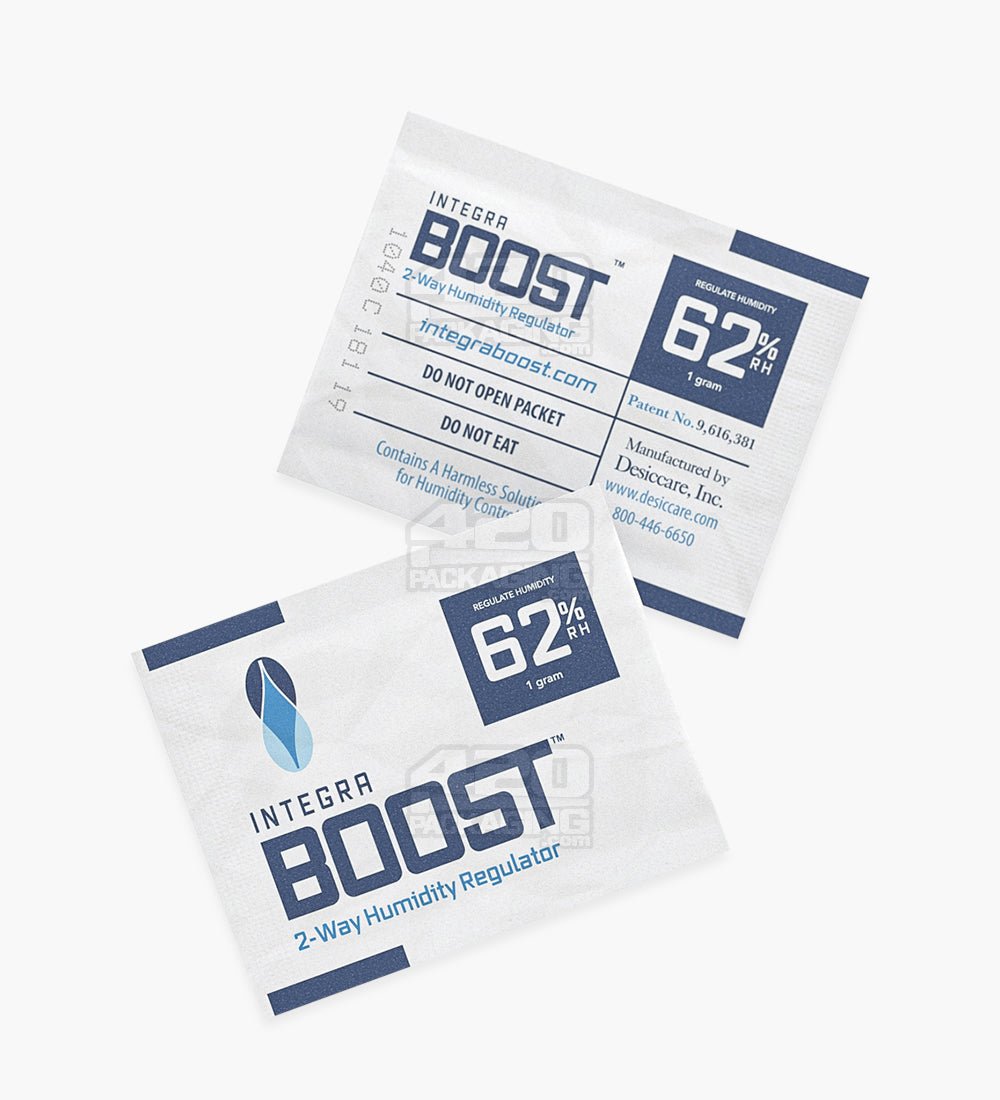
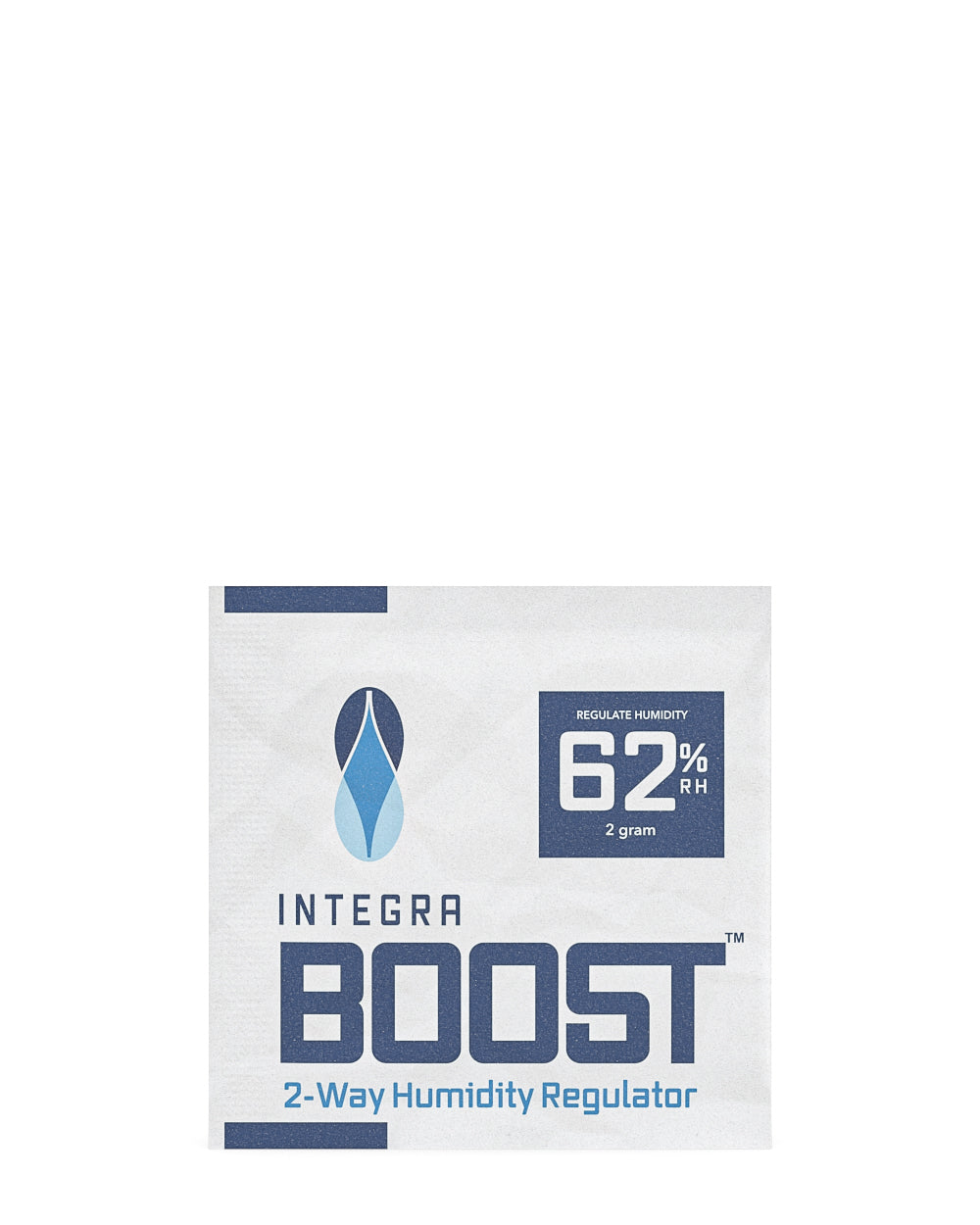
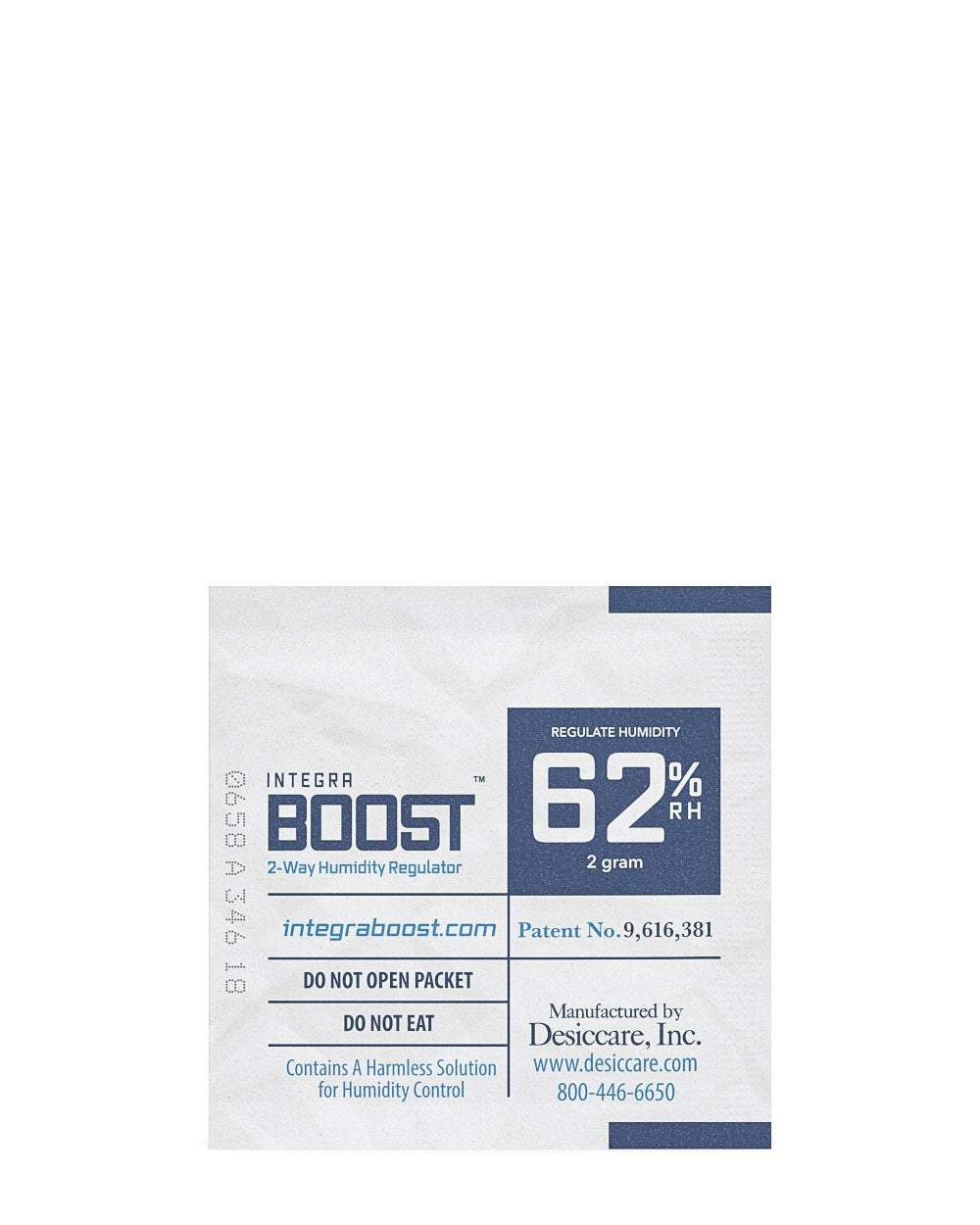
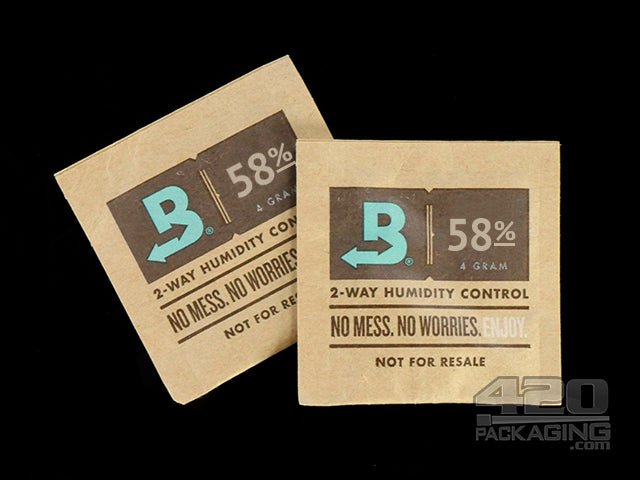
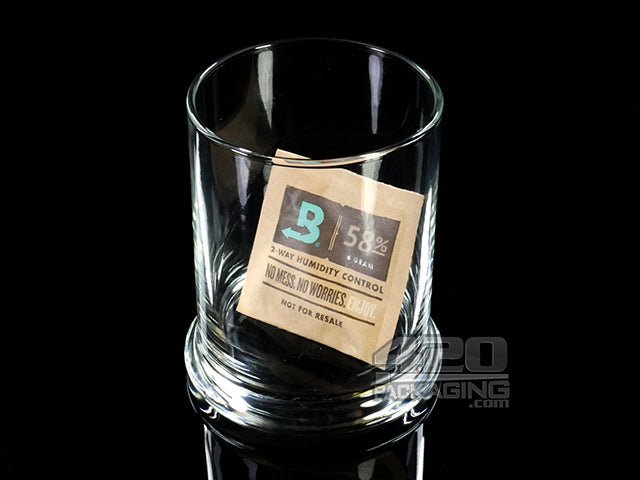

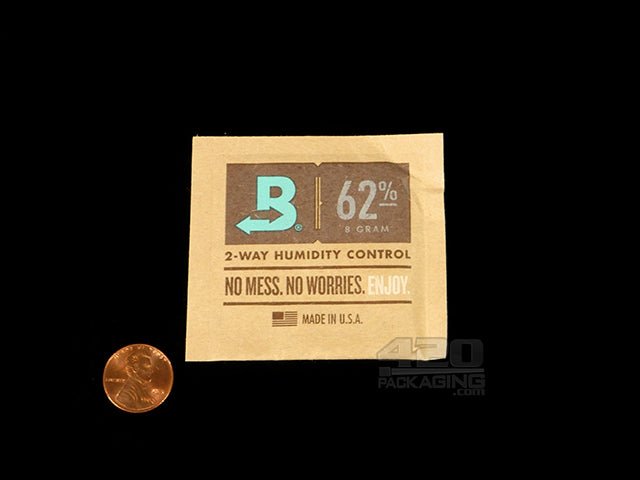
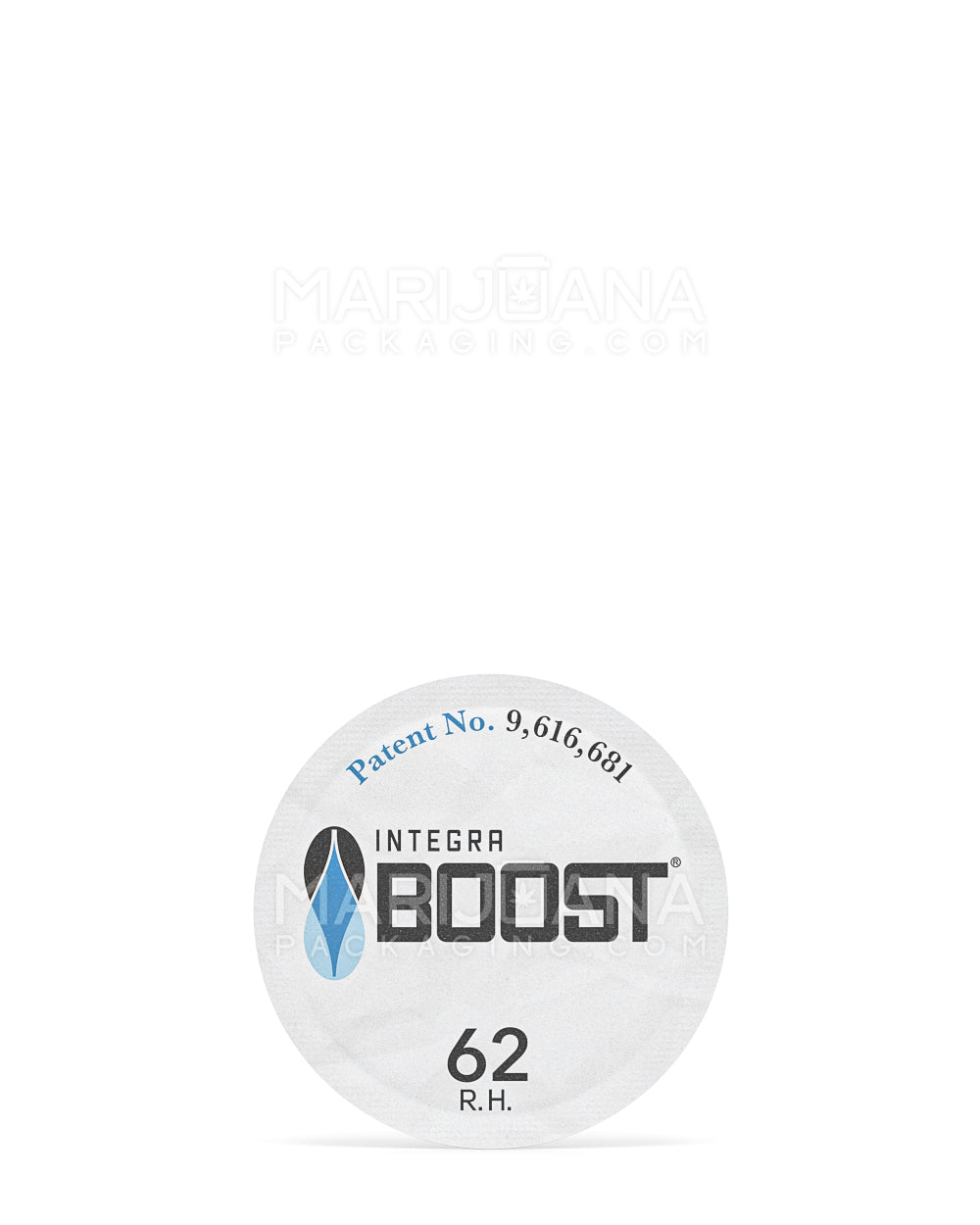
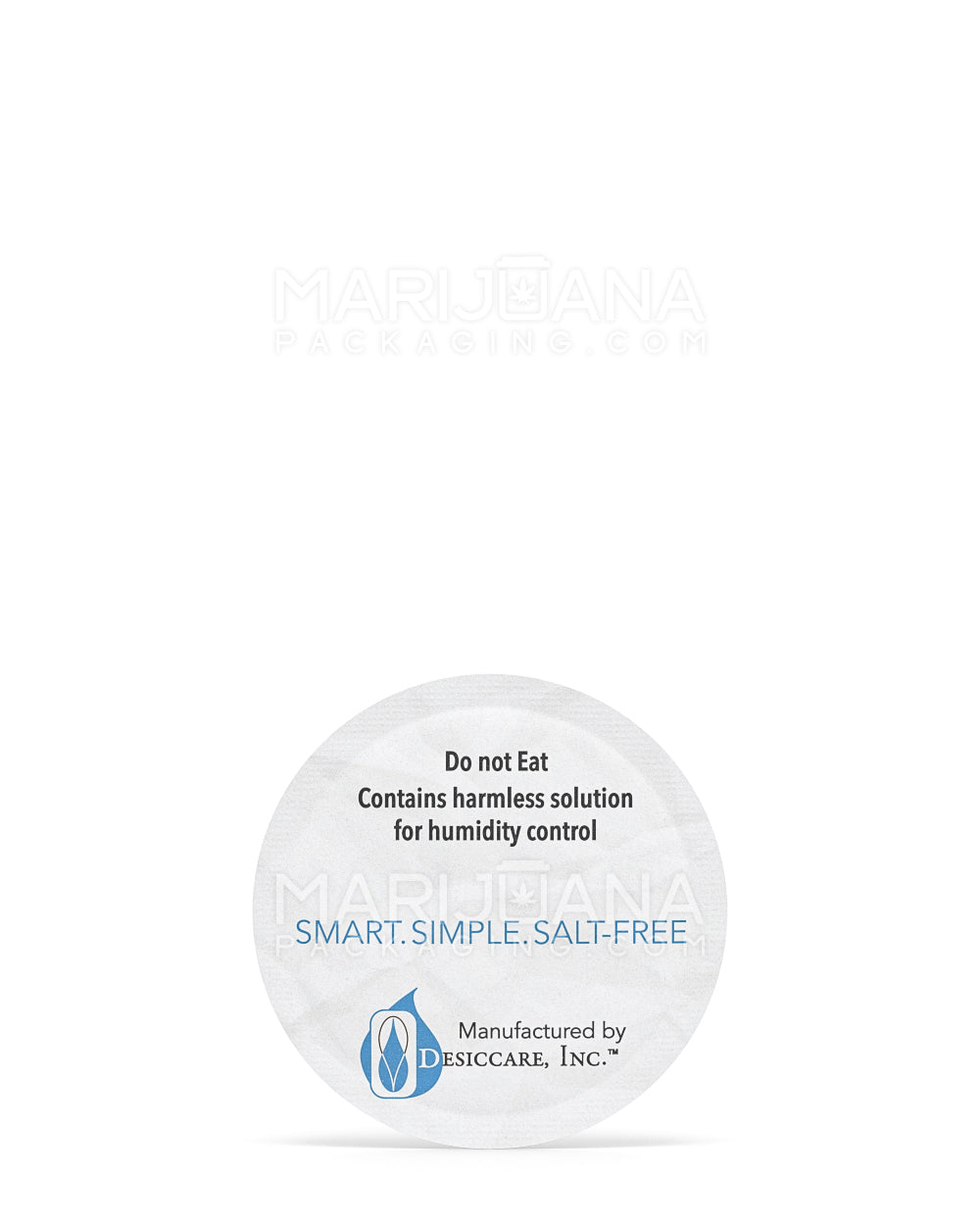
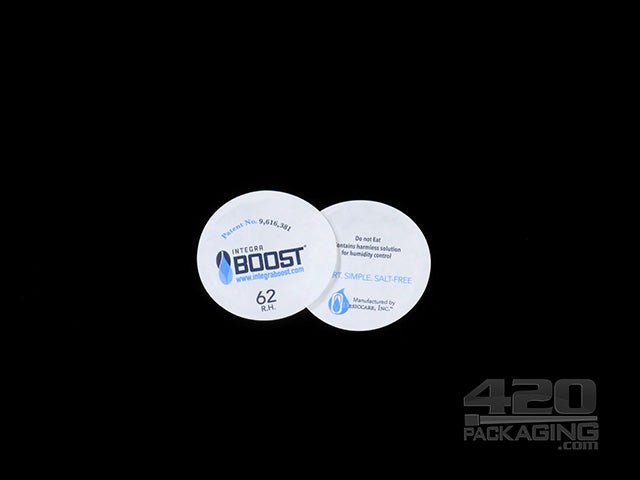

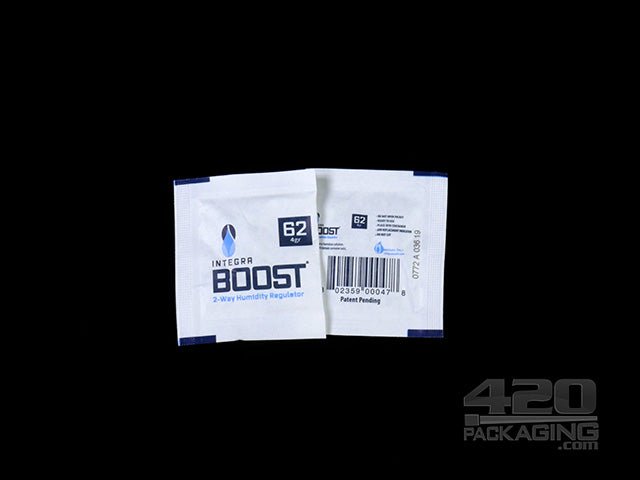
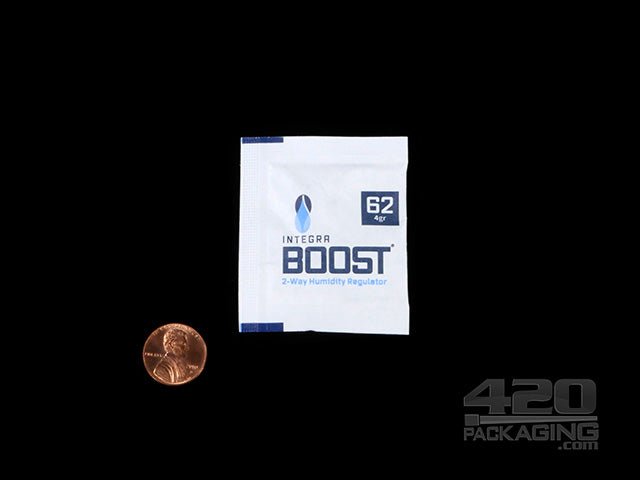
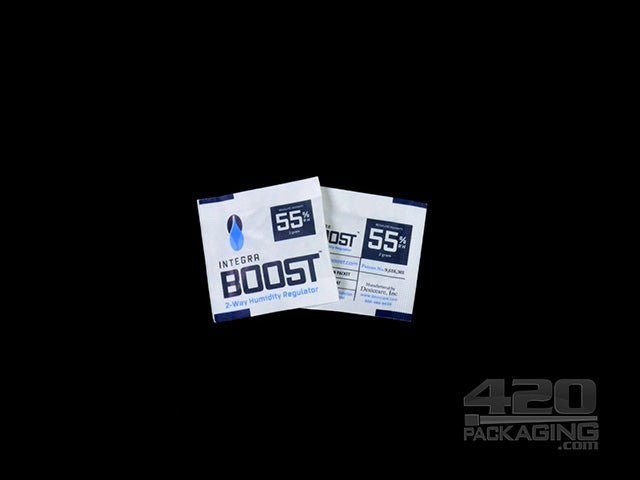
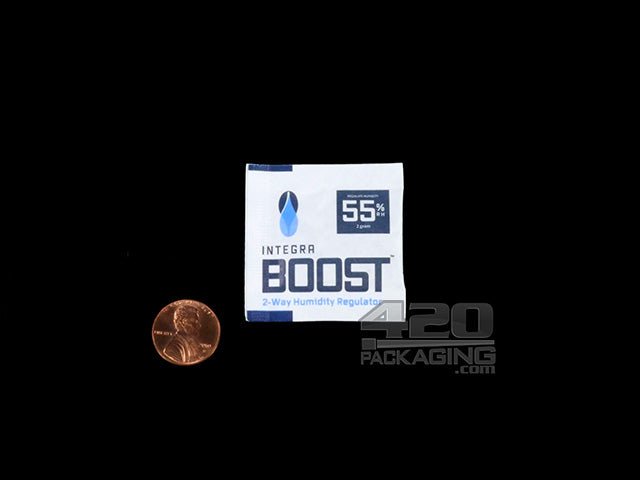
Humidity packs for weed help cannabis cultivators, processors, manufacturers, and dispensaries manage moisture conditions inside closed flower packaging. Marijuana Packaging supplies wholesale cannabis humidity packs from Boveda and Integra Boost, with two-way humidity-control options labeled for 55%, 58%, and 62% relative humidity. These compact sachets are used with suitable jars, pouches, and other enclosed packaging formats to help moderate changes in the internal storage environment.
Choosing the right weed humidity control packs requires more than selecting a preferred humidity percentage. Commercial buyers must distinguish the target relative humidity from the packet's moisture-handling capacity, match the pack to the amount of flower being stored, and consider how effectively the container limits air and moisture exchange. Humidity packs can support a properly dried and packaged product, but they cannot replace drying, curing, microbial testing, or a suitable protective package. Understanding those limits is essential when incorporating humidity-control accessories into wholesale cannabis packaging operations.
Wholesale Humidity Packs for Cannabis Flower
Cannabis flower continues to exchange moisture with the air around it after drying and packaging. When a container is repeatedly opened or its closure allows environmental exchange, the conditions inside can change over time.
Two-way humidity packs are designed to help moderate those changes. Unlike materials intended only to absorb moisture, they can release or take up water vapor in response to the surrounding environment.
This makes them relevant to commercial cannabis flower packaging programs where brands want more consistent storage conditions between filling, distribution, and eventual use.
What Are Cannabis Humidity Packs?
A cannabis humidity pack is a sealed sachet containing materials designed to regulate the relative humidity of an enclosed space.
The sachet uses a membrane that allows water vapor to move between its internal moisture-control material and the surrounding air. Its contents are intended to remain sealed inside the packet.
Different manufacturers use different formulations and constructions, but the commercial objective is similar: help maintain the surrounding air near the humidity level identified on the pack.
Why Flower Packaging May Benefit From Humidity Control
Dried flower can become brittle when exposed to excessively dry conditions. Buds may crumble more easily during handling, and the consumer may encounter a different texture from the one intended by the producer.
Excessive moisture introduces different concerns, including an increased risk of undesirable microbial activity when the product's water activity becomes too high.
Appropriately selected humidity packs can help moderate moisture changes within their operating limits. Their usefulness depends on the initial condition of the flower, the package's barrier performance, and the storage environment.
Humidity control is therefore one component of a flower-preservation program, not a guarantee that a packaged product will remain safe or unchanged indefinitely.
Where Humidity Packs Fit in Commercial Operations
Humidity-control sachets may be used during finished-product storage, retail packaging, or other approved stages after the flower has reached suitable moisture conditions.
For wholesale operations, the pack becomes an additional packaging component that must be selected, inserted, monitored where appropriate, and included in the finished-package cost.
The most effective process is one in which the flower, humidity pack, container, and closure have been evaluated together.
How Two-Way Humidity Packs Work
The defining feature of a two-way humidity pack is its ability to respond to moisture conditions in either direction.
When the air inside a sufficiently enclosed container is drier than the pack's target environment, the pack can release water vapor. When that air is more humid, the pack can absorb moisture within its working capacity.
What Does Two-Way Humidity Control Mean?
Two-way humidity control describes a system that can both supply and absorb water vapor.
This differs from conventional desiccants, which are generally intended to remove moisture from their surroundings.
The humidity pack attempts to moderate conditions around a specified target rather than make the enclosed air as dry as possible.
However, it has finite moisture-handling capacity. A small pack cannot indefinitely compensate for a poorly sealed package or extremely unsuitable initial product conditions.
Relative Humidity Inside the Package
Relative humidity, abbreviated RH, describes how much water vapor is present in air relative to the amount the air could hold at the same temperature before reaching saturation.
A humidity pack labeled 62% RH is designed to help maintain an enclosed environment near that relative humidity level under suitable conditions.
It does not mean that the flower contains 62% moisture by weight, nor does it establish that the packaged product has passed any microbial safety test.
Why the Container Matters
A humidity pack works most effectively when the surrounding space is sufficiently enclosed.
If a cap fits poorly or a pouch seal permits substantial air exchange, outside conditions can continually change the moisture level inside the package.
The pack then has to respond to the surrounding environment rather than primarily to the flower and enclosed air.
This can reduce its useful life and make the target humidity harder to maintain.
For that reason, the performance of the jar, bag, cap, and any sealing components is closely related to the performance of the humidity pack.
Choosing Between 55%, 58%, and 62% RH
The Humidity Packs collection includes labeled humidity levels of 55%, 58%, and 62% RH. These percentages are target conditions for the enclosed air, not measurements of the quantity of flower the pack can accommodate.
There is no single target humidity that is automatically appropriate for every cannabis product, storage process, or packaging environment.
The most important selection rule is to match the humidity pack's RH target and working capacity to properly prepared flower inside a suitable sealed package. The RH percentage identifies the intended moisture equilibrium, while pack capacity determines how much moisture exchange the sachet can handle. Neither feature can compensate indefinitely for a leaking package, correct improperly dried flower, or make contaminated cannabis safe. Validate the finished package and measure product water activity when safety and quality specifications require it.
55% RH Humidity Packs
Humidity packs targeting 55% RH establish a relatively drier environment than options labeled 58% or 62%.
They may be considered by packaging programs seeking a lower humidity target within the available assortment.
However, choosing 55% should reflect the characteristics of the flower, the desired handling properties, and the brand's validated storage specifications.
A lower RH target is not automatically superior for every product.
58% RH Humidity Packs
Humidity packs targeting 58% RH offer an intermediate setpoint among the collection's available options.
They may be considered when a business wants a somewhat drier storage environment than a 62% target provides.
Brands should evaluate whether the resulting flower texture and handling characteristics are appropriate for the intended product.
The target percentage alone does not establish a guaranteed shelf life, terpene-retention rate, or consumer preference.
62% RH Humidity Packs
Humidity packs targeting 62% RH are designed to maintain a higher relative humidity than 55% or 58% alternatives.
They are commonly used in cannabis flower storage programs where the desired product characteristics align with that target.
However, the higher setpoint does not mean that the pack should be used to compensate for flower that was packaged while excessively wet.
The flower must already meet the applicable product specifications before the humidity pack is introduced.
Comparing Available Humidity Targets
| Target RH | Relative Position | Buying Consideration |
|---|---|---|
| 55% | Lowest target among the listed options | Evaluate when a comparatively drier storage environment is desired. |
| 58% | Intermediate target | Evaluate when a moderate humidity setpoint aligns with the flower and handling requirements. |
| 62% | Highest target among the listed options | Evaluate when a higher controlled humidity setpoint is appropriate for the product. |
The differences between these setpoints concern the intended environmental conditions, not the physical size or maximum flower capacity of the pack.
Should You Mix Different RH Levels?
Different RH targets should not be mixed indiscriminately inside the same package.
For example, Boveda advises against combining packs with different target humidity levels because the products can work against one another and reduce overall efficiency.
A commercial packaging program should select one validated RH target for each product configuration and follow the relevant manufacturer's instructions.
If multiple humidity packs are needed to provide sufficient moisture-handling capacity, they should be selected according to the recommended configuration rather than combined arbitrarily.
Boveda vs. Integra Boost Humidity Packs
The collection features two established brands: Boveda and Integra Boost.
Both offer two-way humidity control, but their internal formulations and replacement-monitoring methods differ.
Boveda Two-Way Humidity Packs
Boveda uses a salt-based formulation with purified water and other ingredients enclosed in a vapor-permeable packet.
The formulation is designed to absorb or release water vapor according to the humidity conditions inside a suitably enclosed space.
Boveda provides cannabis-oriented RH options within the available collection, including 58% and 62% targets.
Its packs should remain intact during use, and their condition should be checked according to the manufacturer's replacement guidance.
The dedicated Boveda humidity packs collection groups the brand's available humidity-control products for buyers standardizing that formulation.
Integra Boost Humidity Packs
Integra Boost uses a salt-free two-way humidity-control formulation.
Like other two-way systems, it is designed to release or absorb water vapor depending on the conditions inside the enclosure.
Integra offers humidity targets represented in this collection, including 55% and 62% RH.
The manufacturer also describes a color-changing replacement indicator card for monitoring when a pack needs to be changed.
Businesses using the Integra Boost humidity packs category should follow the manufacturer's instructions for the relevant pack and indicator system.
Salt-Based vs. Salt-Free Formulations
The distinction between salt-based and salt-free humidity packs concerns their internal moisture-regulating formulation.
It does not mean that one brand universally guarantees better cannabis quality, longer storage life, or superior microbial safety.
Both technologies depend on an intact packet, appropriate moisture capacity, and a suitable enclosed environment.
For wholesale purchasing, relevant considerations include the available target RH, pack capacity, replacement indication, handling procedures, and consistency in the intended packaging operation.
Choosing a Brand for Recurring Production
When standardizing a packaging line, buyers should evaluate whether their chosen humidity-control product can be sourced reliably across repeat production runs.
Changing pack brand, formulation, or target RH should be treated as a packaging-process change when those characteristics are part of the approved product specification.
Representative product and storage testing can help determine whether the proposed change affects the finished package.
How to Choose the Right Humidity Pack Capacity
Pack sizing is separate from choosing a humidity target.
The RH percentage determines the desired environment, while the packet's moisture-handling capacity influences how much moisture it can absorb or release before requiring replacement.
Pack Capacity vs. Flower Weight
Humidity packs are available in different capacities intended for different amounts of stored product.
The weight or capacity designation associated with a humidity pack describes the pack itself, not the exact quantity of cannabis it can always regulate under every condition.
Manufacturers provide sizing guidance based on intended use, but performance also depends on the package, initial flower condition, and surrounding environment.
Commercial buyers should follow the relevant manufacturer's sizing recommendations rather than assume that every similarly sized pack from different brands has identical working capacity.
Why Larger Packages May Need More Humidity-Control Capacity
A larger amount of flower can contribute more moisture exchange to the surrounding air than a smaller amount, depending on the product's condition.
The size of the enclosure and the rate of air exchange also influence how much work the humidity pack must perform.
For that reason, pack selection should consider the intended flower quantity and container environment together.
A larger pack or an approved combination of packs may be appropriate in some applications, but the quantity should follow manufacturer guidance and process validation.
Internal Space and Product Clearance
Humidity packs occupy physical space within the finished package.
In compact jars or tightly filled pouches, this can affect flower arrangement, product access, and clearance beneath the closure.
During packaging trials, businesses should verify that the humidity pack can be positioned appropriately without interfering with sealing surfaces, cap engagement, or product removal.
A Practical Sizing Decision
Commercial buyers can narrow the selection by answering four questions:
- What quantity and type of cannabis flower will be stored?
- Which RH setpoint has been selected for that product?
- How effectively does the finished package limit moisture exchange?
- What working capacity does the manufacturer recommend for that application?
Once those factors have been established, a representative storage trial can confirm whether the chosen pack performs appropriately in the actual packaging system.
Humidity Packs for Jars, Mylar Bags, and Pre-Rolls
Two-way humidity packs can be used in different packaging formats, but their usefulness depends on the barrier characteristics and usable space of the finished container.
Humidity Packs Inside Cannabis Jars
Rigid jars provide a defined internal space where a humidity-control sachet can be placed alongside suitable flower.
Glass has strong resistance to gas and moisture transmission through its walls. Plastic jars have material-dependent permeability characteristics.
In both cases, the closure and any liner affect how much outside air enters the package.
When using cannabis jars, buyers should verify that the selected pack fits without obstructing the closure or damaging the product.
Humidity Packs Inside Mylar Bags
Suitable high-barrier pouches can also accommodate humidity-control packs when the product and pack fit correctly.
However, the term Mylar does not automatically establish a particular oxygen or moisture barrier. Actual pouch construction, film layers, closure design, and sealing quality determine its protective characteristics.
For commercial Mylar bags, the humidity pack should be selected alongside the intended pouch material and sealing procedure.
The sachet should not become trapped in a heat-seal area or interfere with any required child-resistant mechanism.
Humidity Packs for Pre-Rolls
Pre-rolls can be affected by the moisture condition of the cannabis inside them and by the environment in which they are stored.
Some pre-roll packaging programs may use humidity packs where the container format and desired product characteristics make them appropriate.
However, the pack must not crush the finished joints, damage the paper, or interfere with opening and closing the package.
Brands using pre-roll packaging should evaluate finished joint condition, packaging geometry, and the selected RH target together.
Humidity Packs and Compatible Closures
A humidity-control sachet cannot make an unsuitable cap airtight or correct an incomplete seal.
Where a commercial program requires an enclosed storage environment, suitable jars with matching lids can help establish a defined starting configuration.
However, the completed package's barrier performance must still be verified.
A child-resistant cap may provide required opening functionality without automatically creating the moisture barrier needed for long-term humidity control.
When and How to Use Humidity Packs
Humidity packs should be introduced as part of an approved storage or retail packaging process, not used indiscriminately at every stage of cannabis production.
After Drying and Curing
For finished flower packaging, the product should already meet its applicable moisture and quality specifications before a humidity pack is added.
Drying removes moisture from harvested material, while curing is a separate controlled postharvest process.
A humidity-control pack can help moderate storage conditions, but it does not perform all the functions of proper drying or curing.
Using a pack to compensate for flower that is excessively wet is not an appropriate substitute for establishing the product's suitability before packaging.
Remove the Outer Wrapping, Not the Inner Packet
Manufacturer instructions for common two-way humidity packs call for removal of any protective outer overwrap before placing the humidity-control packet in a suitable enclosure.
The inner functional packet must remain intact.
Do not cut, puncture, or empty the sachet. Its membrane is part of the controlled water-vapor exchange system.
For Integra Boost, the manufacturer's instructions also describe placing its replacement indicator card inside the enclosed space when supplied for the relevant product.
Place the Pack Where It Will Not Interfere
The pack should be positioned in a way that accommodates the intended product and closure.
Manufacturer guidance should determine whether direct contact with the contents is appropriate for the particular pack.
The sachet should not be trapped in a closure thread, positioned across a sealing surface, or exposed to unnecessary damage during filling.
Close the Package Promptly
After placing the humidity pack inside the approved container, close or seal the package according to the packaging procedure.
Extended exposure to room air causes the pack to respond to the surrounding environment and may consume some of its working capacity before the finished package is closed.
For recurring production, a consistent insertion and closing sequence can reduce variability between finished packages.
Relative Humidity, Water Activity, and Flower Safety
Relative humidity and water activity are closely related, but they are not interchangeable measurements in every practical situation.
Understanding the difference helps cannabis producers avoid confusing the humidity-control pack's label with a direct test of the flower.
What Is Water Activity?
Water activity, represented as aw, describes the availability of water in a material for physical, chemical, and biological processes.
It differs from total moisture content. Two materials can contain similar amounts of water by weight while exhibiting different water activities.
The U.S. Food and Drug Administration's technical explanation of water activity describes its relationship to equilibrium relative humidity and microbial growth in stored products.
Water Activity vs. Headspace RH
At equilibrium and a common temperature, water activity can be expressed in relation to equilibrium relative humidity.
For example, an equilibrium relative humidity of 60% corresponds mathematically to a water activity of approximately 0.60.
However, this relationship depends on equilibrium conditions. A humidity pack labeled 62% RH does not immediately establish that every piece of flower inside the jar measures 0.62 water activity.
Moisture may not yet be evenly distributed, the product may not be at equilibrium, and temperature changes can affect measurements.
Direct product testing remains important when water activity is part of a quality or safety specification.
Why Mold Prevention Claims Need Care
Excessively high water activity can support undesirable microbial activity, while overly dry flower may become brittle.
Controlling the storage environment can help manage moisture-related risks, but a humidity pack cannot remove existing contamination or guarantee the absence of mold.
The pack also cannot replace appropriate sanitation, properly managed drying, microbial testing, or suitable storage conditions.
A product found to be unsuitable for packaging should be handled according to the applicable quality and regulatory procedures rather than relying on a humidity sachet to correct it.
Humidity Packs Are Not a Sterilization Method
Two-way humidity-control packs manage water vapor. They are not designed to sterilize cannabis, kill mold spores, or decontaminate unsafe flower.
They also do not guarantee cannabinoid or terpene stability under every condition.
Any claim involving microbial safety, preservation performance, or shelf life should be supported by evidence relevant to the actual product and complete package.
How Long Humidity Packs Last and When to Replace Them
Humidity packs have finite working capacity and eventually require replacement.
The useful life of a particular pack depends on its construction, how much moisture it must exchange, the package's seal, how often it is opened, and the storage environment.
Why Pack Lifespan Varies
Even identical humidity packs can last for different periods when used under different conditions.
A frequently opened container may expose its humidity pack to more environmental changes than a sealed package stored under stable conditions.
Likewise, a package with poor moisture-barrier performance may require the humidity pack to work harder.
For wholesale operations, replacement planning should therefore reflect validated performance rather than a universal lifespan assumption.
Integra Boost Replacement Indicators
Integra Boost provides a color-changing replacement indicator system for relevant humidity-control packs.
According to the manufacturer's instructions, the indicator changes color as the pack approaches the point when replacement is needed. A bright blue indicator is the stated replacement signal.
The indicator should be used according to the instructions for the particular pack and should not be assumed to function identically across other brands.
Recognizing Boveda Replacement Conditions
Boveda provides replacement guidance based on the physical condition of its packs and the application.
As certain Boveda packs are used, they become progressively firmer. The manufacturer identifies substantial hardening as a replacement indicator for applicable products.
The exact procedure should follow current instructions for the specific Boveda formulation.
A firmness test intended for one brand should not automatically be applied to salt-free packs from a different manufacturer.
Storing Unused Humidity Packs
Unused packs should be kept in their intended protective packaging or another manufacturer-approved storage configuration until needed.
Exposing packs to ambient air before use can consume their moisture-handling capacity.
Wholesale operations should follow the manufacturer's recommendations for storage, handling, and any applicable shelf-life information.
Packaging teams should also avoid damaging the sealed inner packets during inventory handling or insertion into finished packages.
Humidity Packs vs. Desiccants and Oxygen Absorbers
Humidity packs, desiccants, and oxygen absorbers address different aspects of the packaging environment.
Although the collection URL references humidity, oxygen, and moisture control, the listed products are two-way humidity-control packs. Buyers should not assume that every form of environmental-control accessory is represented by the same product type.
Two-Way Humidity Packs
Two-way humidity packs release or absorb water vapor in response to the enclosed environment.
Their purpose is to help maintain a selected relative humidity rather than continually lower the moisture level.
They are especially relevant to suitable dried cannabis flower packaging.
Desiccants
Desiccants are generally intended to absorb moisture and create or maintain a drier environment.
They are not equivalent to two-way humidity-control packs because their purpose is not to maintain a moderate target RH by both adding and removing moisture.
For applications where a particular moisture balance is required, substituting an ordinary desiccant can produce a different result.
Oxygen Absorbers
Oxygen absorbers are designed to remove oxygen from an appropriately enclosed environment according to their chemical mechanism and working capacity.
They do not serve the same function as a two-way humidity pack.
Oxygen exposure and moisture conditions can both affect product stability, but controlling one does not automatically control the other.
Combining different atmospheric-control technologies should only be considered when their compatibility and the intended packaging application have been evaluated.
Why a Good Seal Still Matters
Neither humidity-control packs nor oxygen-control accessories can indefinitely compensate for uncontrolled exchange through a poorly sealed package.
The jar, pouch film, cap, liner, or other closure components determine how effectively the internal conditions can be maintained.
Where the sealing interface requires additional attention, compatible cap liners and seals may be relevant to the overall package design.
However, an added seal must be suitable for the container and should not interfere with any qualified child-resistant closure.
Troubleshooting Humidity-Control Problems
When a humidity pack does not appear to maintain the intended conditions, the cause may involve the product, container, pack capacity, measurement method, or storage environment.
Identifying the actual cause is more useful than automatically adding more packs.
Common Problems and What to Check
| Observed Issue | Possible Explanation | What to Verify |
|---|---|---|
| Headspace RH remains below target | Insufficient pack capacity, air exchange, or equilibrium not yet reached | Closure integrity, manufacturer sizing, temperature, and measurement timing |
| Headspace RH remains above target | Flower was packaged too wet or the pack cannot handle the moisture load | Product water activity and whether the flower was suitable for packaging |
| Pack requires frequent replacement | Repeated opening or substantial environmental exchange | Container sealing performance and storage conditions |
| Different jars produce different results | Variation in product moisture, closure application, or container material | Flower lots, pack insertion, and finished-package consistency |
| Flower texture is inconsistent | Different initial product conditions or incomplete equilibration | Drying specifications, product handling, and storage procedure |
| Pack becomes damaged or leaks | Mechanical damage during storage, filling, or handling | Packet integrity and the procedure for removing affected packaging components |
These are potential explanations rather than definitive diagnoses. Any suspected product-safety issue should be handled through the applicable quality-assurance process.
Monitoring Humidity Without Misreading the Results
Humidity sensors can help businesses assess the air inside representative containers, but measurements should be taken using appropriate instruments and procedures.
Readings can be affected by temperature, sensor calibration, placement, and whether the enclosure has reached equilibrium.
Monitoring RH can provide useful packaging information, but it is not a substitute for testing the actual flower when water activity or microbial quality must be verified.
Buying Cannabis Humidity Packs Wholesale
For commercial cannabis businesses, humidity packs should be purchased according to the intended product, storage environment, packaging format, and production quantity.
Wholesale pricing matters, but an effective purchasing decision also considers pack performance, replacement requirements, and the cost of integrating the sachets into the finished package.
Wholesale Humidity Pack Buying Checklist
Before approving a humidity-control product for recurring use, confirm:
- Humidity target: The selected RH level is appropriate for the flower and packaging program.
- Manufacturer: The pack formulation and handling instructions match the intended process.
- Working capacity: The pack is appropriate for the amount of flower and the enclosure.
- Product condition: The flower meets applicable moisture and quality specifications before packaging.
- Container barrier: The jar or pouch and its closure provide suitable protection against environmental exchange.
- Physical fit: The pack can be positioned without damaging the contents or interfering with the closure.
- Replacement monitoring: Applicable manufacturer indicators and inspection procedures can be followed.
- Packet integrity: Sachets remain intact throughout storage, insertion, and distribution.
- Production compatibility: Pack insertion fits the intended filling and sealing workflow.
- Quality assurance: Representative packages can be evaluated for moisture behavior and product suitability.
- Repeat supply: The chosen humidity packs can be sourced consistently for recurring packaging runs.
Cost per Finished Package
The unit price of a humidity pack is only one component of the total packaging expense.
Other considerations include the labor required to insert the pack, any replacement indicator components, inventory handling, production inspection, and the container or pouch needed to maintain an appropriate internal environment.
For a wholesale packaging program, a lower-priced pack may not be the most economical choice if its working capacity is insufficient for the intended application.
Likewise, using more packs than necessary can increase finished-package cost without providing a corresponding benefit.
Manufacturer sizing guidance and representative storage trials provide a more useful purchasing basis than unit price alone.
Standardizing Humidity Control Across Product Lines
Businesses packaging different cannabis flower products may use a consistent humidity-control program when the selected target and pack capacity are suitable for each application.
However, differences in flower condition, container construction, and storage requirements can justify separate configurations.
Packaging specifications should identify the selected RH target, approved pack type, container, closure, and insertion procedure.
Changes to those components should be evaluated before being introduced into routine production.
Wholesale Humidity Packs for Cannabis Packaging Operations
Two-way humidity packs offer a practical way to help manage the storage environment of properly dried cannabis flower inside suitable enclosed packaging.
Marijuana Packaging supplies wholesale Boveda and Integra Boost humidity packs for cannabis cultivators, processors, manufacturers, dispensaries, and brands seeking consistent humidity-control components for commercial packaging.
By selecting the appropriate RH target, matching pack capacity to the intended application, protecting packet integrity, and verifying the finished container's sealing performance, businesses can build humidity control into their packaging process without relying on unsupported promises about freshness, mold prevention, or product shelf life.
Frequently Asked Questions About Humidity Packs
Two-way cannabis humidity packs are designed to absorb or release water vapor to help maintain a selected relative humidity inside a suitable enclosed package. They can help moderate moisture changes affecting properly dried flower during storage. However, humidity packs do not replace drying, curing, microbial testing, or a compatible jar or pouch. Their performance depends on the pack's working capacity, the initial condition of the product, and the barrier characteristics of the container.
The choice depends on the desired storage environment and the characteristics of the finished flower. A 55% RH pack targets a comparatively drier environment, 58% offers an intermediate target, and 62% targets a higher relative humidity. None is universally ideal for every strain or application. Cannabis businesses should follow manufacturer guidance and validate the chosen conditions against their product-quality specifications.
Both Boveda and Integra Boost offer two-way humidity control, but their formulations differ. Boveda uses a salt-based system, while Integra Boost uses a salt-free formulation. Integra also provides a color-changing replacement indicator system for applicable packs, whereas Boveda has its own replacement guidance. The appropriate choice depends on the required RH target, working capacity, handling procedures, and packaging program rather than a universal claim that one brand preserves cannabis better.
No. Humidity packs are not a mold-removal, sterilization, or remediation method. They can help regulate moisture exchange within their operating capacity, but they cannot make contaminated cannabis safe or replace proper drying and microbial quality controls. If cannabis flower has excessive water activity or other unacceptable characteristics, it must be addressed through the appropriate quality-assurance process before packaging.
Choose pack capacity according to the manufacturer's recommendations for the amount of flower, packaging environment, and intended use. A humidity pack's RH percentage indicates its target humidity, not its moisture-handling capacity. Replacement timing varies with the pack formulation, seal integrity, storage conditions, and frequency of opening. Integra Boost provides indicator-card guidance for applicable packs, while Boveda uses manufacturer-specific condition and replacement instructions. Wholesale buyers should evaluate representative packages before standardizing a pack for recurring production.