

Clear Jars
Find Marijuana Packaging solutions for every product and every stage of your business. Our selection includes stock and custom packaging designed to protect your products, meet cannabis compliance requirements, and showcase your brand.
Filters
55 products
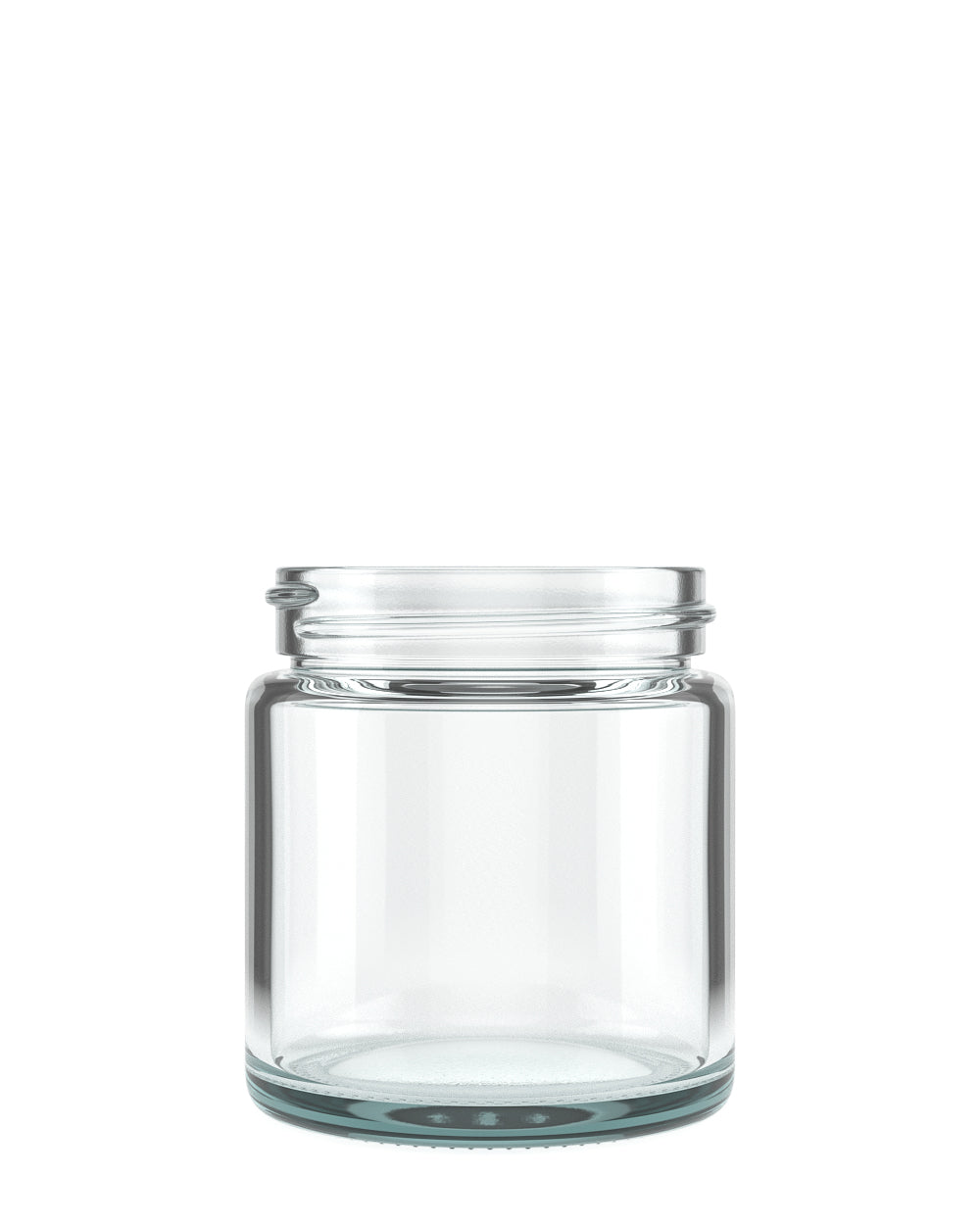
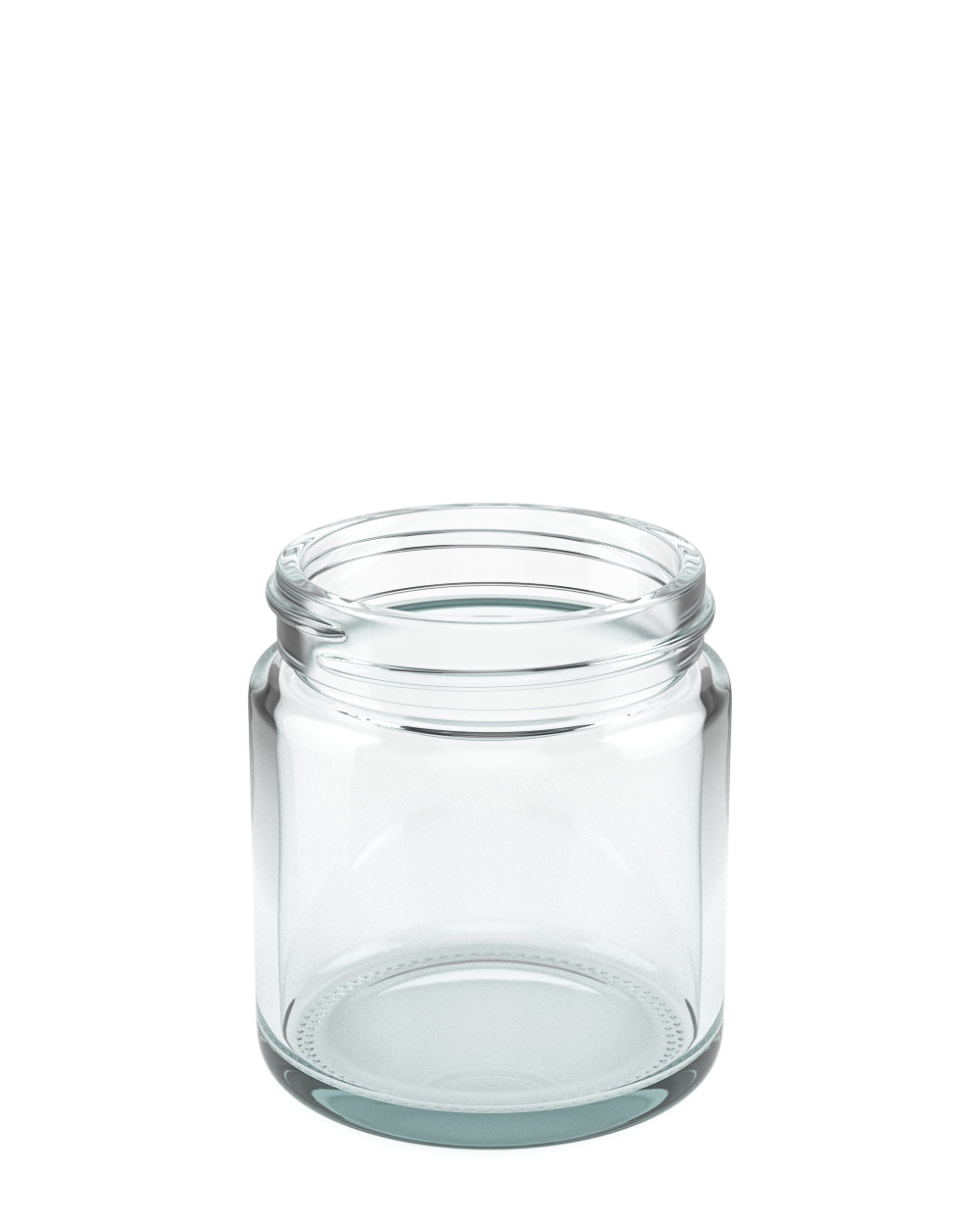
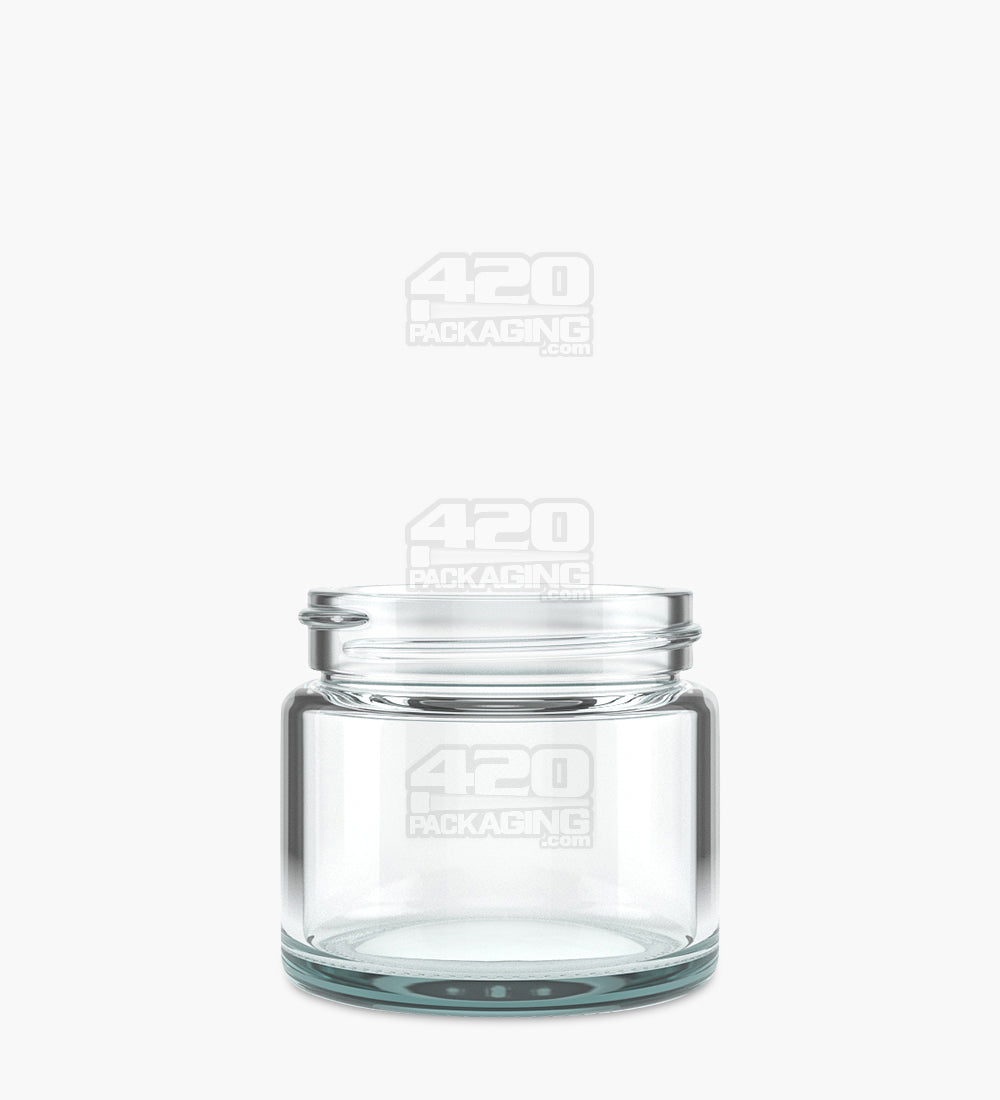
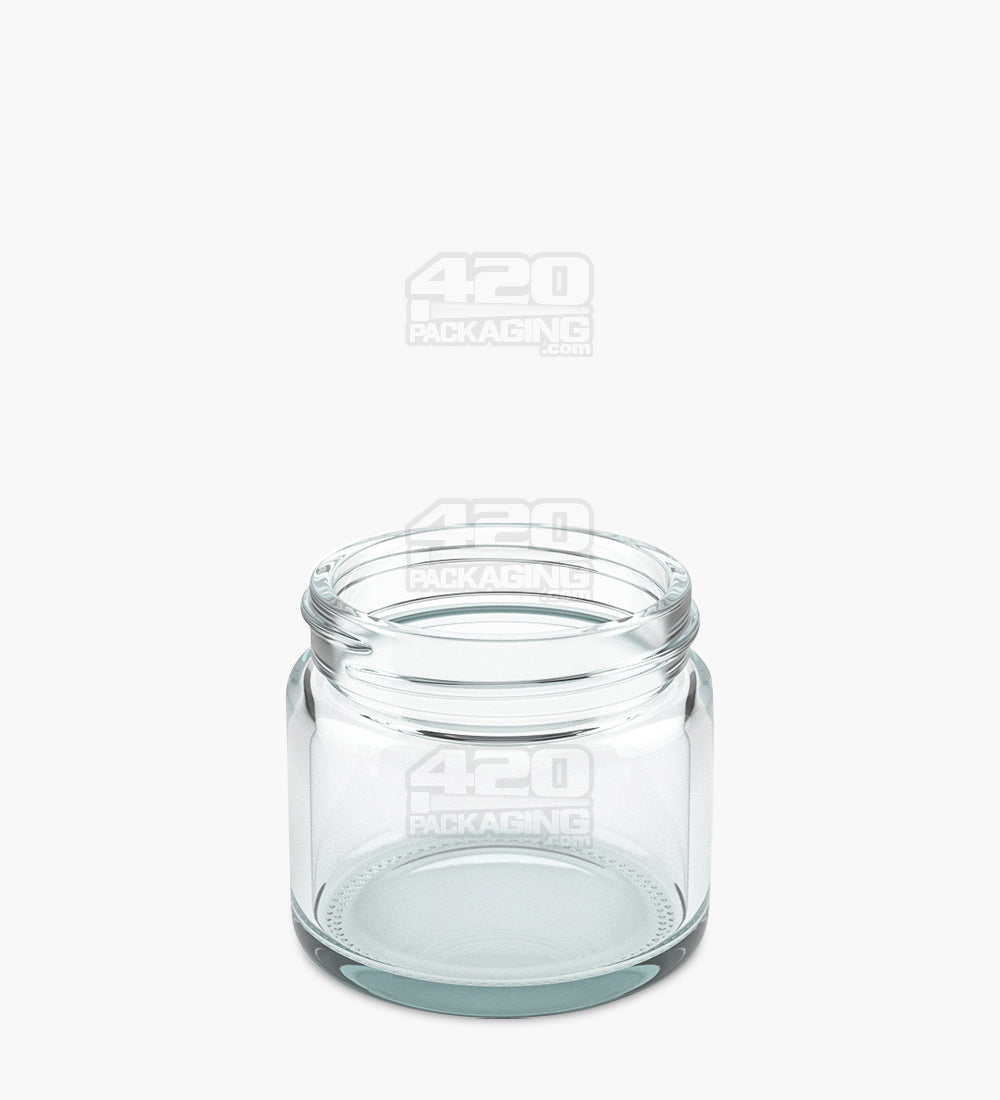
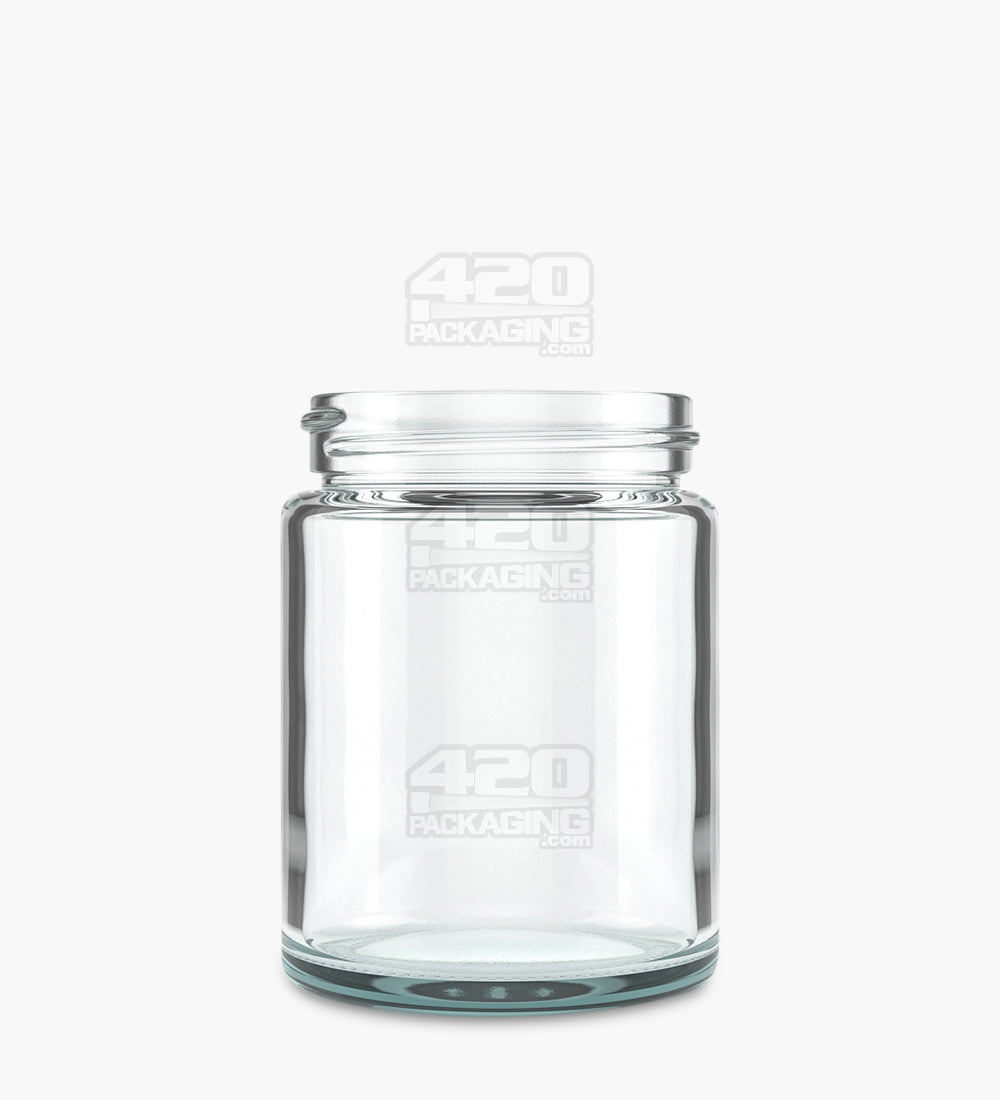
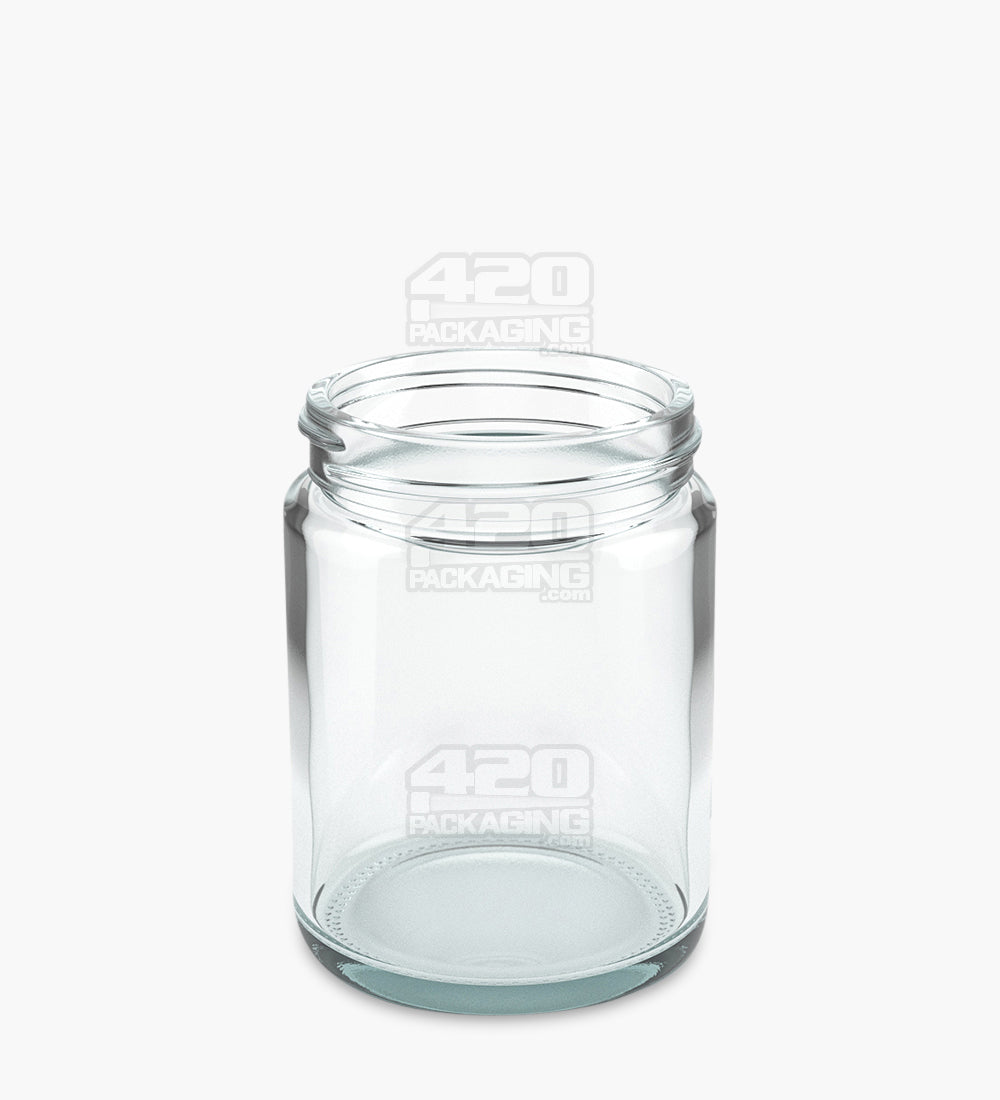
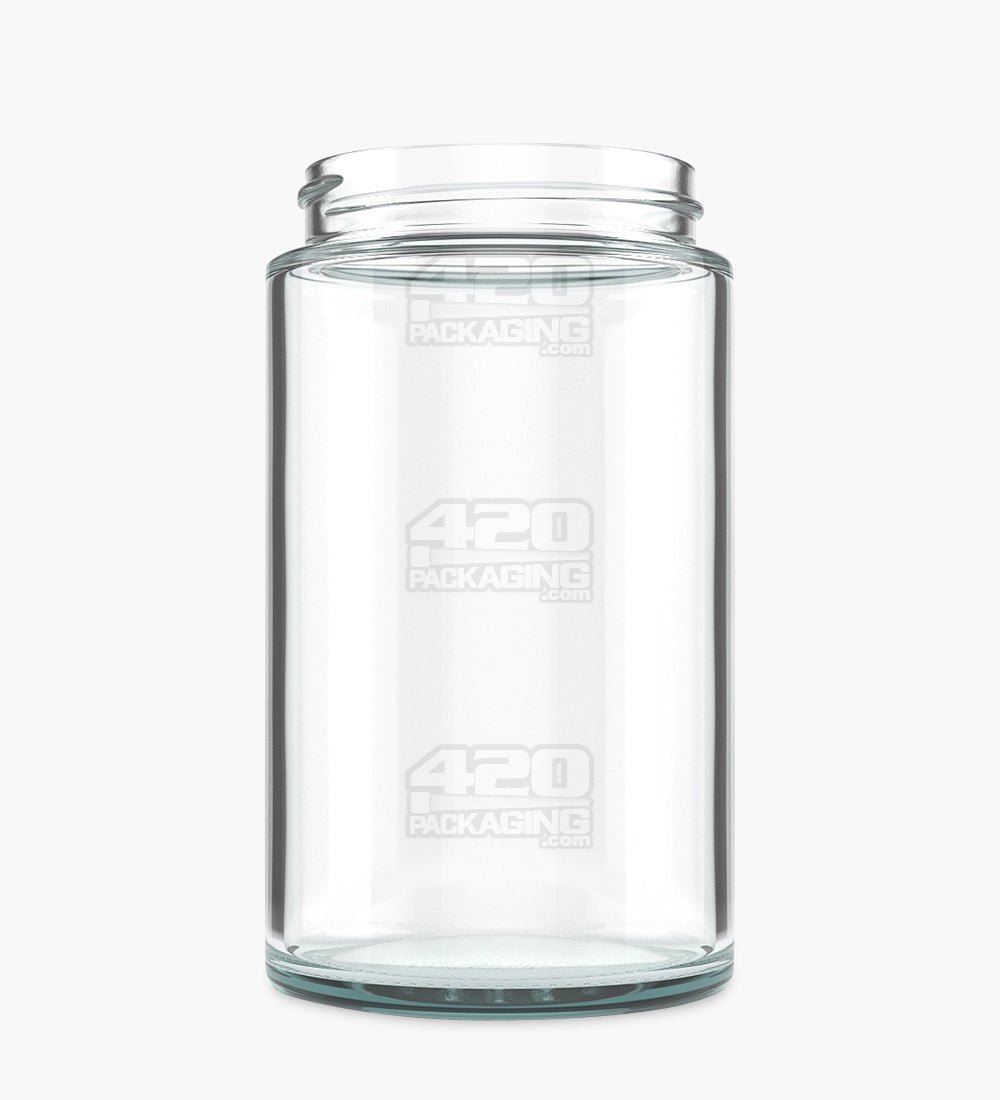
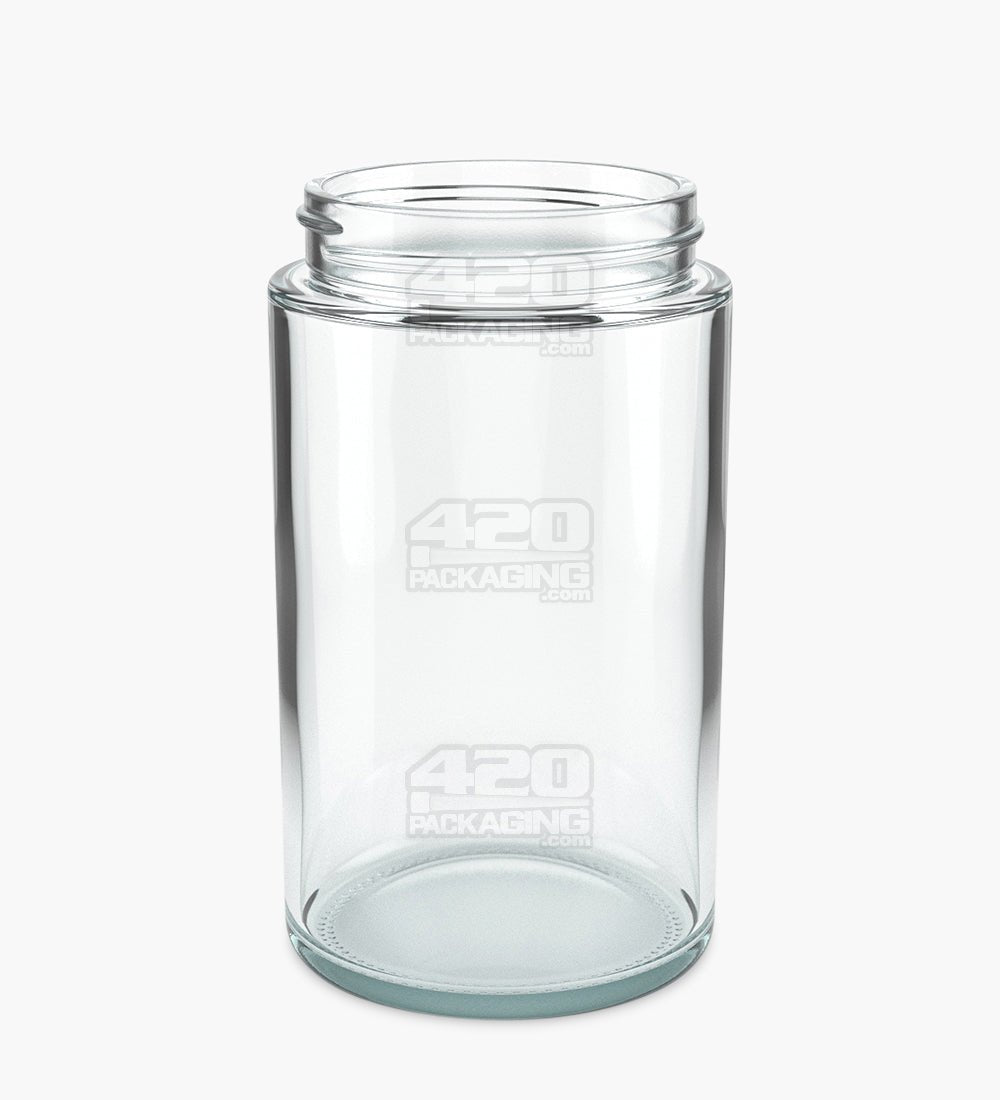

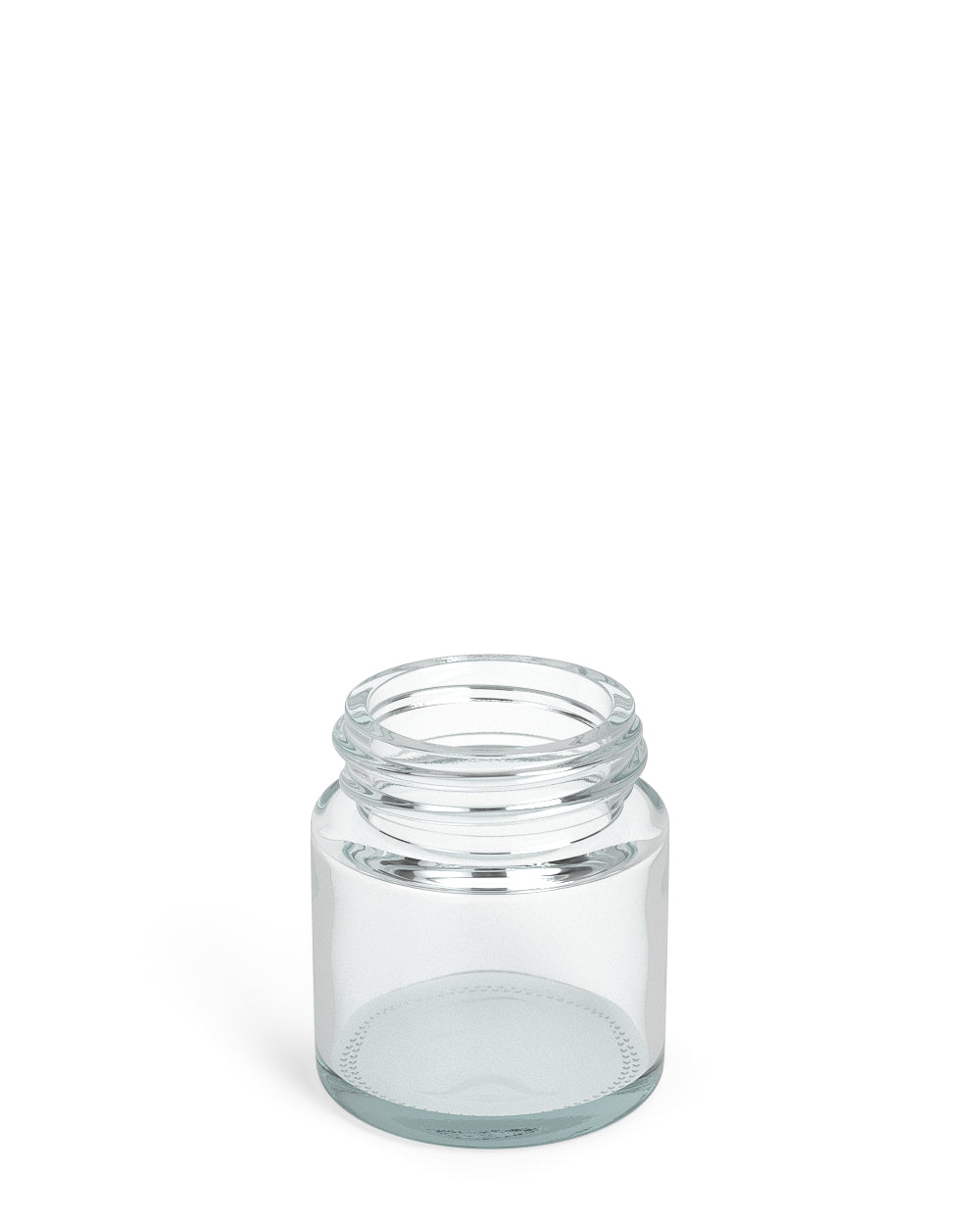


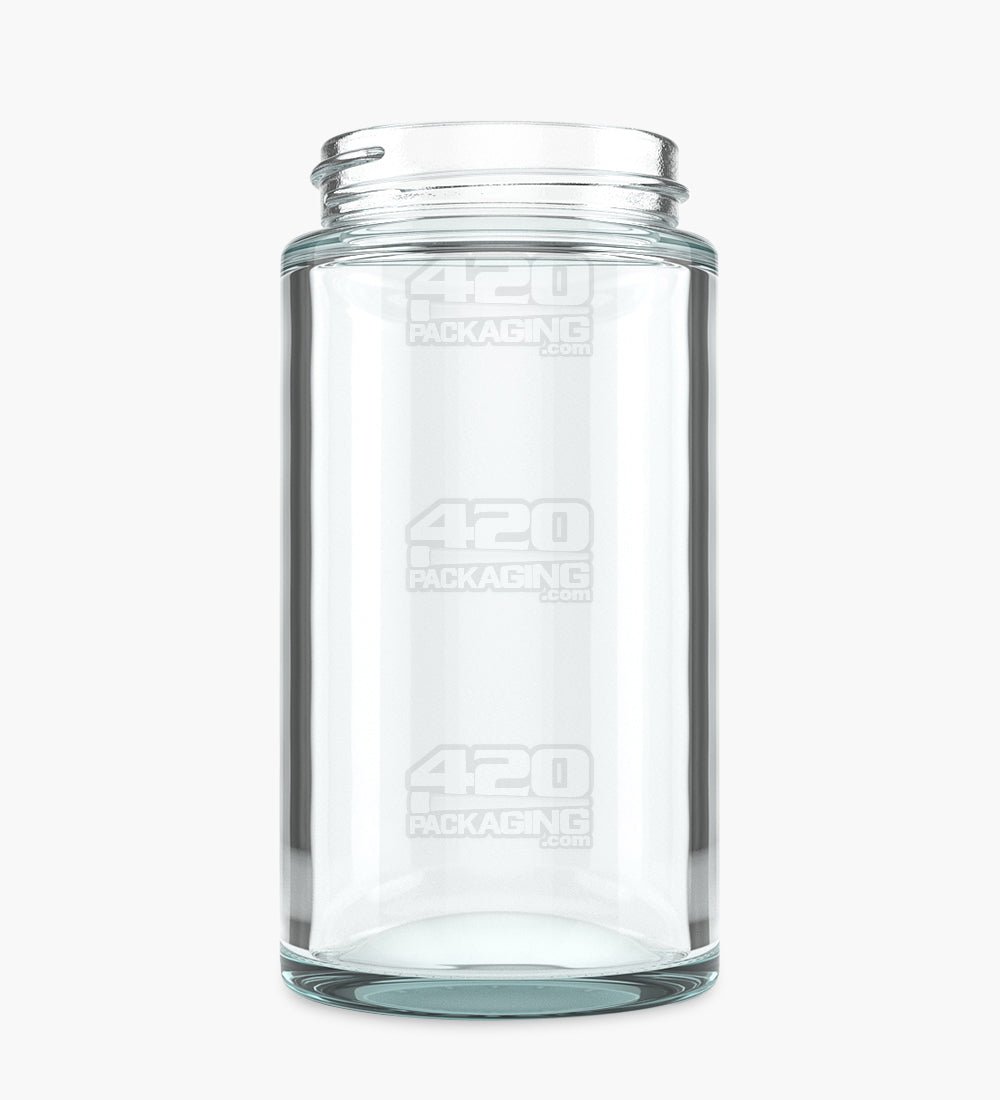
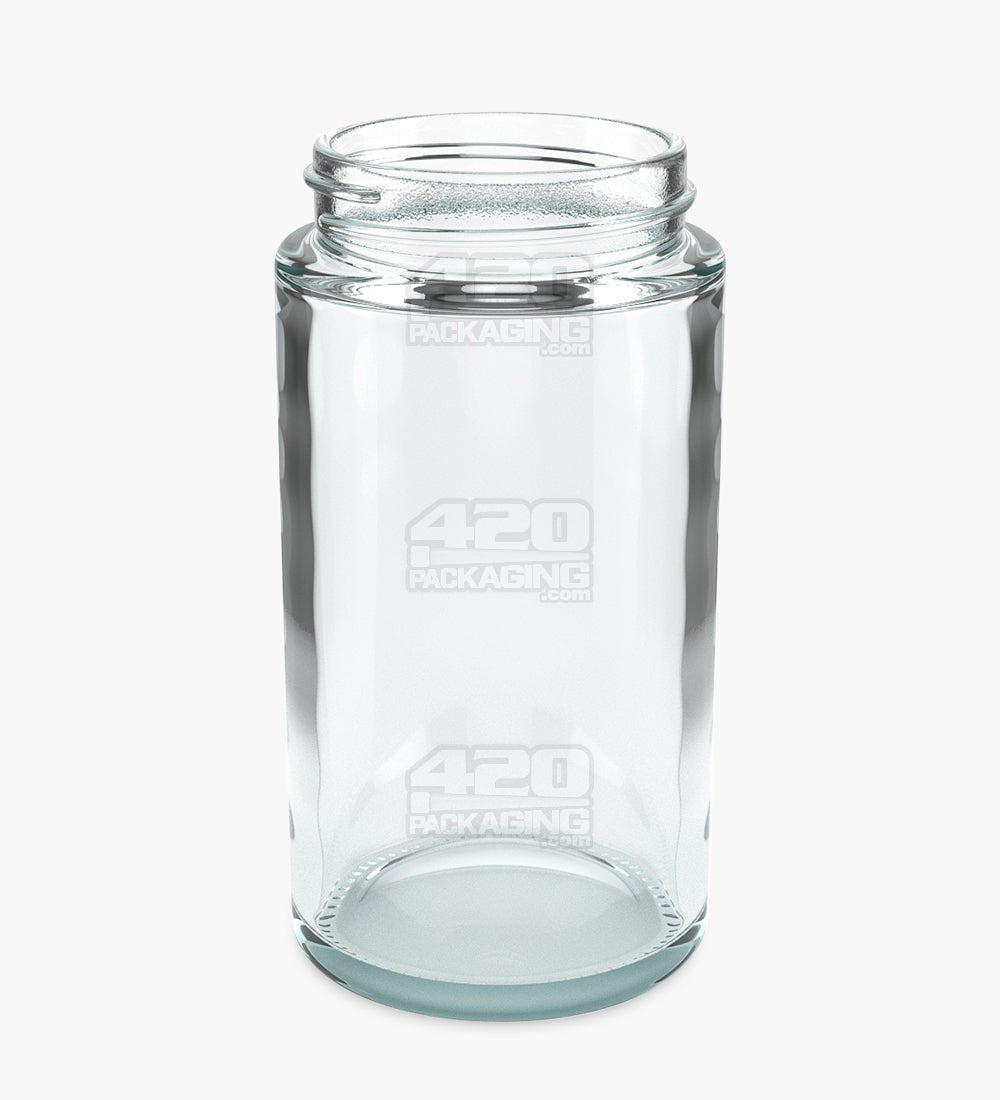
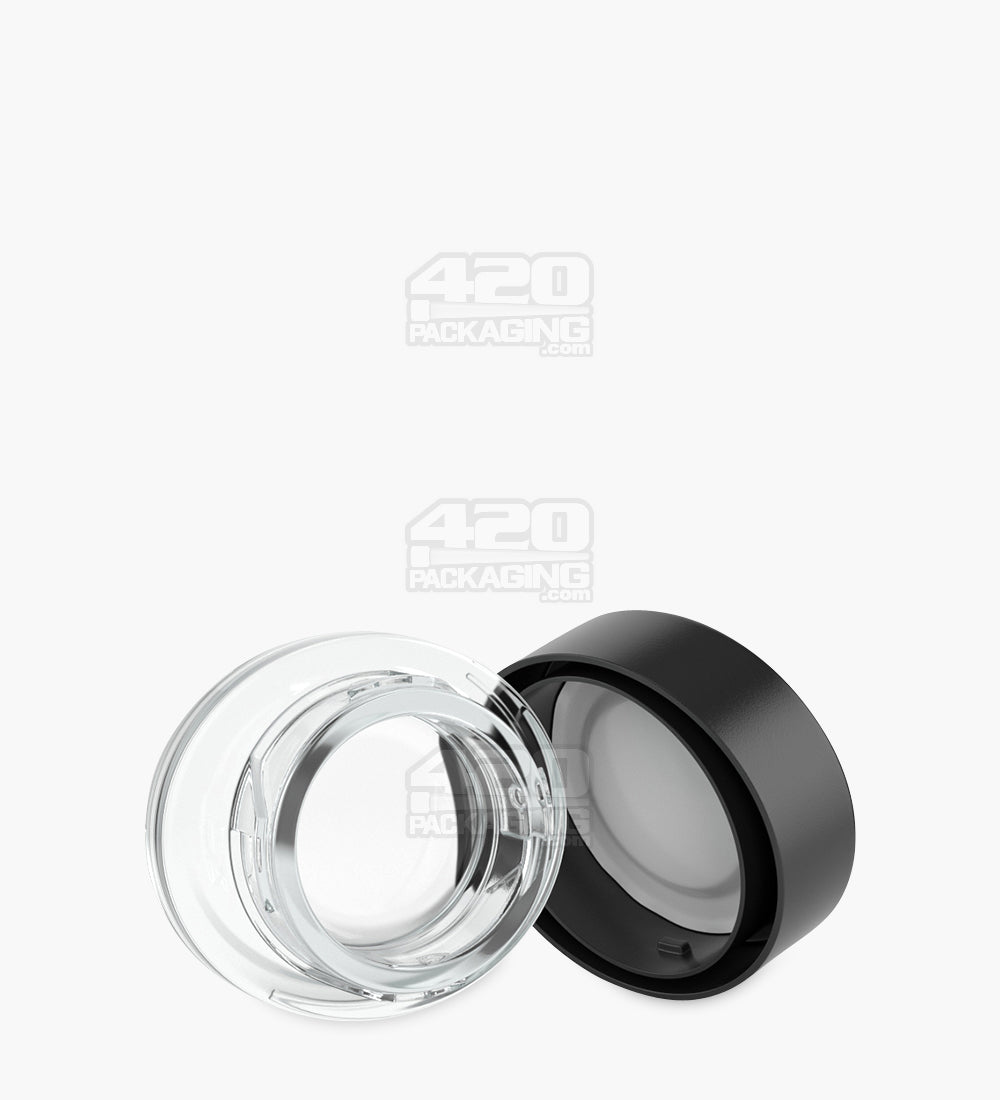


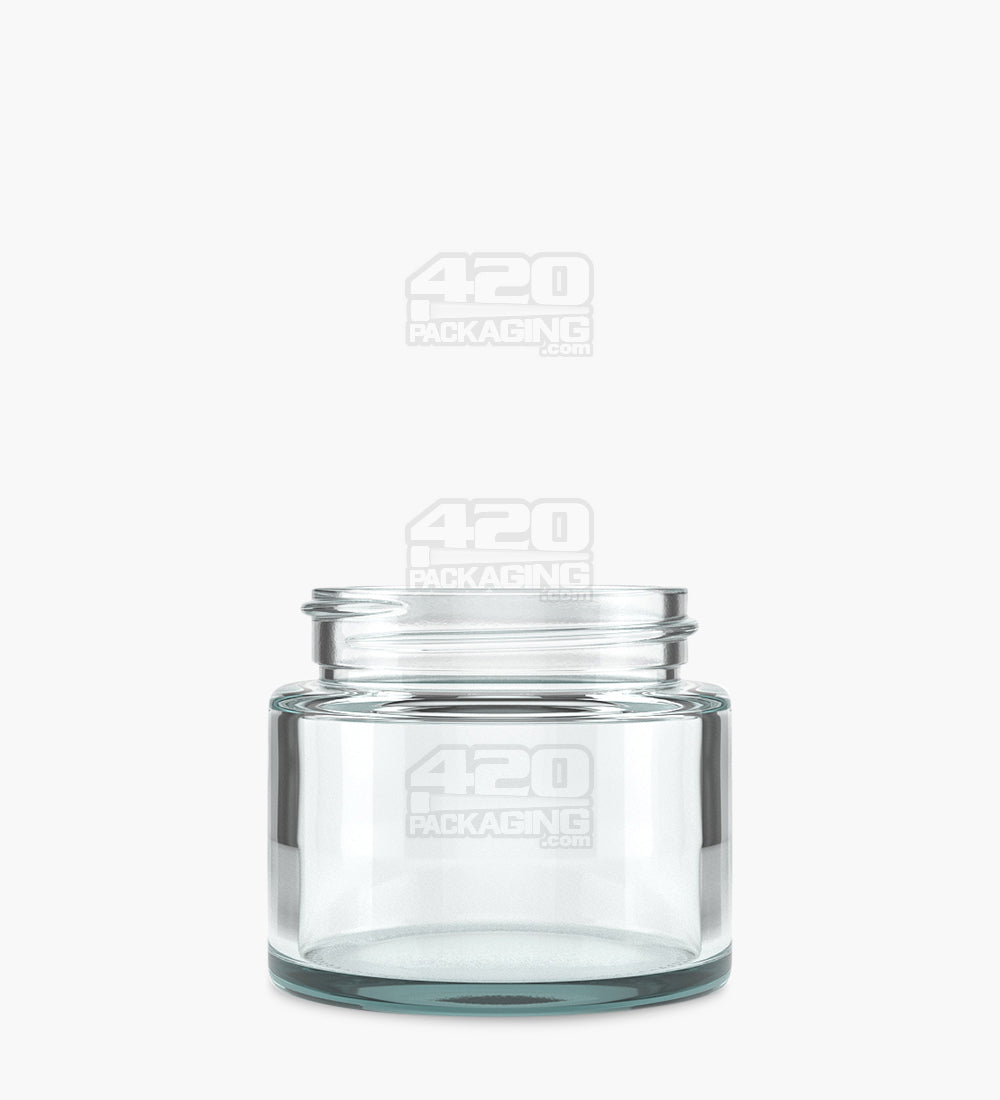
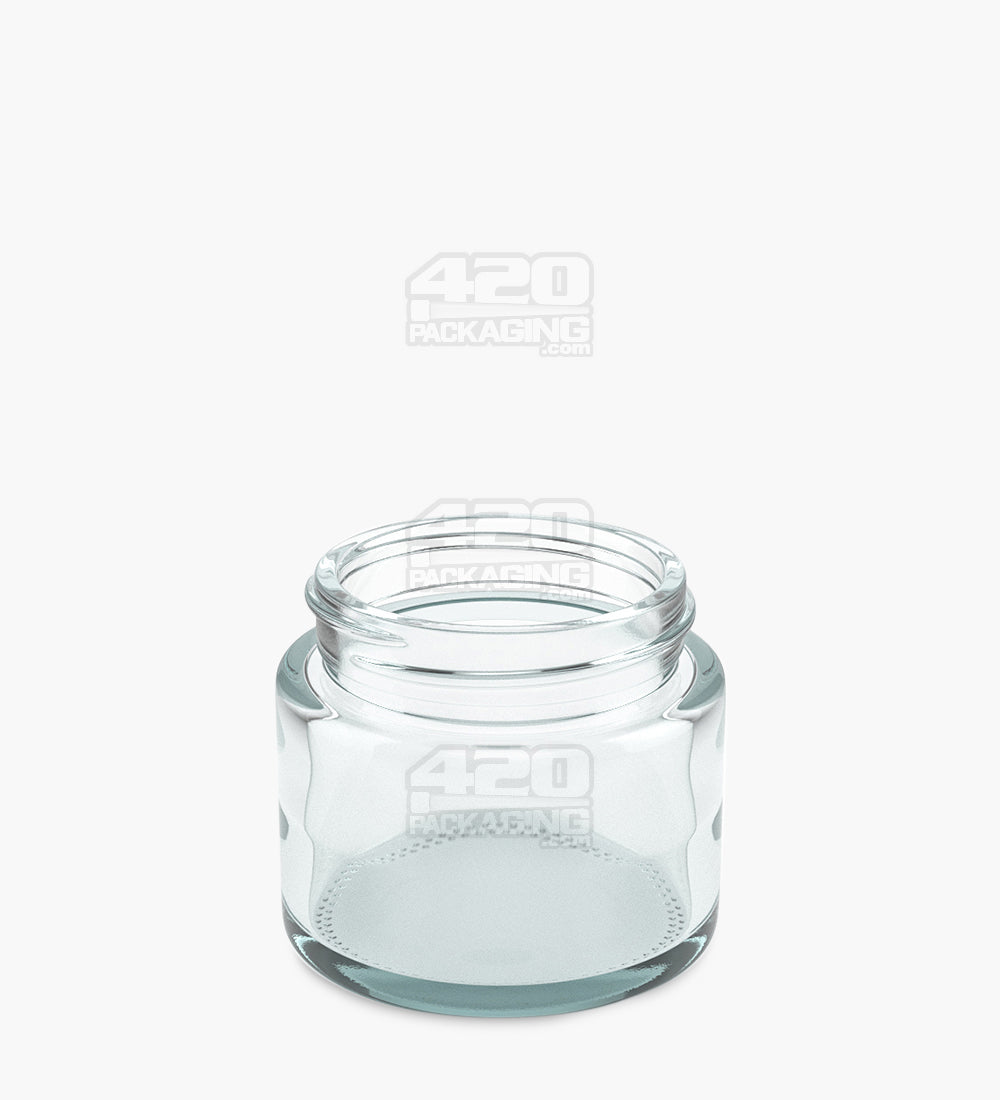
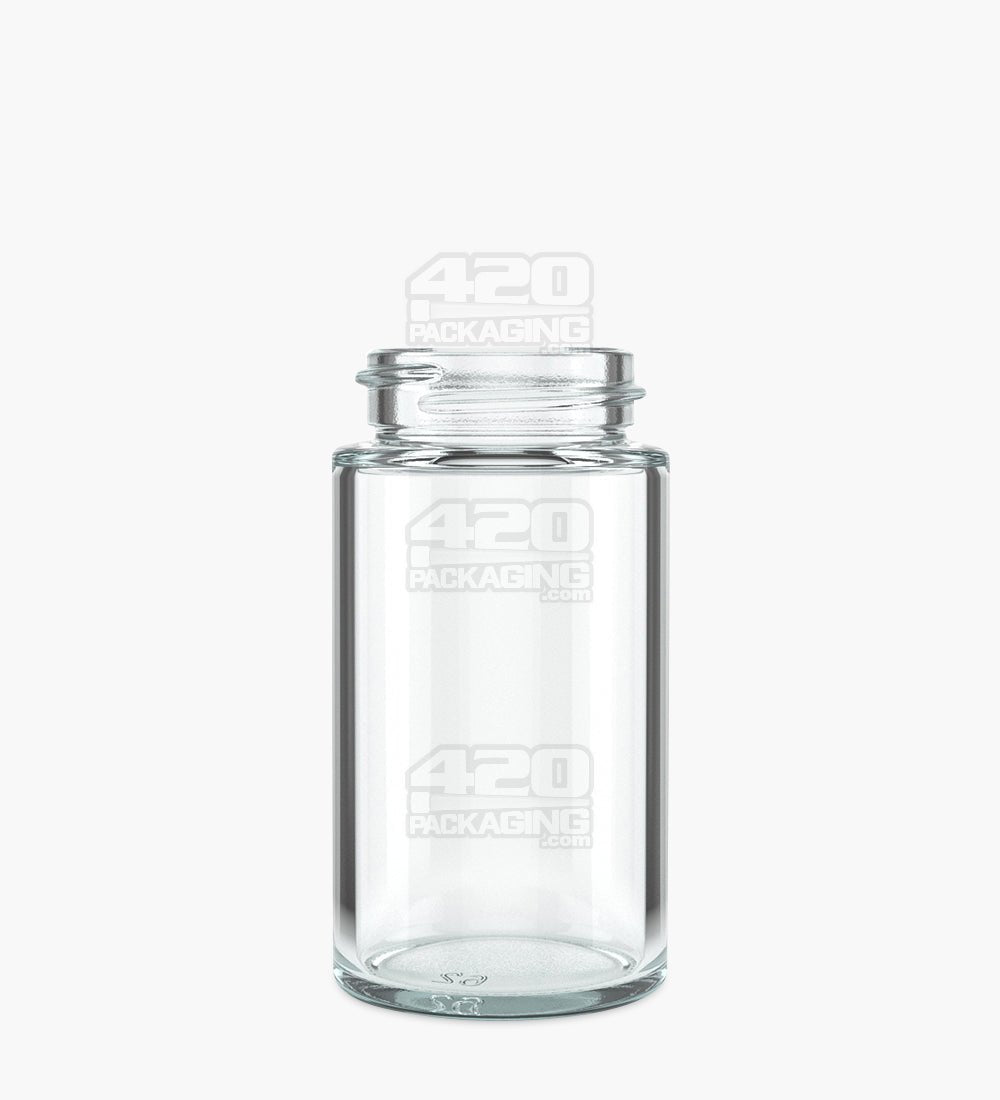
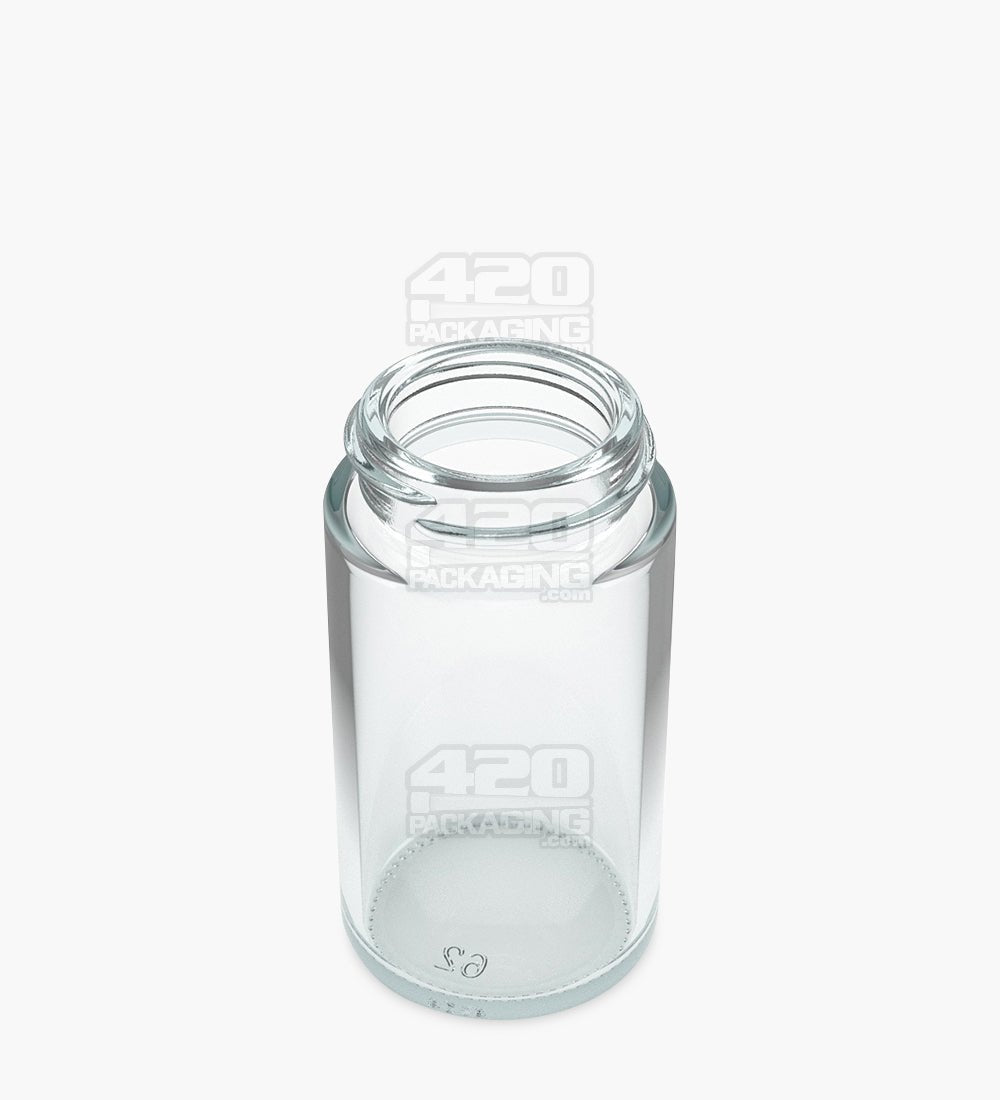
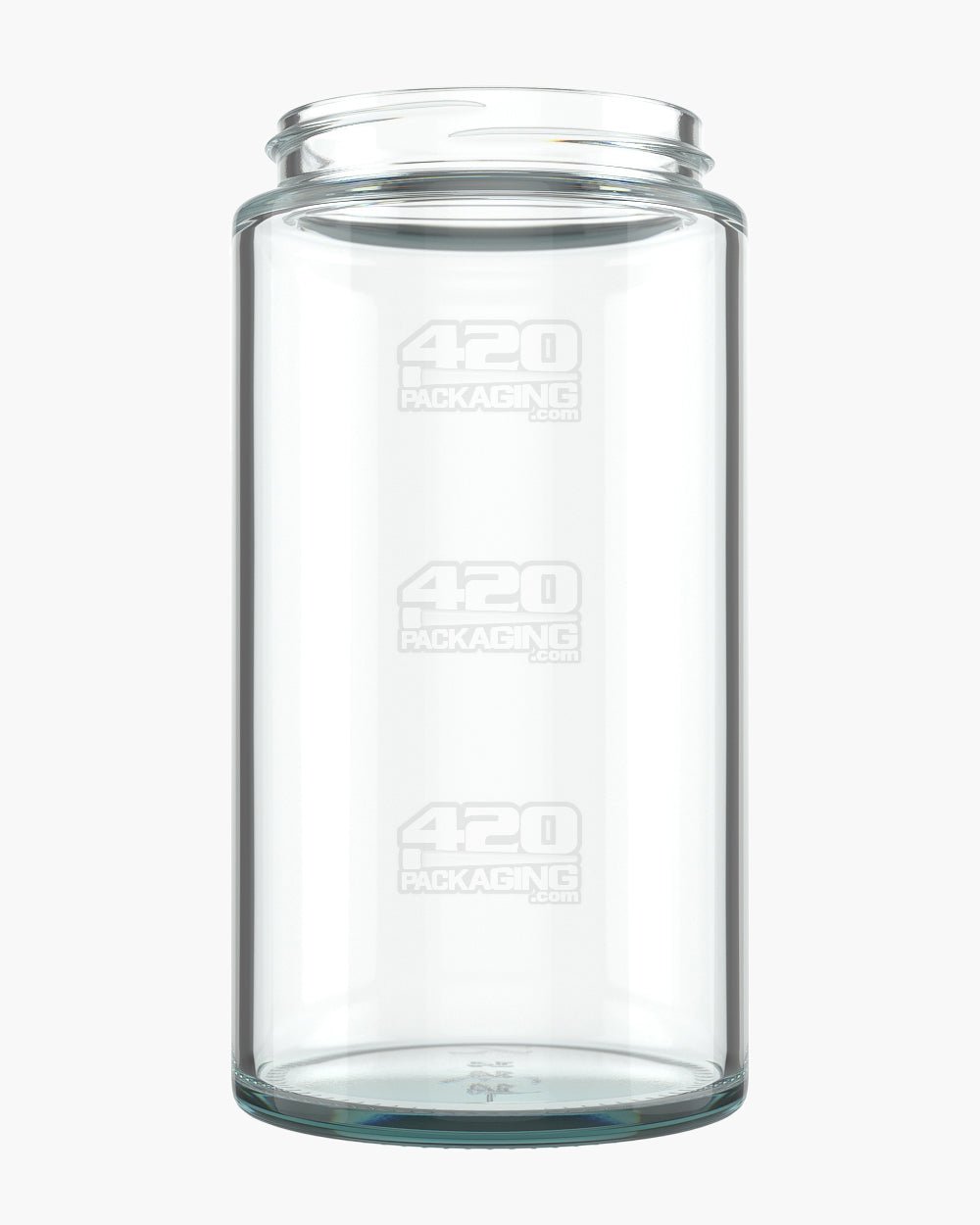
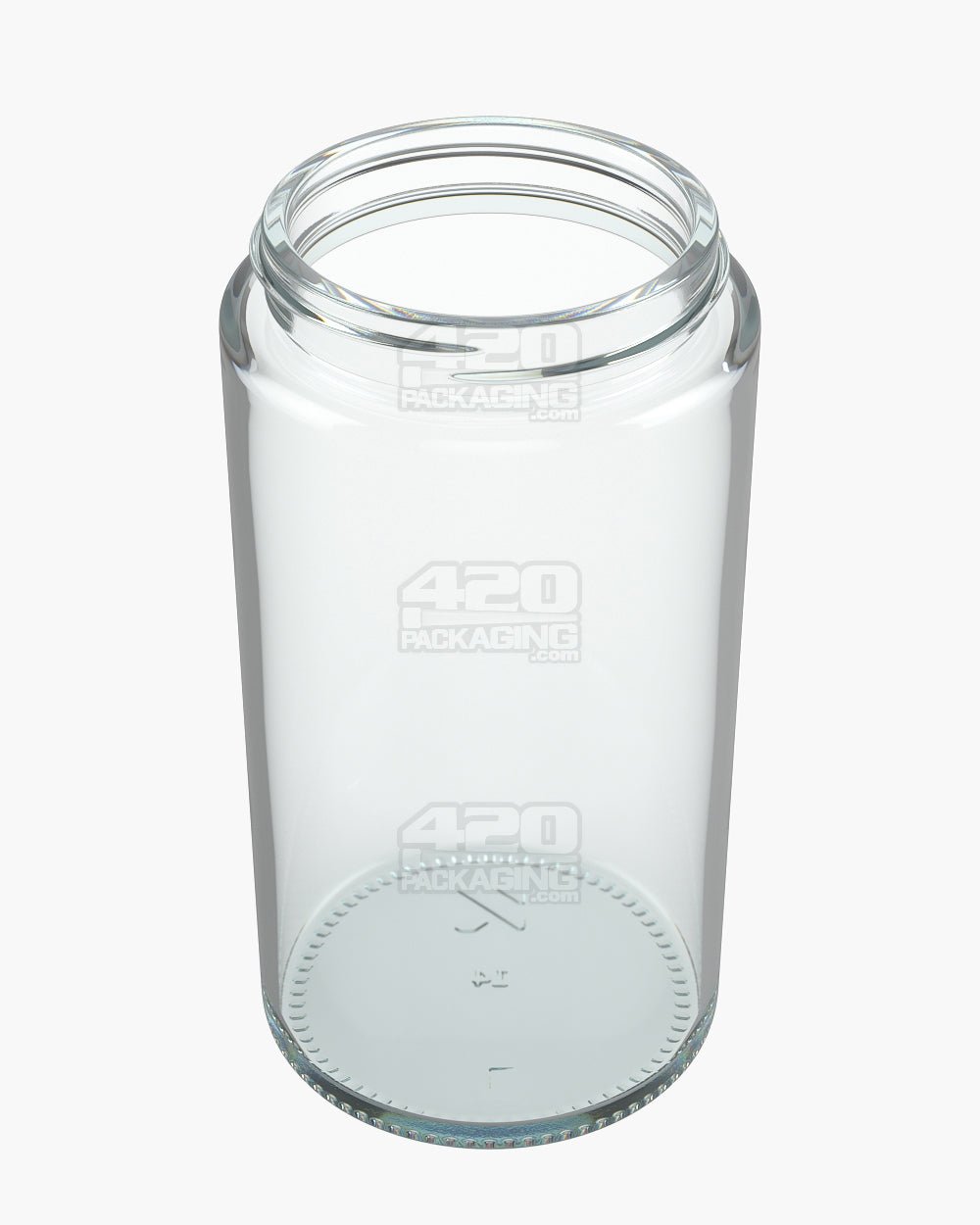
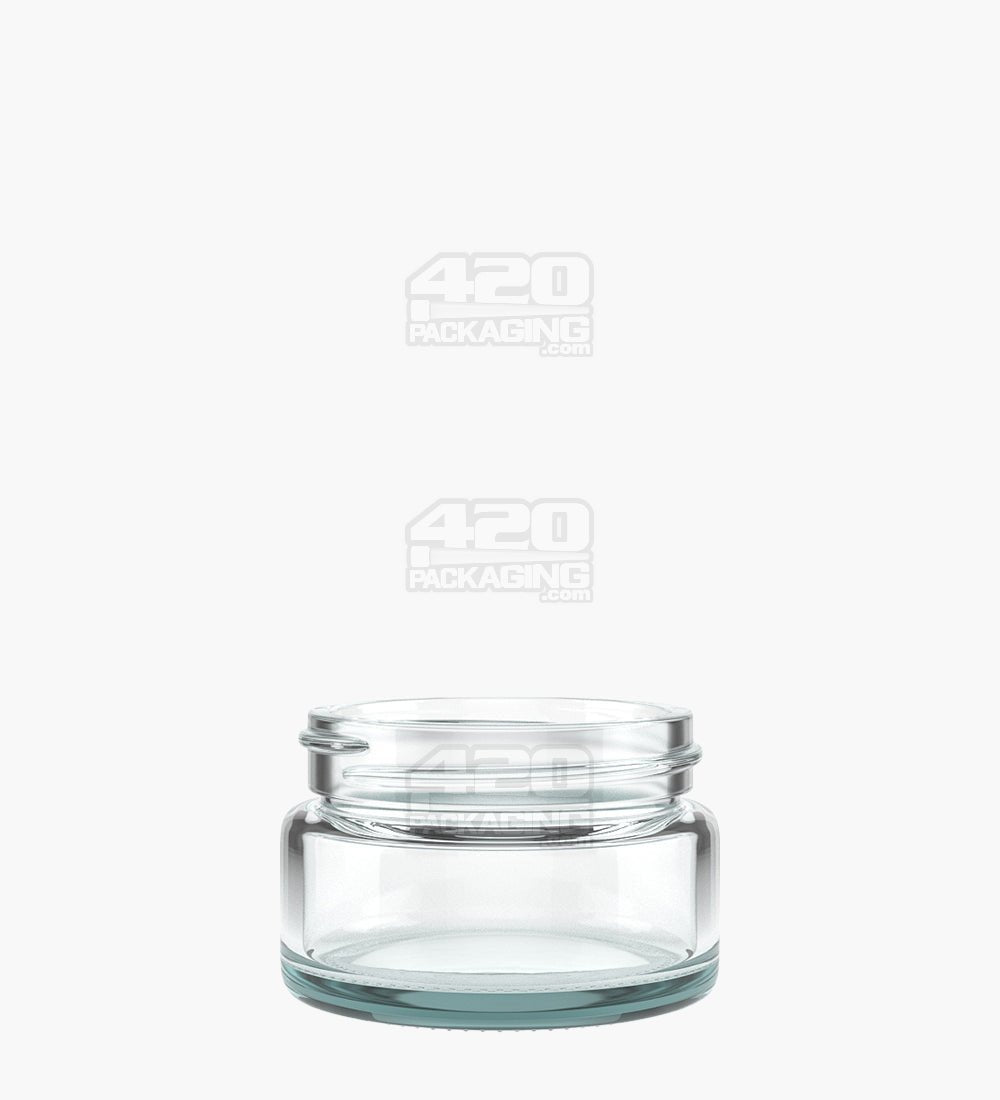
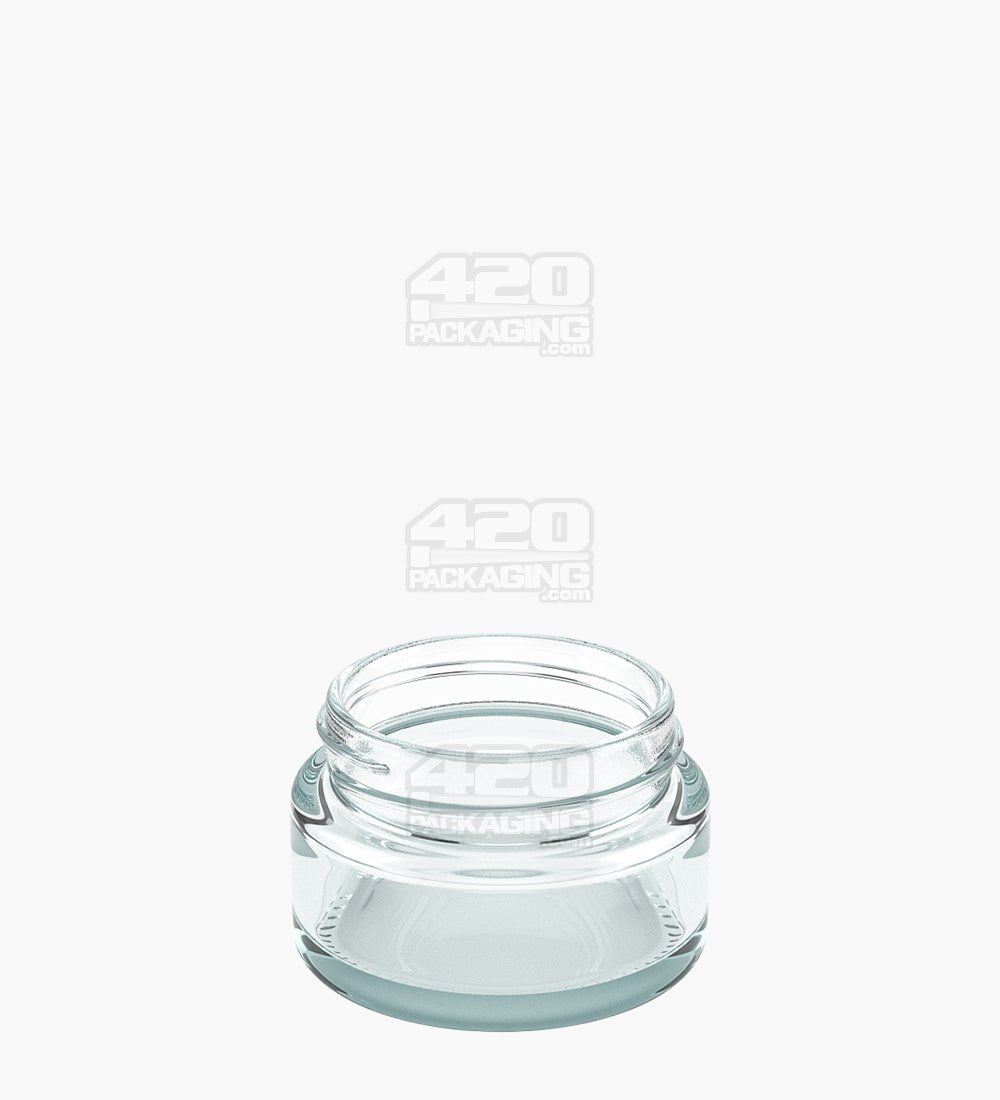
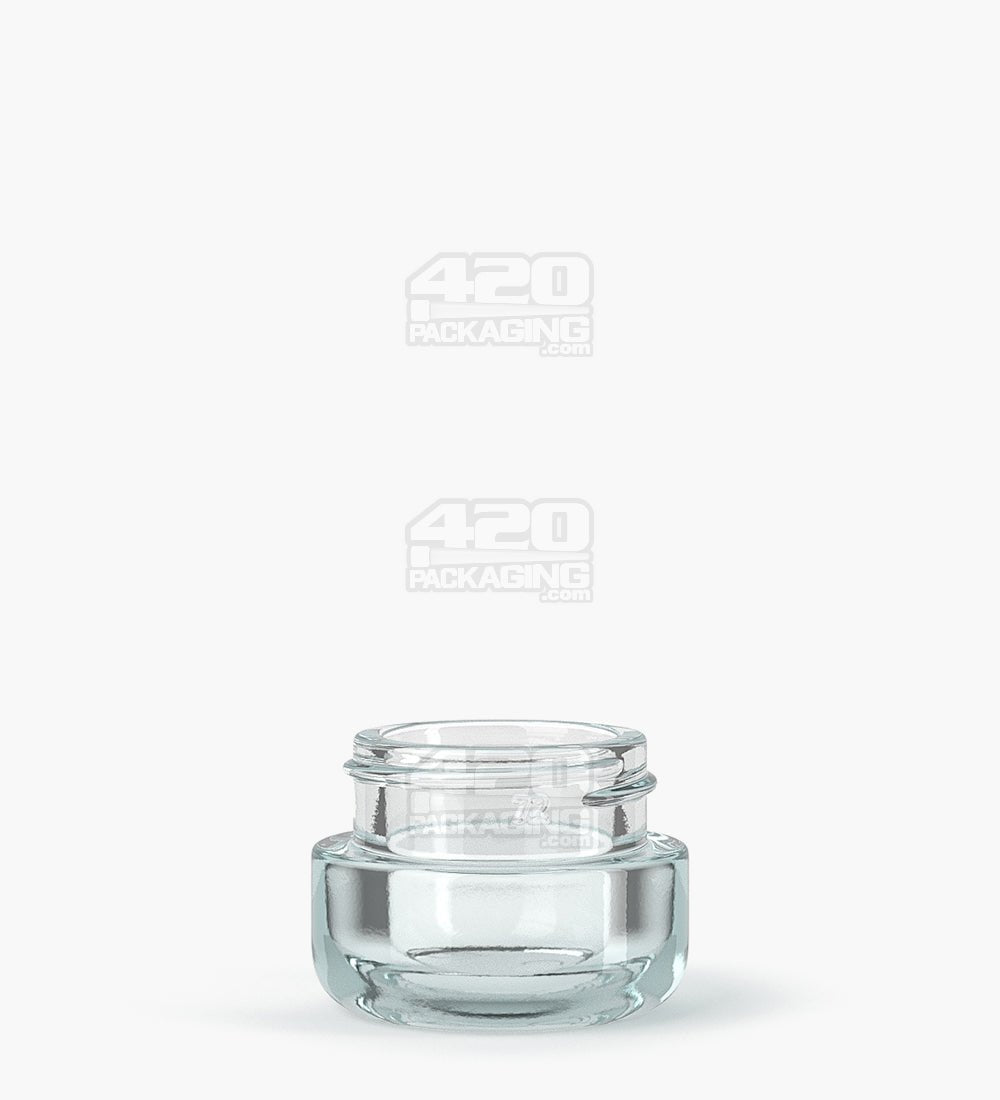
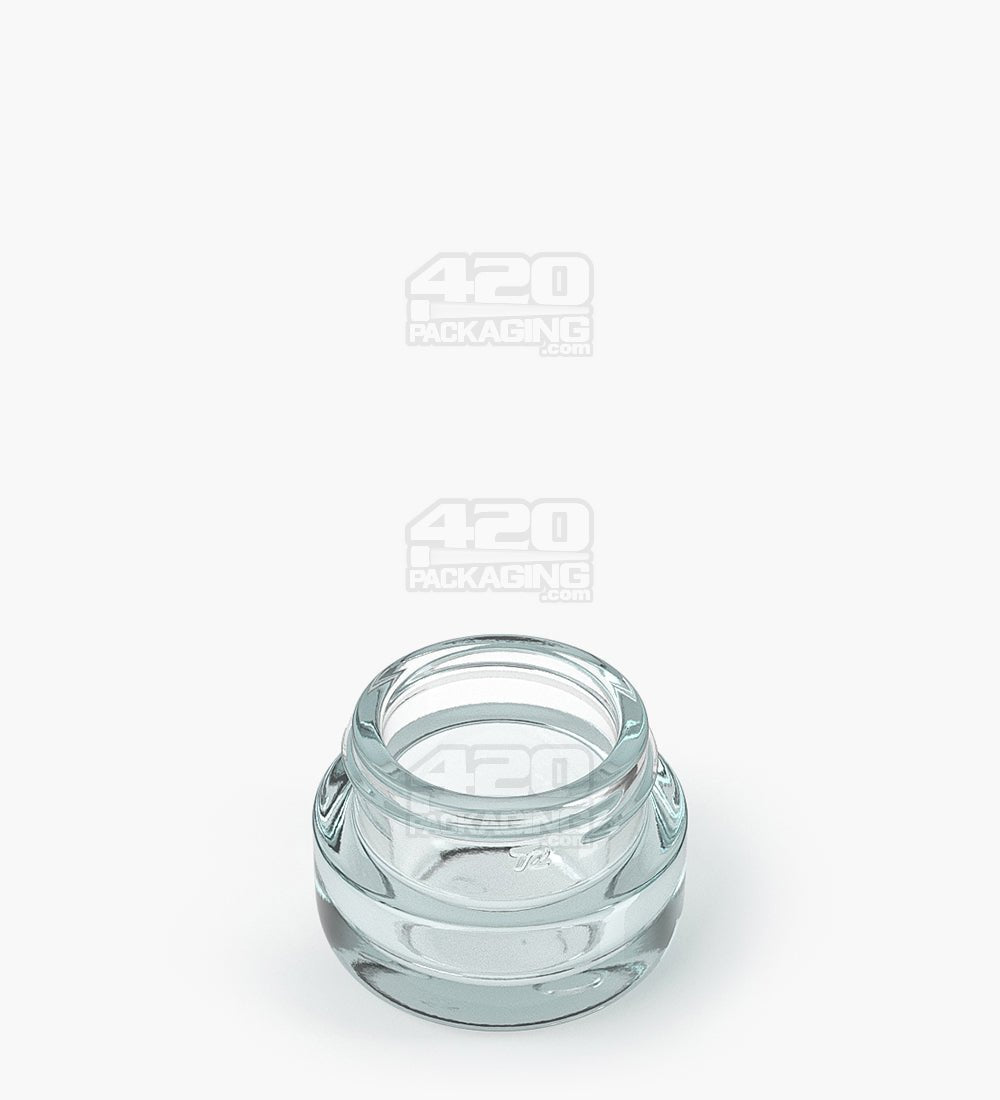
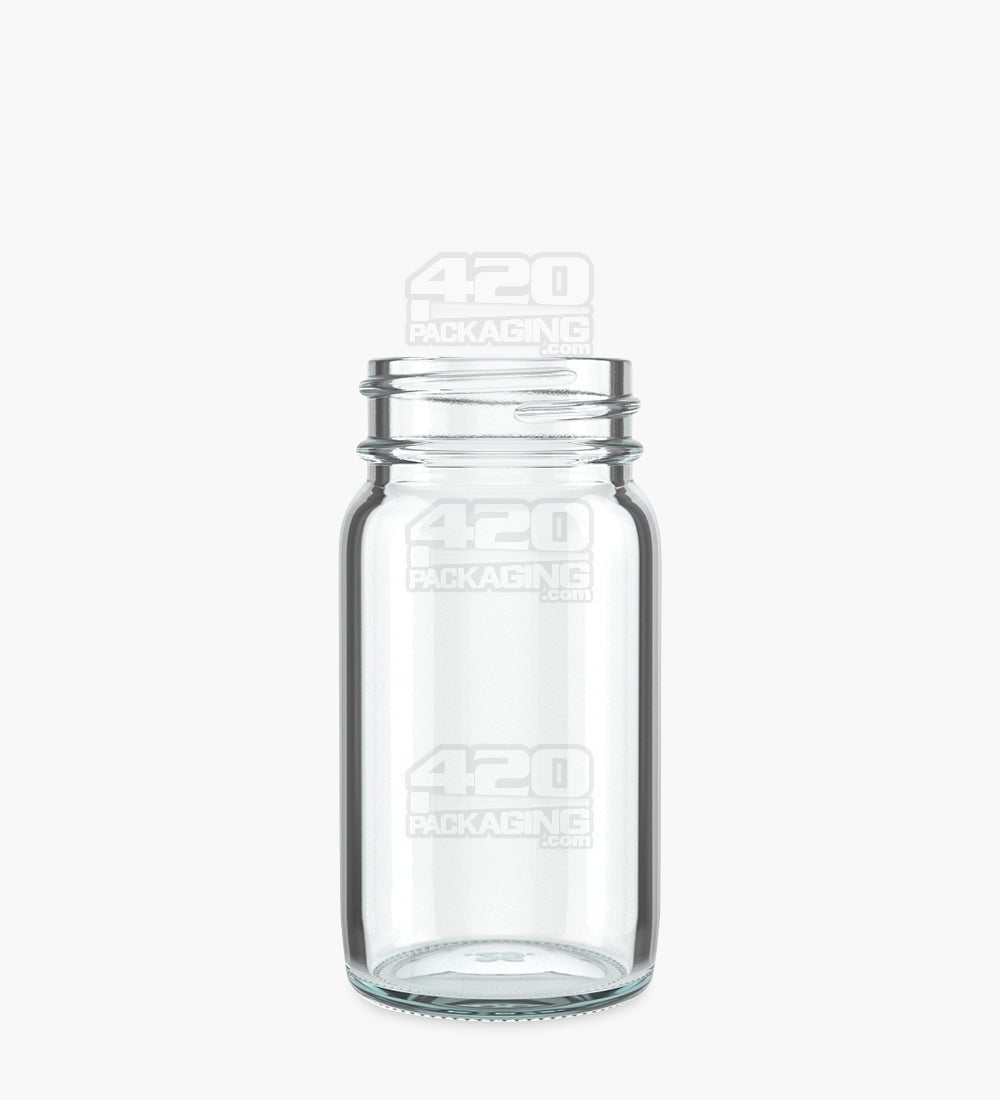
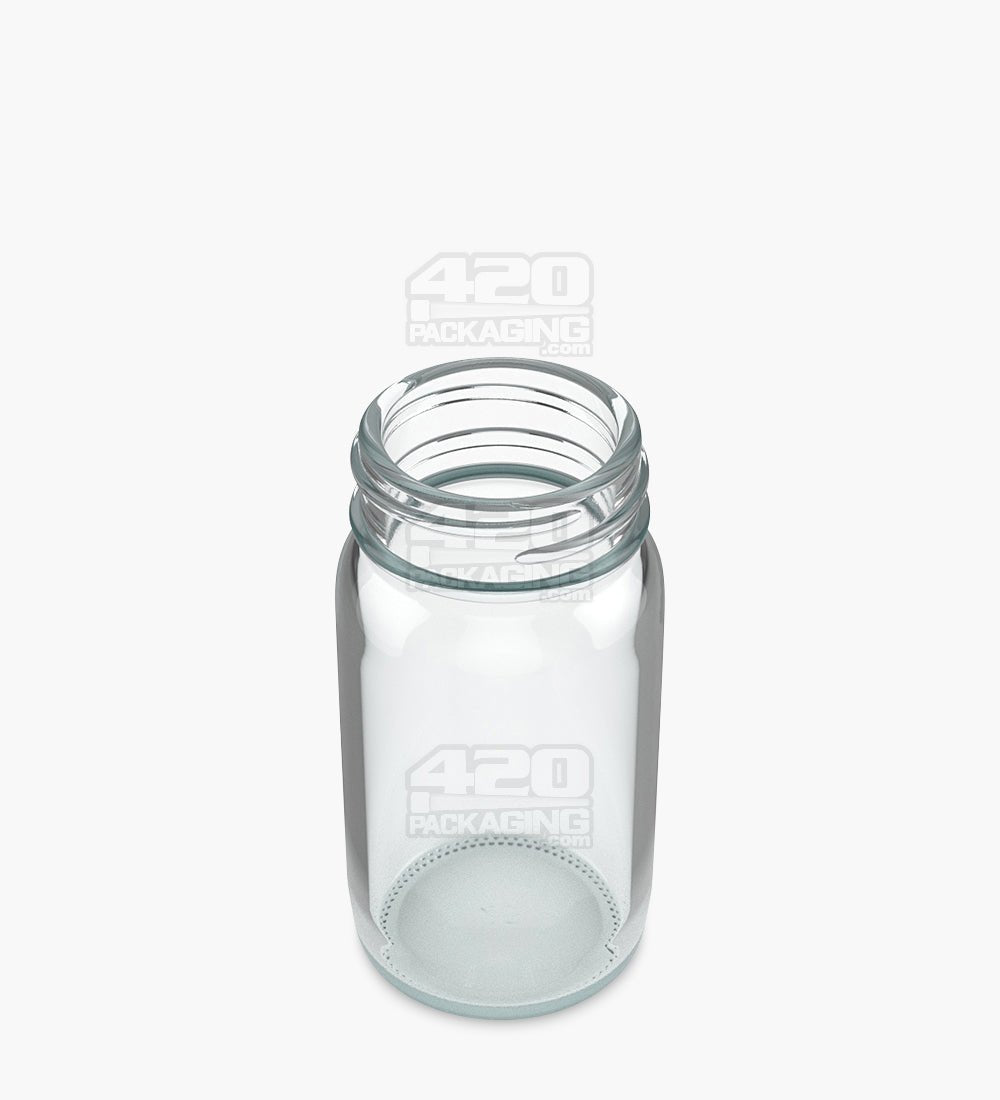
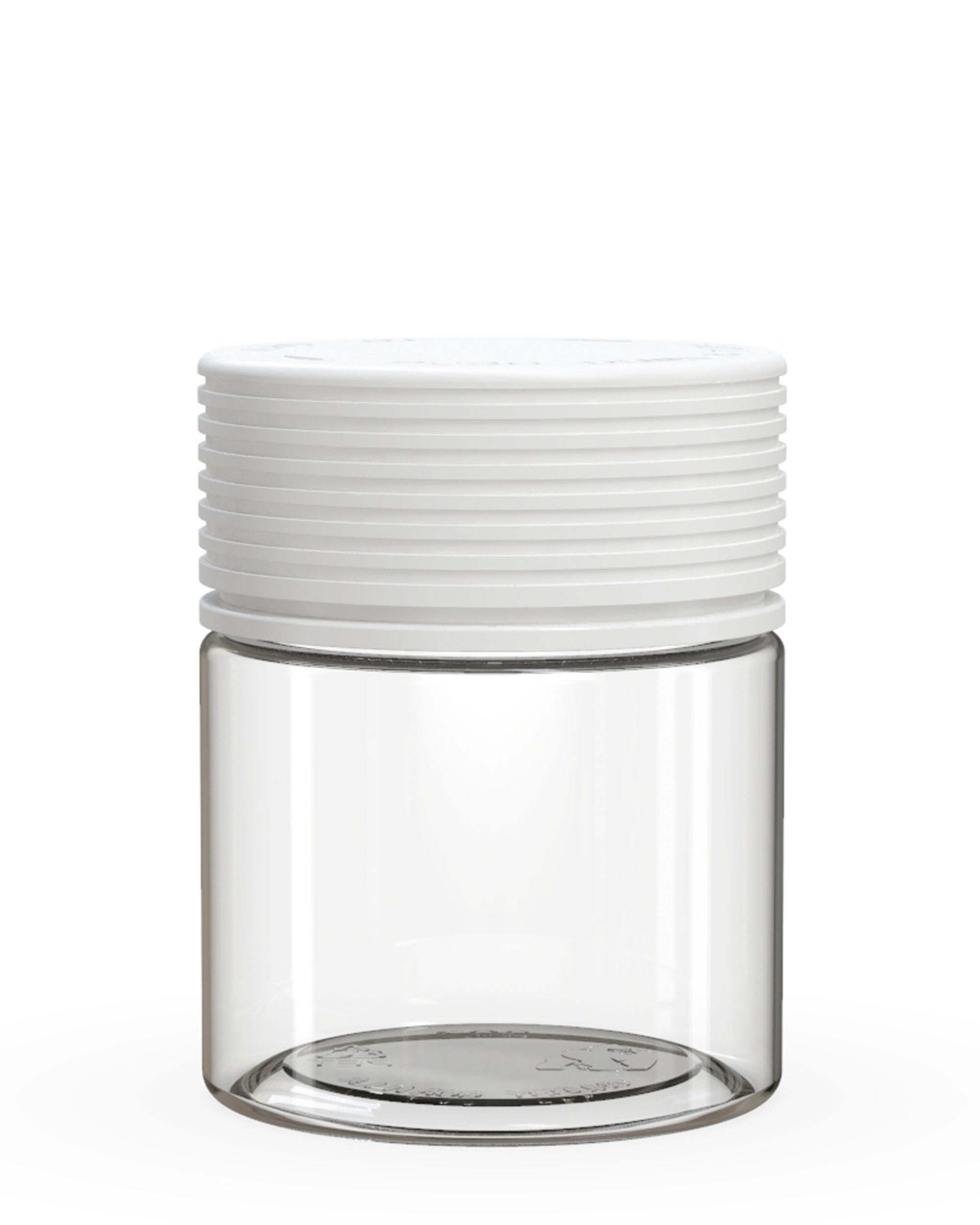
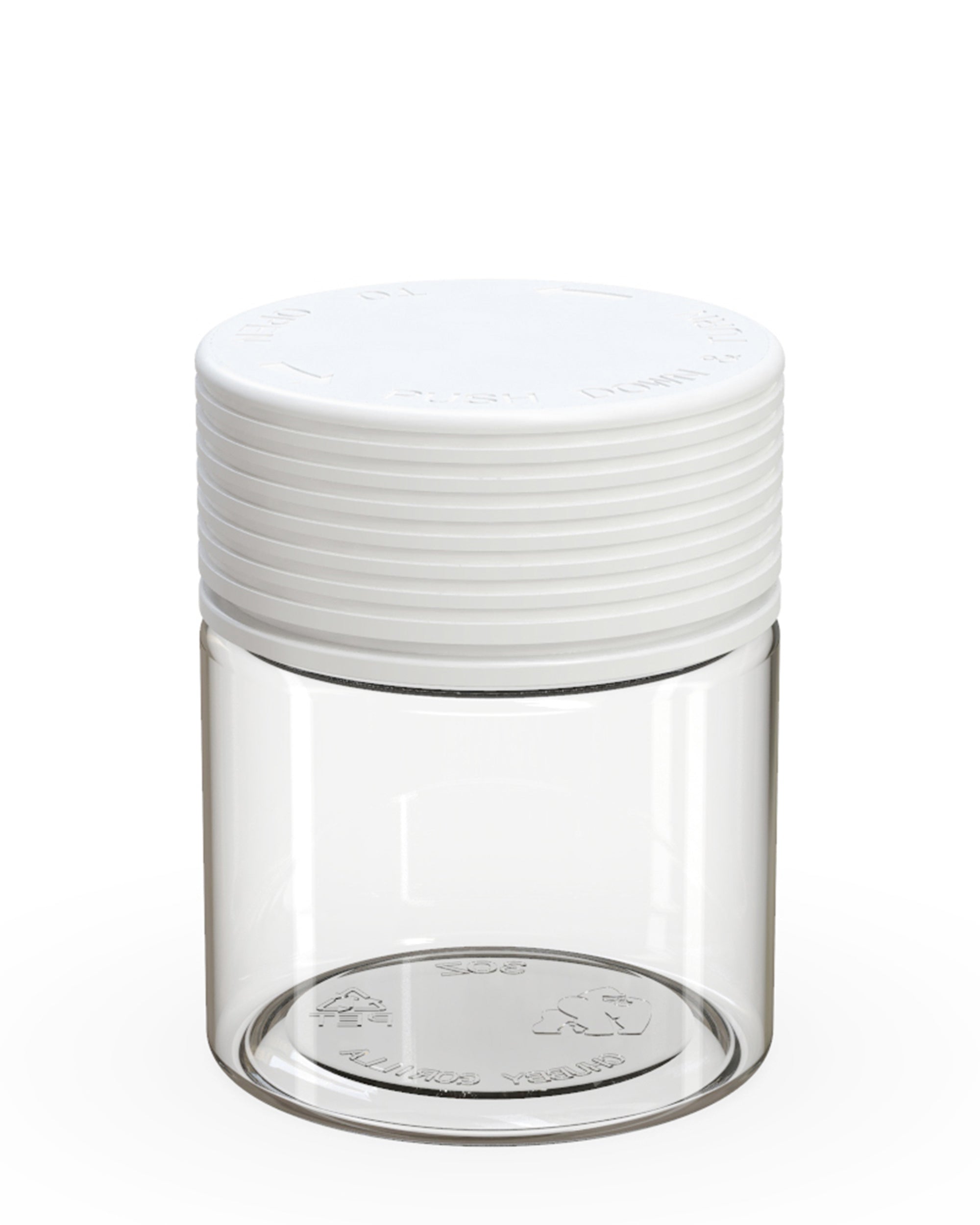
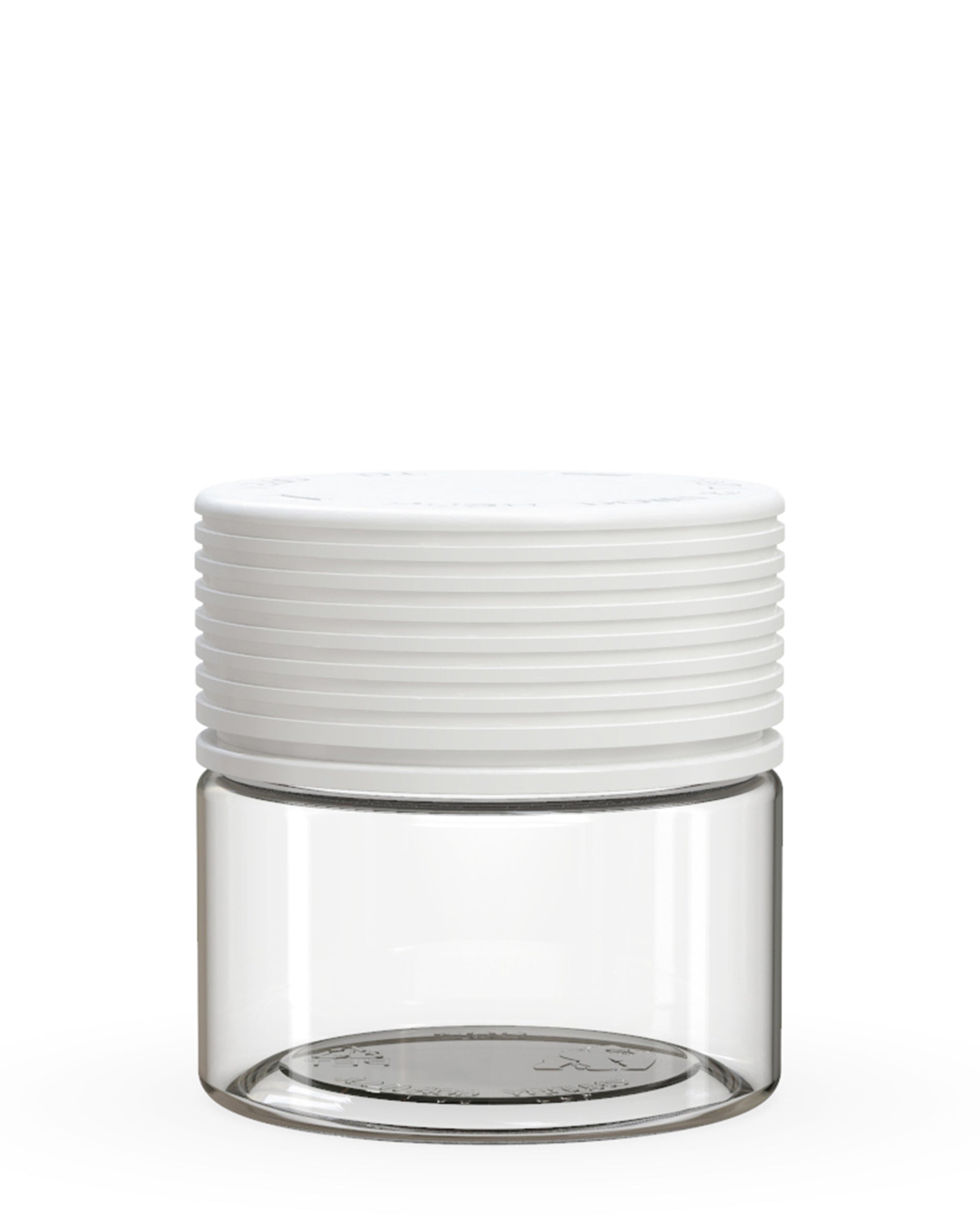
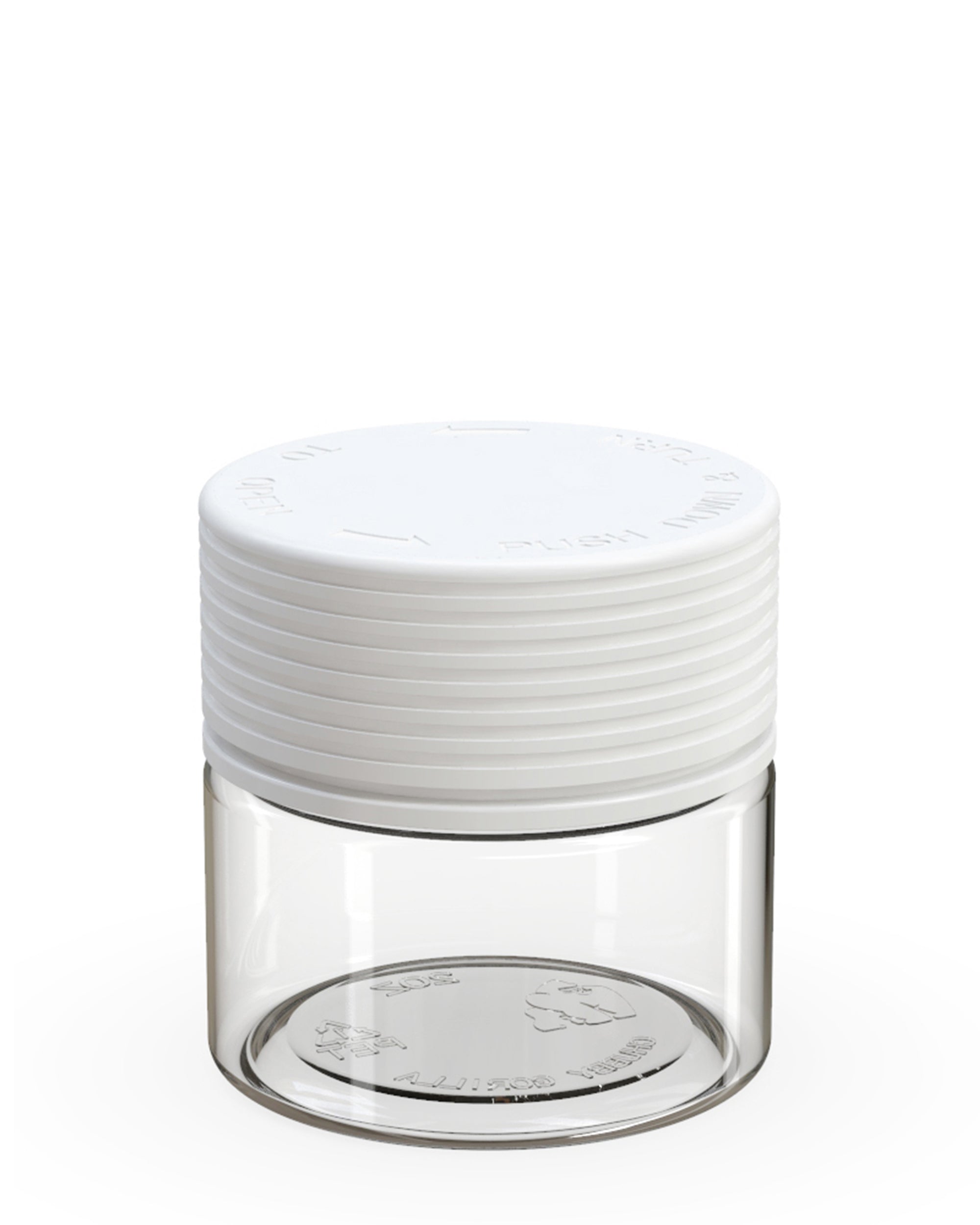
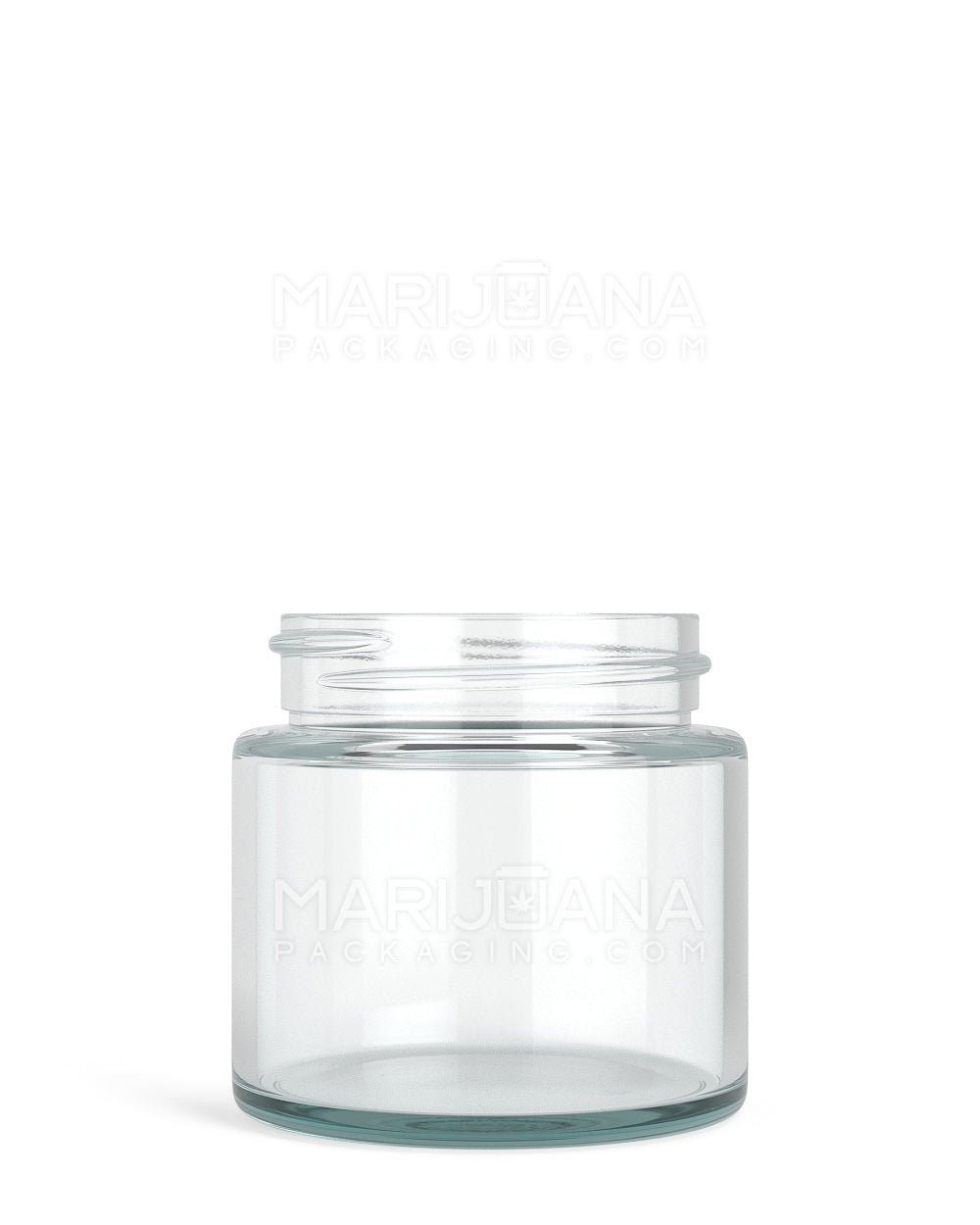
Clear cannabis jars provide transparent, rigid packaging that allows consumers and dispensary staff to view cannabis flower, concentrates, and other suitable products without opening the container. Marijuana Packaging supplies wholesale clear weed jars in glass and plastic, including recycled-content plastic options and containers designed for compatible child-resistant closures. These transparent packaging formats are used by cultivators, processors, manufacturers, cannabis brands, and dispensaries that want product visibility alongside practical packaging performance.
Choosing the right clear glass cannabis jars or clear plastic cannabis jars requires balancing visual presentation with material properties, light exposure, product fit, and closure functionality. A transparent container can reveal bud structure, color, and fill consistency, but visibility does not establish airtightness, child resistance, or protection from ultraviolet light. Businesses purchasing clear cannabis jars wholesale should evaluate the complete packaging system, including the jar, cap, sealing components, labels, regulatory requirements, and conditions under which the product will be stored or displayed.
Wholesale Clear Cannabis Jars for Commercial Packaging
Clear cannabis jars are rigid containers manufactured from transparent materials that permit direct visual inspection of their contents. Unlike opaque packaging, transparent jars allow the appearance and arrangement of the product to remain visible without disturbing the closure.
For cannabis flower, this can make individual buds part of the retail presentation. For suitable concentrate products, transparency can reveal the product's appearance and fill condition. Clear containers can also help packaging personnel identify certain visible inconsistencies during production.
Within the broader cannabis jars assortment, this collection addresses a specific optical characteristic: transparency. It is distinct from collections organized by material, container capacity, child-resistant functionality, or product application.
Why Cannabis Brands Choose Transparent Jars
Clear packaging offers several characteristics that may be valuable to commercial cannabis operations:
- Product visibility: Consumers can see the appearance of the contents without opening the package.
- Flower presentation: Bud structure, color, and the arrangement of the flower remain visible.
- Visible fill consistency: Packaging personnel can identify certain differences in product placement and headspace.
- Rigid construction: Glass and plastic jars maintain a defined shape that helps protect contents against external compression.
- Material choice: Clear containers are available in glass, conventional plastic, and certain recycled-content plastic constructions.
- Labeling flexibility: Brands can combine transparent surfaces with conventional, partially transparent, or specially decorated labels.
- Closure options: Suitable jars can be paired with compatible standard or child-resistant cap systems.
- Packaging standardization: A common transparent format can be used across different products when capacity, material, and closure requirements permit.
These characteristics should be evaluated in the context of the actual product. Transparency can improve visual access, but it also makes differences in fill level and product appearance more noticeable.
When a Clear Jar Is the Appropriate Choice
A clear jar may be particularly suitable when the brand wants customers to evaluate the product's appearance as part of the purchasing experience.
This is relevant to cannabis flower, where bud structure and color can influence presentation, and to certain concentrate applications where visibility is commercially useful.
However, clear packaging is not necessarily appropriate when the product requires opacity under the applicable regulatory framework or when the packaging program prioritizes limiting light transmission.
The selection should reflect the intended product, retail environment, labeling requirements, and expected storage conditions.
Clear, Transparent, and Translucent Jar Finishes
The terms clear, transparent, translucent, and frosted describe related but different visual characteristics.
For commercial packaging, understanding these distinctions helps buyers select containers that achieve the intended product visibility without relying on imprecise color descriptions.
Clear and Transparent Containers
A transparent jar allows the contents to be seen through its walls with relatively little visual obstruction.
The degree of clarity depends on the material, surface finish, wall construction, and manufacturing characteristics.
Clear glass can provide high visual clarity, while transparent plastic may have different optical characteristics depending on the resin and processing method.
Even when two containers are described as clear, they may differ in haze, surface reflections, or apparent color.
Translucent and Frosted Jars
Translucent containers transmit light but scatter it enough that the contents are not seen as clearly as they would be through a transparent surface.
Frosted finishes can create this partially obscured appearance through surface texture, coating, or other treatments.
These finishes may be useful when a brand wants the visual character of glass or plastic without displaying every detail of the product.
However, translucency should not automatically be considered sufficient opacity for a particular regulatory requirement.
The actual material and finished packaging configuration must be evaluated.
Clear Jars With Colored Caps
A clear container can be paired with a black, white, or other compatible cap without changing the transparency of its walls.
This allows brands to use closure color as part of their visual identity while maintaining direct product visibility.
However, the color or finish of the cap does not establish the jar's sealing performance or suitability for a child-resistant packaging requirement.
Closure compatibility should be verified independently of the intended appearance.
Clear Glass Jars vs. Clear Plastic Jars
Material selection affects the performance and economics of a clear cannabis jar. Although both glass and plastic can provide transparent rigid packaging, they differ in weight, resistance to breakage, material barrier properties, and compatibility with particular products.
Clear Glass Cannabis Jars
Clear glass cannabis jars provide rigid construction and strong resistance to gas and moisture transmission through the container walls.
Glass also offers a relatively inert, nonporous surface suitable for many packaging applications, subject to verification of the actual product and complete closure system.
For cannabis flower, clear glass allows bud appearance and the finished fill to remain visible. This can support a retail presentation centered on the product rather than the container finish.
However, glass is generally heavier than comparable plastic containers and can fracture under impact. Commercial buyers should account for protective shipping materials, warehouse handling, and breakage inspection.
Brands selecting glass construction across several capacities can evaluate the broader glass cannabis jars assortment separately from the color-specific clear jar category.
Clear Plastic Cannabis Jars
Clear plastic cannabis jars generally provide lower weight and greater resistance to shattering than glass.
These characteristics may be useful when businesses package, transport, and distribute large quantities of rigid retail containers.
Different plastics also provide different levels of optical clarity, rigidity, and resistance to gas and moisture transmission.
The specific resin matters. A clear plastic jar should not be assumed to have the same barrier characteristics, temperature tolerance, or product-contact suitability as every other transparent polymer.
The plastic cannabis jars category is relevant when material construction and lightweight packaging characteristics are the primary purchasing considerations.
Clear Post-Consumer Recycled Plastic Jars
Some transparent plastic containers incorporate post-consumer recycled material, commonly referred to as PCR plastic.
PCR describes material recovered after consumer use, not a separate type of polymer.
The actual clarity, color consistency, mechanical characteristics, and product-contact suitability depend on the underlying resin and manufacturing process.
Recycled content should not be confused with recyclability. A PCR jar is not automatically recyclable through every municipal program, nor does the presence of recycled material establish suitability for every food-contact application.
Businesses with recycled-content procurement objectives should verify the applicable material specifications and supported claims.
Comparing Clear Glass and Plastic Jars
| Selection Factor | Clear Glass Jars | Clear Plastic Jars |
|---|---|---|
| Product visibility | Direct visibility through transparent glass | Direct visibility depending on resin and construction |
| Container weight | Generally heavier | Generally lighter |
| Resistance to breakage | Can fracture under impact | Generally more resistant to shattering |
| Container-wall barrier | Strong resistance to gas and moisture transmission | Varies according to the polymer and construction |
| Surface characteristics | Relatively hard glass surface | Varies by resin, including resistance to scratching and scuffing |
| Light transmission | Depends on the glass composition and any treatment | Depends on the resin, additives, and construction |
| Closure performance | Requires a compatible cap and sealing interface | Requires a compatible cap and sealing interface |
Neither material is inherently child-resistant, airtight, smell-proof, or tamper-evident. Those properties must be evaluated using the completed packaging system.
Product Visibility, Flower Presentation, and Fill Consistency
Product visibility is the defining characteristic of clear cannabis jars. It can influence retail presentation, filling procedures, and quality-control practices.
However, visual inspection has limitations. A product that looks attractive through transparent packaging still requires appropriate weighing, testing, labeling, and quality assurance.
Displaying Cannabis Flower Without Opening the Jar
Clear jars allow consumers and retail staff to observe flower characteristics such as bud structure, visible coloration, and the arrangement of individual pieces.
This reduces the need to open the container solely for visual inspection, provided the retail experience and applicable rules allow the product to be viewed through its packaging.
For cannabis brands that emphasize appearance, the jar becomes part of the product presentation.
The container's clarity and cleanliness are therefore commercially relevant. Scuffs, fingerprints, residual material, and inconsistent fill arrangements can become visible alongside the flower.
Visible Fill Levels and Headspace
Transparent walls make the amount of unused space inside a jar easy to see.
This can help packaging teams assess whether a selected container provides an appropriate fill appearance for the intended flower portion.
However, flower density varies between cultivars. Equal net weights may occupy different volumes, meaning two accurately filled jars can appear different.
Clear packaging makes these variations apparent but does not establish whether the correct weight has been packaged.
Accurate weighing and approved filling procedures remain necessary.
Visual Inspection During Production
Clear jars may help operators identify certain visible packaging issues, including:
- Unexpectedly low or high product placement.
- Flower caught near the container opening.
- Visible foreign material or residues.
- Some forms of internal condensation.
- Cracked or damaged glass.
- Visible deformation or surface defects in plastic containers.
- Improper positioning of internal accessories.
- Obvious product movement or damage after handling.
These are potential visual checks, not substitutes for formal quality-control procedures.
Transparency does not establish microbial safety, cannabinoid content, product identity, or the integrity of an otherwise invisible sealing defect.
Keeping Clear Containers Presentable
Because the product remains visible, clear jars can be less forgiving of residues and cosmetic defects than opaque containers.
Packaging operations should establish appropriate inspection and handling procedures for the selected material.
Glass jars should be checked for chips, cracks, or damaged openings. Plastic jars should be checked for relevant surface and structural defects.
Any cleaning or preparation procedure must be appropriate for the material and packaging process, and containers should not be filled when unacceptable foreign material or residue remains.
Choosing Clear Jar Capacity and Opening Design
Clear cannabis jars are available across different capacity categories, but transparency does not establish how much flower or another product a jar can hold.
Usable capacity depends on the container's internal shape, opening, closure configuration, and the physical characteristics of the intended contents.
Nominal Container Capacity vs. Cannabis Weight
Jar capacities are commonly identified in fluid ounces or milliliters. Cannabis flower is generally packaged and labeled by weight.
These measurements are not directly interchangeable.
Dried flower has irregular shapes and spaces between buds, so equal weights can occupy different amounts of room.
For commercial packaging, buyers should verify whether the actual flower portion fits comfortably inside the selected clear jar rather than assuming that a nominal volume corresponds to a guaranteed gram weight.
Choosing the Right Opening
The opening must allow the intended product to be inserted and removed without unnecessary compression or damage.
For flower, larger buds may require more clearance than smaller pieces of the same total weight.
For suitable concentrates, the opening can affect how conveniently the contents are accessed.
For pre-rolls, the complete joint length and intended arrangement must be considered.
The right container combines appropriate usable volume with practical product access.
Headspace and Visible Product Presentation
Some space beneath the lid is necessary for correct closure engagement.
However, excessive headspace can make a clear jar appear underfilled, especially when flower density varies across product batches.
The preferred fill should balance product protection, opening clearance, and the intended retail appearance.
Packaging teams should evaluate the finished product with the cap installed rather than judging capacity using only the empty or open jar.
Clear Jars for Flower, Concentrates, and Pre-Rolls
Transparent containers can serve different cannabis product categories, but each application has its own material, shape, closure, and regulatory requirements.
A clear jar appropriate for flower is not automatically suitable for concentrates or edibles, even when the product physically fits.
Clear Cannabis Flower Jars
Flower is a natural application for clear jars because the buds remain visible inside the finished package.
For this use, buyers should evaluate the flower's density, the container opening, appropriate headspace, and the performance of the intended closure.
The finished package should help protect the buds against external compression while remaining practical to fill, label, and open.
Because transparent packaging exposes the contents to light, storage and retail display conditions are especially relevant.
Clear Concentrate Jars
Clear glass and other compatible transparent containers may be appropriate for concentrates when their material, interior shape, and closure suit the formulation.
Transparency can reveal characteristics of the contents, but concentrate packaging often has more specific product-contact and sealing requirements than loose flower.
Different extracts have different textures, compositions, and behavior during filling and storage.
Commercial buyers should verify the compatibility of the jar and any liner with the intended formulation.
For formulations requiring specialized interiors or closures, the cannabis concentrate jars category addresses those application-specific requirements.
Clear Jars for Pre-Rolls
Clear jars may also be used for suitable pre-roll configurations when the opening and usable interior accommodate the finished joints.
Transparent walls allow the packaged pre-rolls to remain visible, which may be useful for certain retail presentations.
However, nominal capacity alone cannot establish pre-roll count or compatibility.
The entire finished joint, including its filter or tip, must fit without bending, crushing, or interfering with the closure.
Brands packaging joints in rigid containers should evaluate their actual product arrangement against the available pre-roll jars and confirm the required closing mechanism.
Clear Containers for Other Products
Transparent jars may be considered for other products when their materials and complete packaging configurations are suitable.
However, food-contact requirements, product compatibility, opacity rules, and child-resistant packaging regulations may make a clear jar inappropriate as the final retail package for certain cannabis goods.
Each application should be evaluated independently rather than assuming a transparent jar is a universal packaging solution.
Light Exposure, UV Protection, and Storage Conditions
Transparency creates an important packaging tradeoff: it allows customers to see the product, but it also permits light to pass through the container walls.
This characteristic should be considered when cannabis products will be stored for extended periods or displayed under lighting.
The key purchasing tradeoff with clear cannabis jars is visibility versus light exposure. Clear packaging displays the product without opening the container, but it should not be assumed to block ultraviolet or other potentially relevant wavelengths. Glass and plastic can differ in their optical properties, and the actual storage environment matters. When transparency is important, verify the material and use appropriate storage, display, and secondary-packaging practices rather than relying on unsupported UV-protection claims.
Does Clear Glass Block UV Light?
Clear glass does not provide one universal level of ultraviolet protection.
Light transmission depends on the composition and construction of the glass, including any coatings or additional treatments.
Likewise, transparent plastic materials vary in the wavelengths they transmit.
A container described simply as clear should not be marketed as UV-protective unless relevant information supports that claim.
For businesses requiring a defined level of light reduction, the actual container's optical characteristics should be reviewed.
Why Light Exposure Matters for Cannabis Storage
Light, temperature, oxygen, moisture, and storage duration can influence the characteristics of cannabis products over time.
Published cannabis postharvest research has identified light and temperature as factors affecting the stability of certain cannabinoids during storage.
A review of cannabis postharvest operations and cannabinoid stability discusses the influence of environmental conditions on stored cannabis material.
These findings do not establish a universal shelf life for every clear jar or cannabis formulation.
The complete package and expected storage environment should be evaluated together.
Retail Lighting and Display Conditions
Clear jars placed under direct lighting can receive more light exposure than identical products stored inside opaque cases or cartons.
For brands using transparent packaging, retail display practices may therefore be relevant to product preservation.
Lighting intensity, duration, temperature, and the actual packaging material can all influence exposure.
The goal is to coordinate product visibility with appropriate handling rather than assume that a transparent container provides the same conditions as an opaque one.
Secondary Packaging and Light Management
Some brands use outer cartons, sleeves, or other packaging components to limit product visibility or light exposure during storage and distribution.
This can allow the immediate clear jar to provide product visibility after the permitted outer layer is opened or removed.
However, secondary packaging must be evaluated against the regulatory requirements of the intended market.
Adding an opaque outer component does not automatically establish that every other packaging or labeling requirement has been satisfied.
Clear Jar Lids and Child-Resistant Closures
A clear jar may be sold as an empty container or as part of a matched jar-and-cap configuration.
The presence of a compatible lid determines how the package opens and closes and may contribute to child resistance and sealing performance.
Transparency itself has no bearing on whether the package is child-resistant.
Clear Jars Sold Without Caps
Some transparent glass and plastic jars are purchased separately from their closures.
This allows packaging businesses to select a specific cap style, liner, or finish according to their requirements.
However, the cap must match the container's exact neck finish, thread configuration, and intended sealing interface.
The cannabis jar lids and closures assortment provides options for buyers sourcing closures separately.
A cap should not be considered suitable simply because it appears to fit the opening.
Clear Jars With Matching Caps
Other transparent jar configurations include their intended closures.
Matched components can simplify procurement and reduce the need to identify suitable caps independently.
Depending on the design, a matched closure may be conventional or incorporate a child-resistant mechanism.
However, a jar supplied with a lid is not automatically airtight, tamper-evident, or qualified as child-resistant.
Those functions must be verified for the actual completed package.
Child-Resistant Clear Cannabis Jars
Child-resistant packaging uses engineered opening mechanisms intended to make access significantly difficult for young children while remaining usable by adults.
For jars, this frequently involves a compatible cap requiring coordinated opening actions.
A transparent container can form part of a qualifying child-resistant system when paired with its intended closure.
The child-resistant cannabis jars category focuses specifically on such systems, regardless of their color or transparency.
Testing or certification information should correspond to the actual jar-and-cap combination rather than an unrelated configuration.
Airtight Sealing, Odor Control, and Tamper Evidence
A clear container's appearance does not establish its ability to prevent air, moisture, or aromatic compounds from moving between the packaged product and the surrounding environment.
These characteristics depend on material barrier properties, closure design, liner construction, and correct assembly.
Are Clear Cannabis Jars Airtight?
Not all clear cannabis jars create airtight seals.
Glass offers strong resistance to gas transmission through the container walls, but an unsuitable cap may still allow air exchange through the opening.
Plastic containers introduce additional material-dependent permeability considerations.
Airtightness should be evaluated using the fully assembled jar and closure, not inferred from transparency or a tightly screwed cap alone.
Cap Liners and Sealing Surfaces
Some jar caps incorporate foam liners or other sealing components intended to establish contact with the container rim.
Other configurations may use compatible inner seals to provide an additional first-opening barrier.
These components have different properties and application requirements. Their suitability depends on the jar material, closure, packaged product, and sealing method.
Packaging teams should confirm liner compatibility before changing an approved container-and-cap configuration.
Odor Containment for Cannabis Flower
Clear glass and plastic can both be used to enclose cannabis flower, but neither material should be assumed completely smell-proof on the basis of appearance alone.
Odor containment depends on the container walls, closure, liner, and assembled seal.
For brands requiring defined odor-control performance, representative finished packages should be evaluated under the intended storage and handling conditions.
Moisture Protection
Moisture management depends on the condition of the product at filling, the container's barrier properties, the closure system, and the storage environment.
A suitable liner may contribute to limiting moisture exchange through the jar opening, but it does not automatically establish a particular shelf life.
If a packaging program incorporates humidity-control accessories, their material suitability and effect on usable internal space should be considered.
Tamper-Evident Features
Tamper evidence provides visible indication that the package has been opened or interfered with.
Depending on the configuration, this may involve an inner seal, shrink band, security label, or another appropriate component.
Child resistance, tamper evidence, and airtightness are separate characteristics. A clear jar should only be described as providing a particular function when the completed package supports it.
Transparent Labels, Branding, and Retail Presentation
Clear cannabis jars allow brands to make the packaged product part of the visual design. This creates opportunities for labels and decoration that would behave differently on opaque packaging.
However, the label must still provide sufficient contrast, comply with applicable requirements, and adhere reliably to the selected container material.
Clear Labels on Clear Glass and Plastic
Transparent adhesive labels can allow part of the packaged flower to remain visible through the design.
This can be useful when the brand wants printed information to appear integrated with the container while retaining product visibility.
However, transparent label stock does not necessarily provide enough contrast for small text or detailed graphics.
Dark printing may become difficult to read against a changing background of flower colors and empty space.
Businesses should evaluate printed samples on fully packaged jars rather than approve readability using the empty container alone.
White Ink and Contrast Considerations
Some printing processes use an opaque white layer beneath colored graphics to improve contrast on transparent packaging.
This can help portions of a label remain legible while leaving other areas clear for product visibility.
The appropriate printing technique depends on the label material, artwork, and available production process.
Required warnings, symbols, and product information should remain readable regardless of the contents visible behind the label.
Full-Wrap vs. Partial-Coverage Labels
A full-wrap label can provide more space for branding and mandatory information, but it may conceal a substantial portion of the product.
Partial-coverage labels preserve more direct visibility while reducing the area available for printed details.
For cannabis brands, the design should balance visibility, legibility, labeling requirements, and the desired retail presentation.
The final choice should be evaluated using the actual jar geometry and the complete required label content.
Custom Branding on Clear Jars
Clear glass and plastic containers can support different compatible branding treatments, including labels, coordinated cap finishes, and certain printing methods.
Businesses developing a distinctive package can evaluate custom branded cannabis jars when the intended decoration requires additional manufacturing or artwork considerations.
Custom treatments should not interfere with the neck finish, child-resistant mechanism, sealing interface, or required labeling.
Brands should establish the approved container and closure configuration before finalizing production artwork.
Clear Cannabis Jars and Packaging Compliance
Transparent cannabis jars may be appropriate for certain product categories, but packaging requirements vary by jurisdiction and product type.
The finished retail package may need to address child resistance, tamper evidence, opacity, resealability, labeling, and material suitability.
These requirements must be evaluated independently of the jar's appearance.
Are Clear Jars Allowed for Cannabis Flower?
Clear containers may be appropriate for cannabis flower packaging where the applicable regulations permit transparent final-form packaging and all other requirements are satisfied.
For example, California's general final-form cannabis packaging guidance identifies opacity as a requirement specifically for edibles, subject to an exception for certain cannabis beverages in glass.
This does not eliminate child-resistant, tamper-evident, or labeling requirements for flower.
Businesses should verify the rules applicable to their intended retail market before approving a transparent container.
Clear Jars and Cannabis Edible Opacity Rules
A clear jar should not automatically be used as the exposed final retail package for cannabis edibles.
The California Department of Cannabis Control's final-form packaging guidance generally requires edible packaging to be opaque, while allowing certain cannabis beverages to use clear or colored glass containers.
California also recognizes that different layers of packaging may be used to meet applicable requirements.
A clear immediate container placed within a suitable opaque outer package may therefore be an option where the complete configuration complies with the relevant rules.
However, the outer package must satisfy the intended requirements, and the inner container may have its own labeling obligations when it can be separated from the outer packaging.
Transparent material alone does not establish whether an edible package is lawful or suitable.
Child-Resistant Packaging Standards
The Poison Prevention Packaging Act provides a federal special-packaging framework for certain regulated products.
Under 16 CFR Part 1700, child-resistant packaging is evaluated using defined performance procedures intended to make opening significantly difficult for young children while preserving reasonable adult accessibility.
The U.S. Consumer Product Safety Commission's special packaging guidance explains these requirements and clarifies that the agency does not pre-approve or endorse individual package designs.
For cannabis products, the applicable child-resistant requirement depends on the jurisdiction and product category.
A clear jar must be evaluated as part of the actual qualifying system rather than considered compliant solely because a particular cap has a locking mechanism.
Required Information on Clear Jar Labels
Transparent packaging can create additional legibility concerns because label text may appear over visible product contents.
Required information must remain readable, conspicuous, and positioned according to the relevant labeling rules.
For example, the California Department of Cannabis Control's labeling guidance for nonmanufactured cannabis products identifies requirements for product identity, net weight, the universal cannabis symbol, tracking information, and other mandatory details.
When a clear immediate container is enclosed by removable outer packaging, applicable labeling requirements for the inner container must also be considered.
Product-Contact Suitability
The material of a clear jar must be suitable for the product it will contain.
This becomes especially important when packaging concentrates or edibles, where the formulation may introduce additional product-contact considerations.
The U.S. Food and Drug Administration's food-contact packaging resources provide information about the regulatory framework for substances used in food-contact materials.
Compliance with food-contact requirements, where applicable, should be evaluated for the actual material and intended conditions of use rather than assumed from the fact that a jar is made of glass or plastic.
Clear Jars vs. Black and White Jars
Clear, black, and white cannabis jars can provide distinctly different retail experiences.
Transparent containers display the product, while appropriately constructed opaque containers conceal it. That visual difference can influence branding, light management, and compliance decisions.
Clear Jars vs. Black Cannabis Jars
Clear jars are useful when product visibility is a priority. They allow consumers to see flower appearance and fill levels without opening the package.
Opaque black jars create a more concealed presentation in which container finish, printed artwork, and labels carry more of the visual identity.
Black packaging may also reduce visible light transmission when its construction is sufficiently opaque, although actual optical performance still depends on the material and finish.
For brands that prioritize an opaque, darker presentation, black cannabis jars offer a separate color-specific purchasing category.
Clear Jars vs. White Cannabis Jars
White jars can provide an opaque appearance with a lighter background for branding and labels.
Compared with clear containers, suitable opaque white packaging conceals the contents and changes the way graphics interact with the jar surface.
However, the actual degree of opacity and light transmission must be verified for the selected construction.
The color white does not independently establish child resistance, tamper evidence, or airtightness.
Choosing the Appropriate Visual Format
When comparing clear and opaque jars, consider:
- Whether product visibility is an important part of the retail presentation.
- Whether the product is subject to an opacity requirement.
- The expected exposure to retail and storage lighting.
- The brand's preferred label and container design.
- Whether visible headspace differences are acceptable.
- The material and barrier properties required for the product.
- Closure compatibility and applicable child-resistant requirements.
The preferred finish should support the complete packaging objective rather than be selected solely for appearance.
Buying Wholesale Clear Cannabis Jars in Bulk
Wholesale purchasing of clear cannabis jars should consider both the practical requirements of the packaging operation and the visual characteristics of the finished package.
Unlike opaque containers, transparent jars make the appearance of the contents and certain cosmetic packaging defects immediately apparent. Material selection, filling consistency, component quality, and label design are therefore especially important.
Wholesale Purchasing Considerations
Before ordering clear cannabis jars in bulk, buyers should establish the requirements of the intended product and packaging process.
Important considerations include:
- Material: Glass, conventional plastic, or PCR plastic suited to the intended application.
- Clarity: The desired transparency, haze characteristics, and consistency of the finished material.
- Product fit: Suitable usable capacity and opening clearance for the intended contents.
- Closure inclusion: Whether the selected jar includes a cap or requires a separately sourced closure.
- Child resistance: Supporting documentation for any required qualifying packaging system.
- Sealing: Appropriate liner or additional sealing components where necessary.
- Opacity rules: Whether the intended product and market permit the chosen transparent configuration.
- Labeling: Sufficient legible space for product details, warnings, symbols, and tracking information.
- Handling: Suitability for the intended filling, capping, labeling, storage, and transportation process.
- Repeat availability: Consistent sourcing of approved jars and compatible closures.
Calculating Finished-Package Cost
The listed cost of an empty clear jar represents only one part of the finished packaging expense.
Commercial buyers should also consider:
- Compatible caps and any required child-resistant mechanisms.
- Cap liners, inner seals, or tamper-evident components.
- Labels, printing, and custom decoration.
- Quality checks related to transparency and visible cosmetic defects.
- Protective packing and freight costs.
- Storage requirements for the selected product and material.
- Filling, capping, and labeling labor.
- Production samples and component inspection allowances.
- Inventory needed for recurring packaging runs.
The lowest-priced empty jar may not produce the lowest finished-package cost if it requires additional components, creates labeling difficulties, or does not fit the intended production process.
Pre-Production Quality Checklist
Before approving a clear jar configuration for commercial production, verify:
- The material and transparency match the intended specification.
- The finished container has acceptable clarity and surface condition.
- The contents fit without excessive compression or unwanted headspace.
- Representative product variations have been evaluated.
- The opening allows practical filling and product removal.
- The selected closure matches the exact jar neck finish.
- Any required child-resistant documentation applies to the completed system.
- Any sealing and tamper-evident components are compatible.
- Light exposure and storage considerations have been addressed.
- The transparent package is permitted for the intended product and market.
- Required labeling remains legible over the visible contents.
- Labels adhere correctly to the actual container material.
- The jar performs consistently during filling, capping, labeling, and transportation.
- Approved component specifications can be maintained for repeat orders.
- Representative finished packages have been inspected before full-scale purchasing.
Maintaining Consistency Across Wholesale Orders
For repeat packaging runs, businesses should maintain approved specifications for the jar material, transparency, container configuration, closure, and labeling.
Substituting a visually similar transparent jar may introduce differences in material properties, neck finish, usable capacity, or clarity.
Likewise, changing the closure can affect sealing performance and any applicable child-resistant qualification.
Component consistency helps support repeatable production and a uniform retail appearance across different manufacturing batches.
Wholesale Clear Cannabis Jars for Your Packaging Operation
Clear cannabis jars provide a transparent packaging format for businesses that want to display the appearance of their products while maintaining the benefits of rigid containers.
Marijuana Packaging supplies wholesale clear glass and plastic weed jars for cultivators, processors, manufacturers, cannabis brands, and dispensaries.
By evaluating product visibility, material characteristics, light exposure, usable capacity, closure compatibility, regulatory requirements, and total packaging cost together, buyers can establish a clear jar configuration that supports consistent production and an appropriate retail presentation.
Frequently Asked Questions About Clear Jars
Clear glass jars provide rigid construction, strong container-wall barrier properties, and a substantial retail presentation. Clear plastic jars generally weigh less and offer greater resistance to shattering during normal handling. Both materials allow flower visibility, but neither automatically creates an airtight or child-resistant package. The better option depends on the intended product, storage conditions, closure, branding, and total wholesale packaging cost.
Not necessarily. Clear glass and transparent plastic can transmit light, and their ultraviolet-blocking characteristics depend on the actual material and any protective treatment. A container should not be described as UV-protective solely because it is made from glass or plastic. Cannabis businesses should consider light exposure during storage and retail display, particularly when long-term product stability is important.
Clear jars may be used for certain cannabis packaging applications, but edible opacity requirements must be checked before selecting a final retail package. California generally requires opaque packaging for cannabis edibles, with an exception for certain beverages packaged in glass. A clear immediate jar inside a qualifying opaque outer package may be an option where permitted. The completed packaging system must also satisfy applicable child-resistant, tamper-evident, labeling, and product-contact requirements.
Some clear cannabis jars are sold as empty containers requiring separately purchased caps, while others are available as matched jar-and-lid configurations. Clear material does not make a jar child-resistant. Where child resistance is required, the complete container-and-closure system must provide the applicable performance, supported by relevant documentation. Buyers should verify cap inclusion and compatibility before placing a wholesale order.
Yes. Clear cannabis jars can support compatible labels, coordinated cap finishes, and certain custom decoration methods. Transparent label designs may preserve product visibility, while opaque print areas can improve text contrast. Customization depends on the jar material, surface characteristics, and available printing process. Brands should approve the container, closure, artwork, and label adhesion using finished samples before committing to bulk production.