

Plastic Jars
Plastic cannabis jars provide a lightweight, durable, and cost-effective packaging solution for storing flower, concentrates, edibles, and other cannabis products. Available in a variety of sizes, colors, and styles, including child-resistant pop-top and screw-top options, plastic jars help preserve freshness while meeting industry compliance requirements. Whether you need stock or custom packaging, our selection of plastic weed jars offers reliable product protection, professional presentation, and customizable branding solutions for dispensaries, processors, and cannabis brands.
Filters
8 products


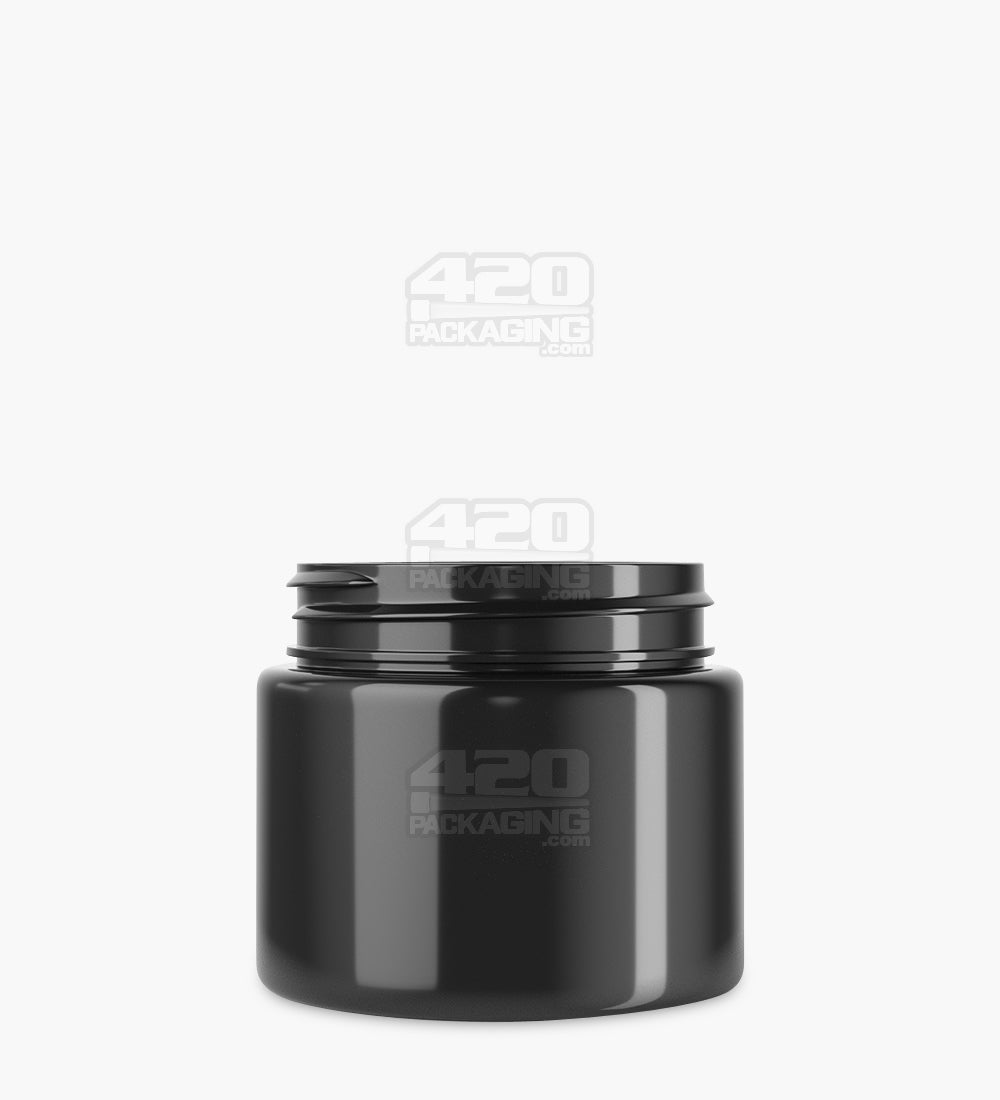


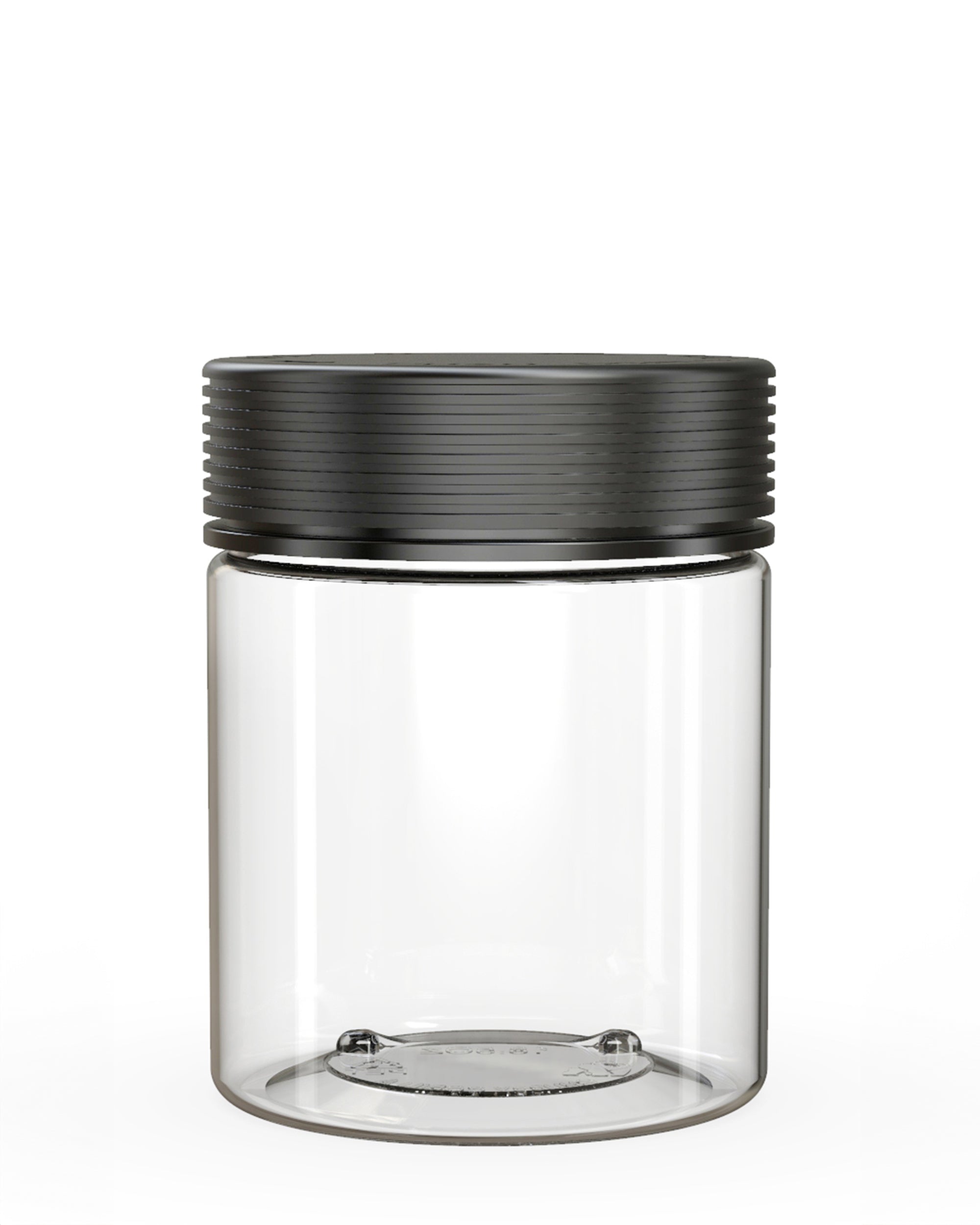
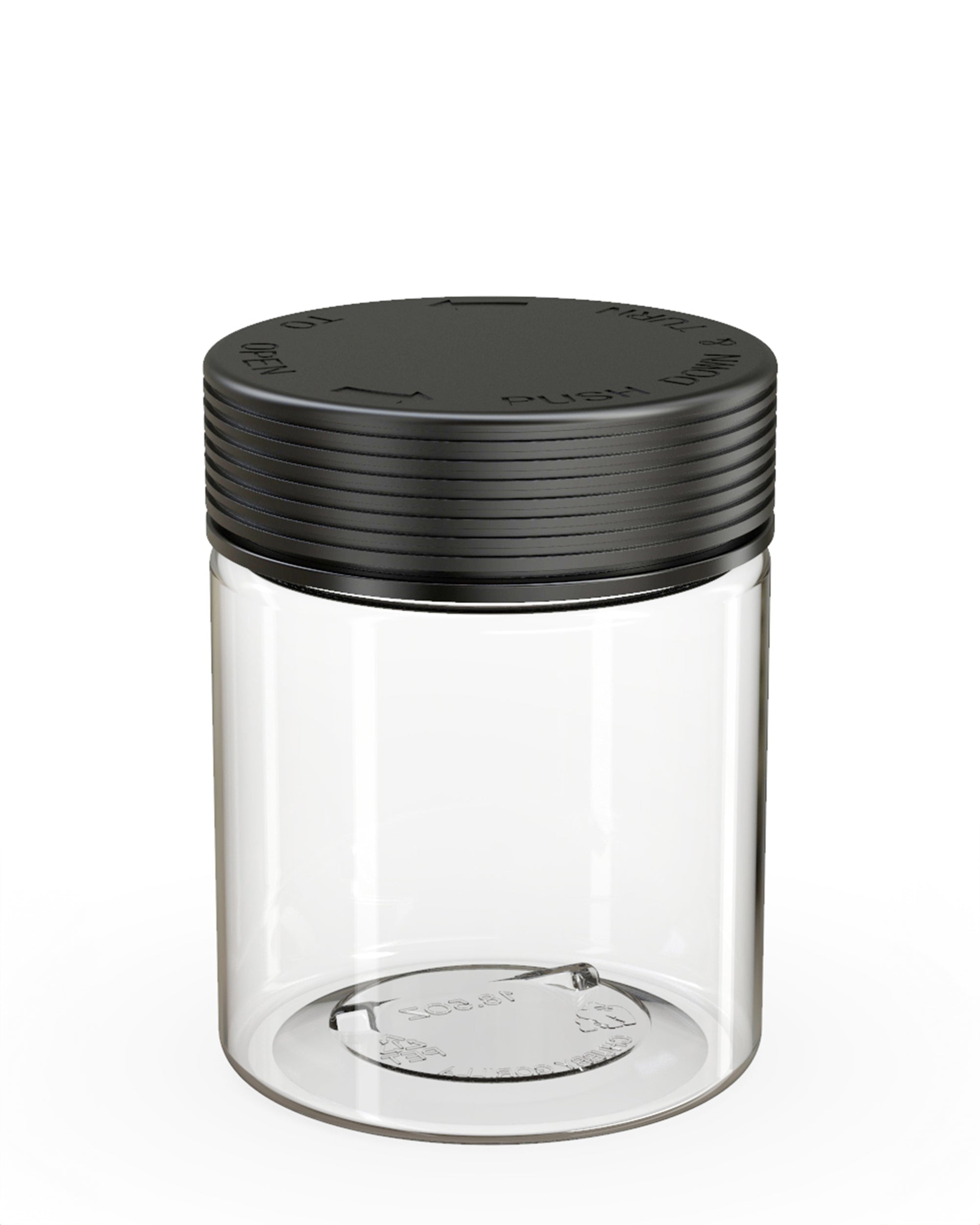
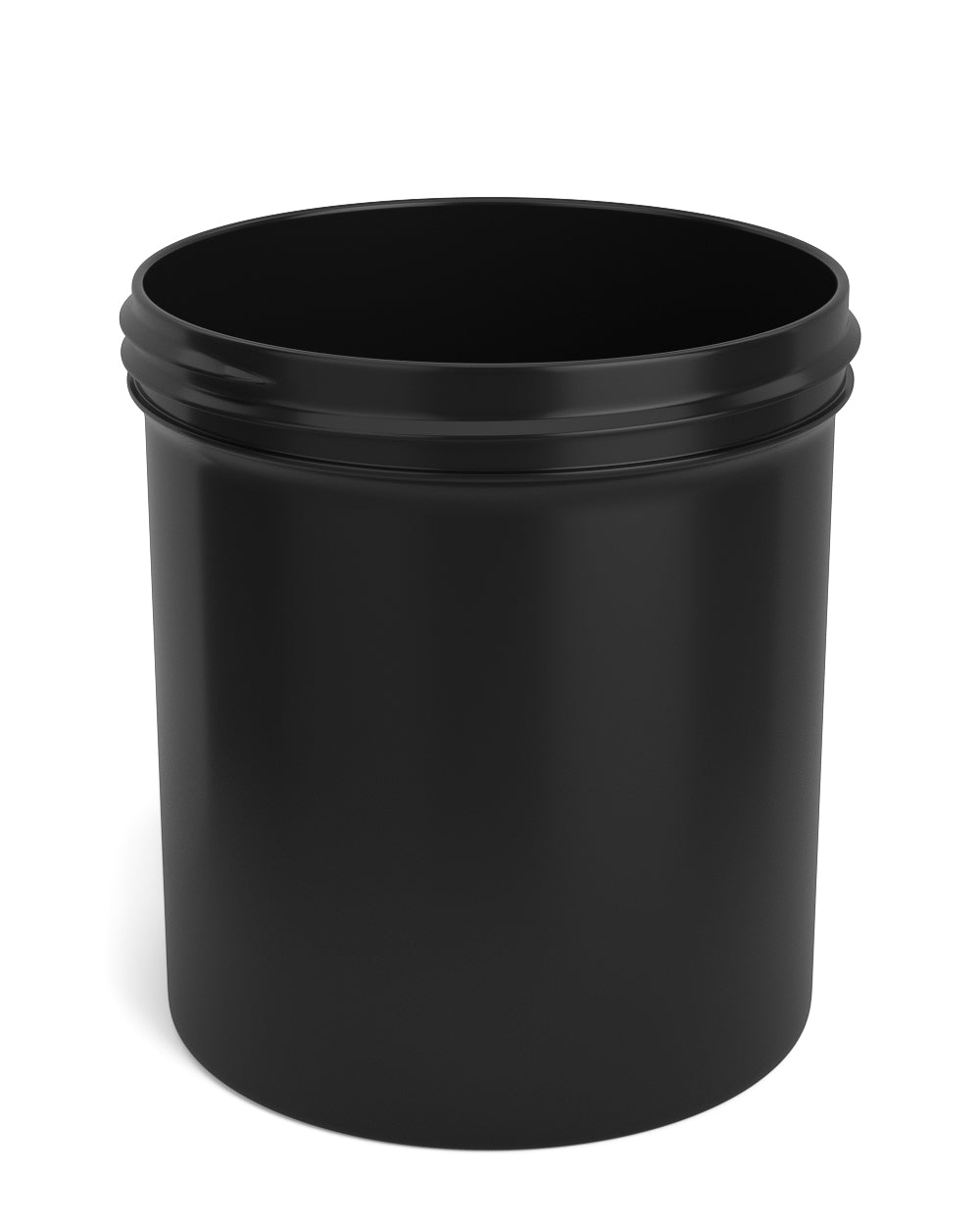
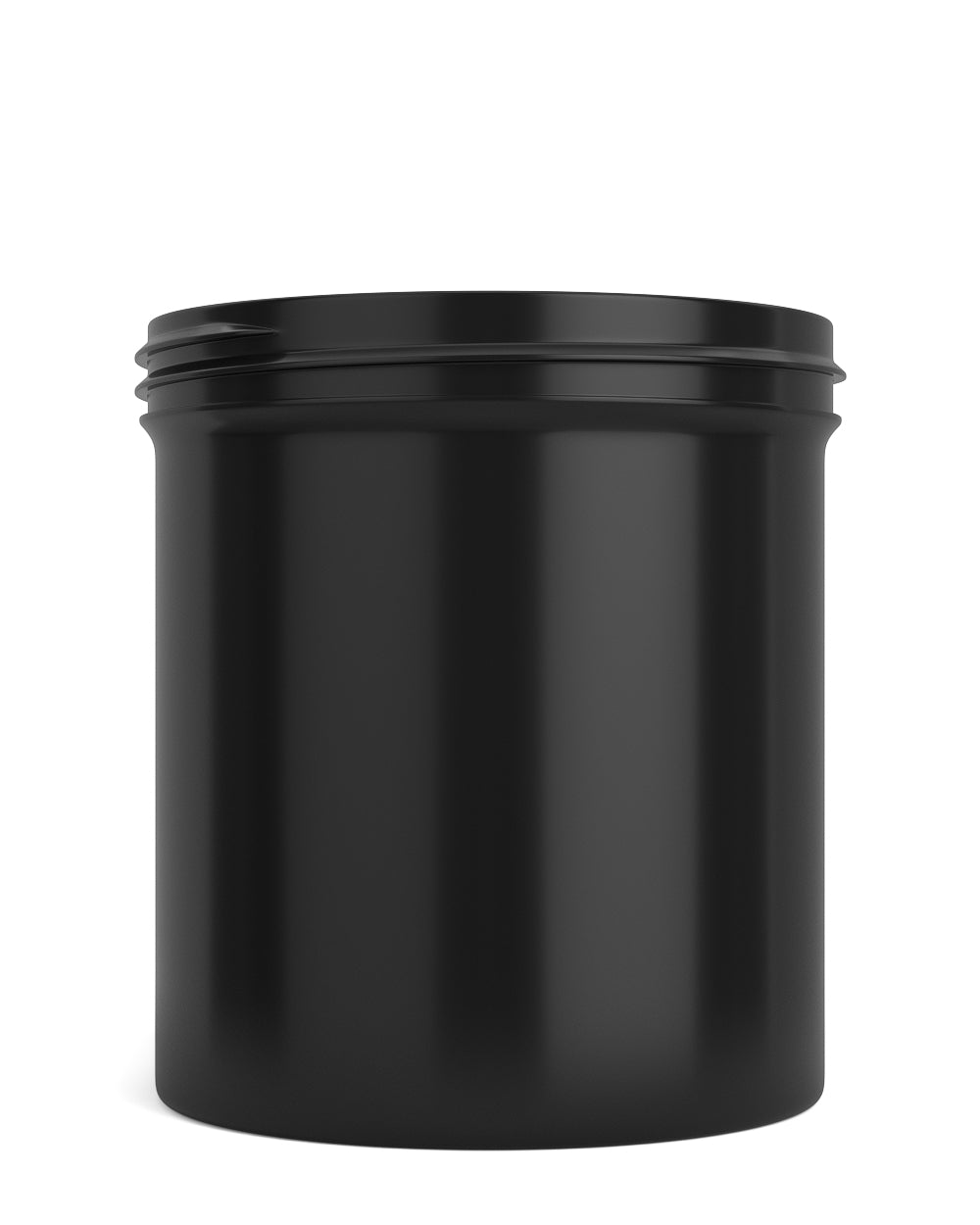
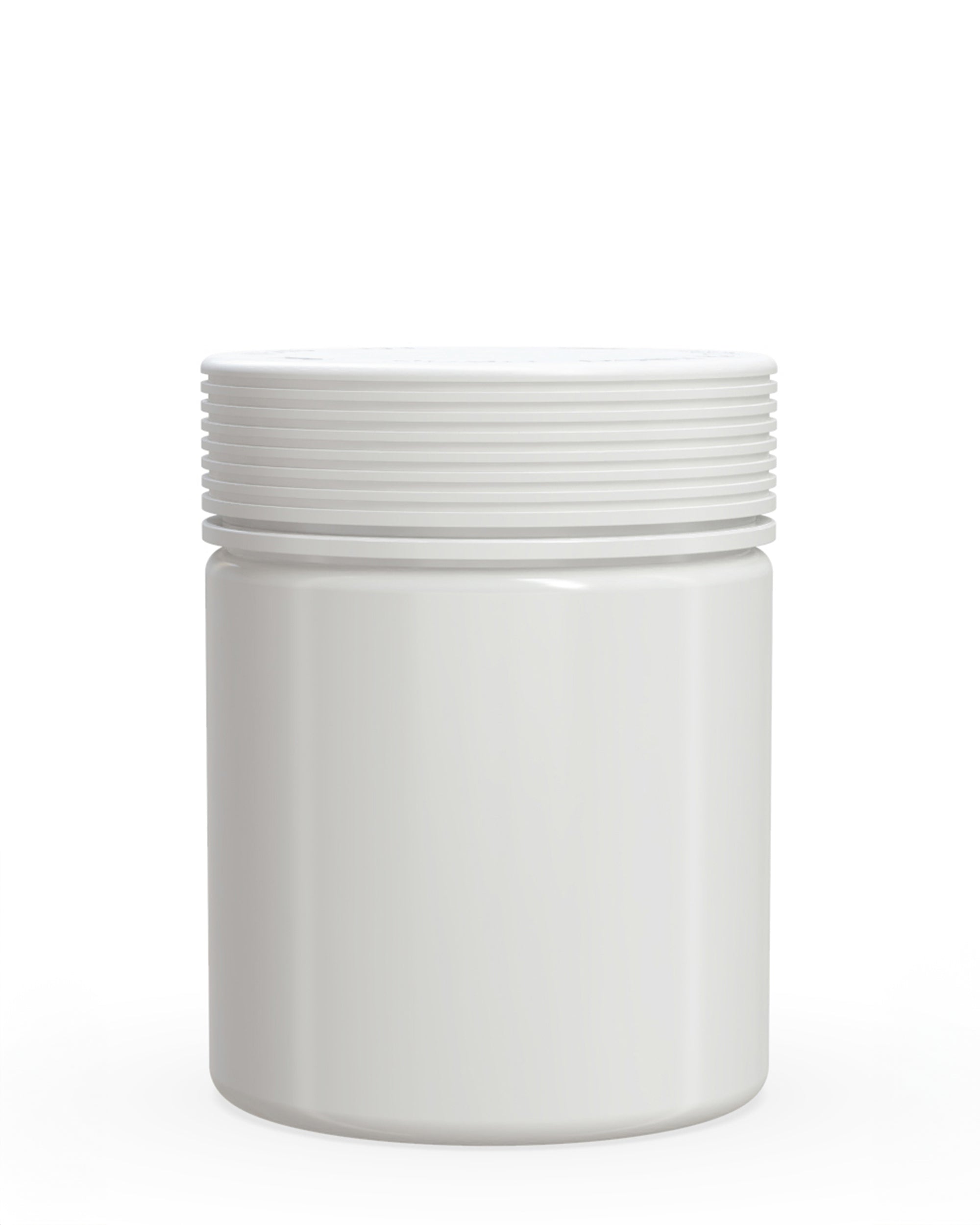
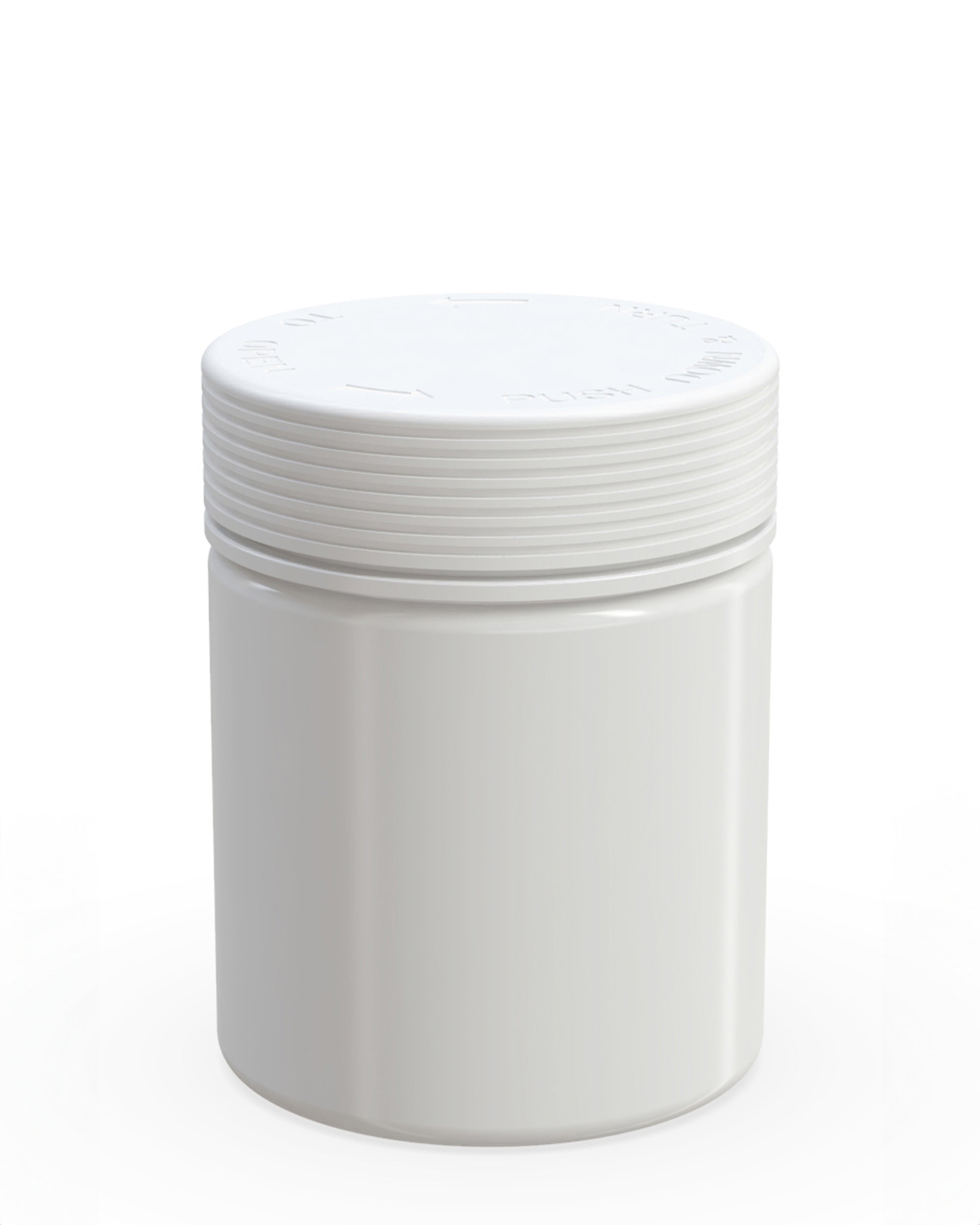
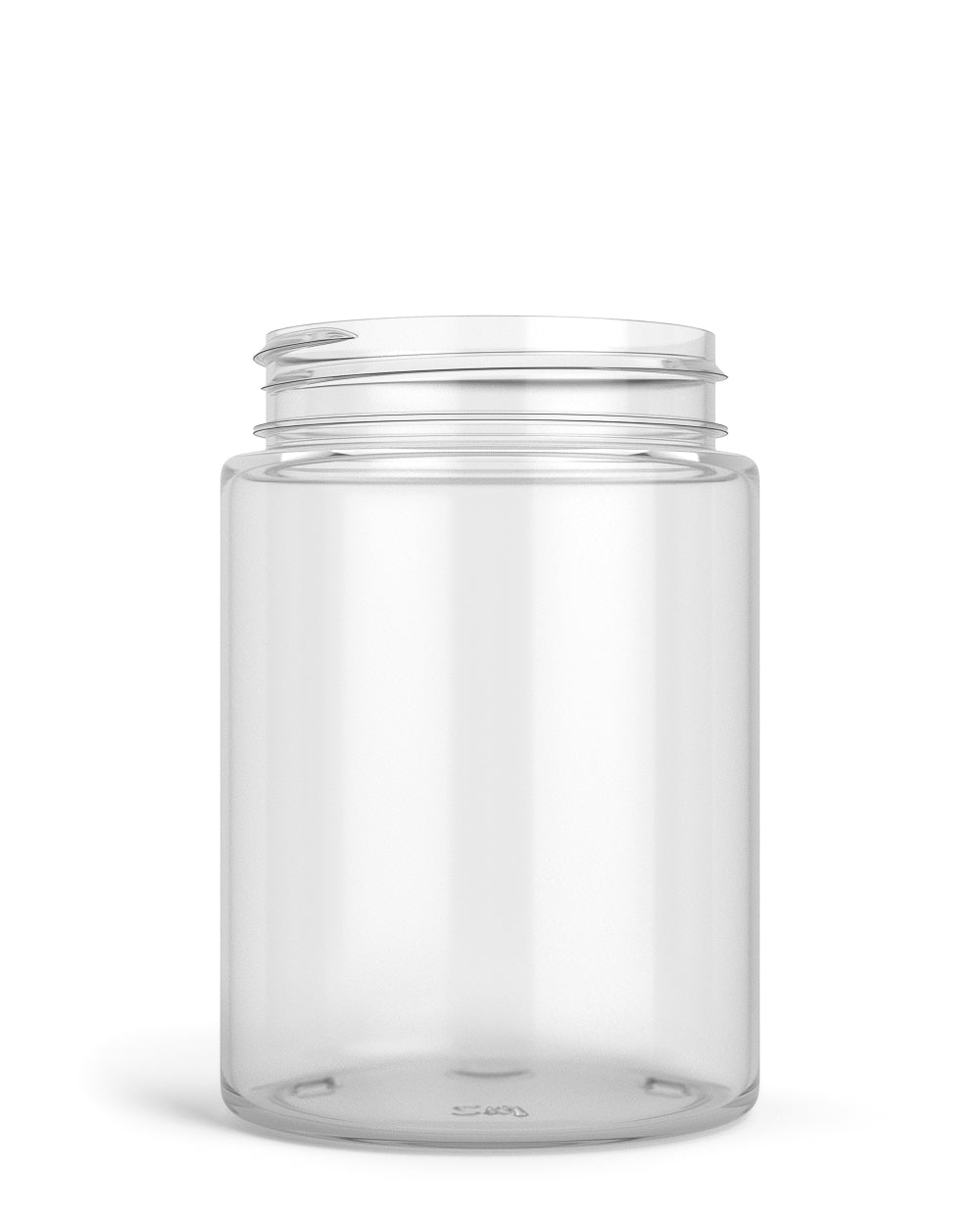
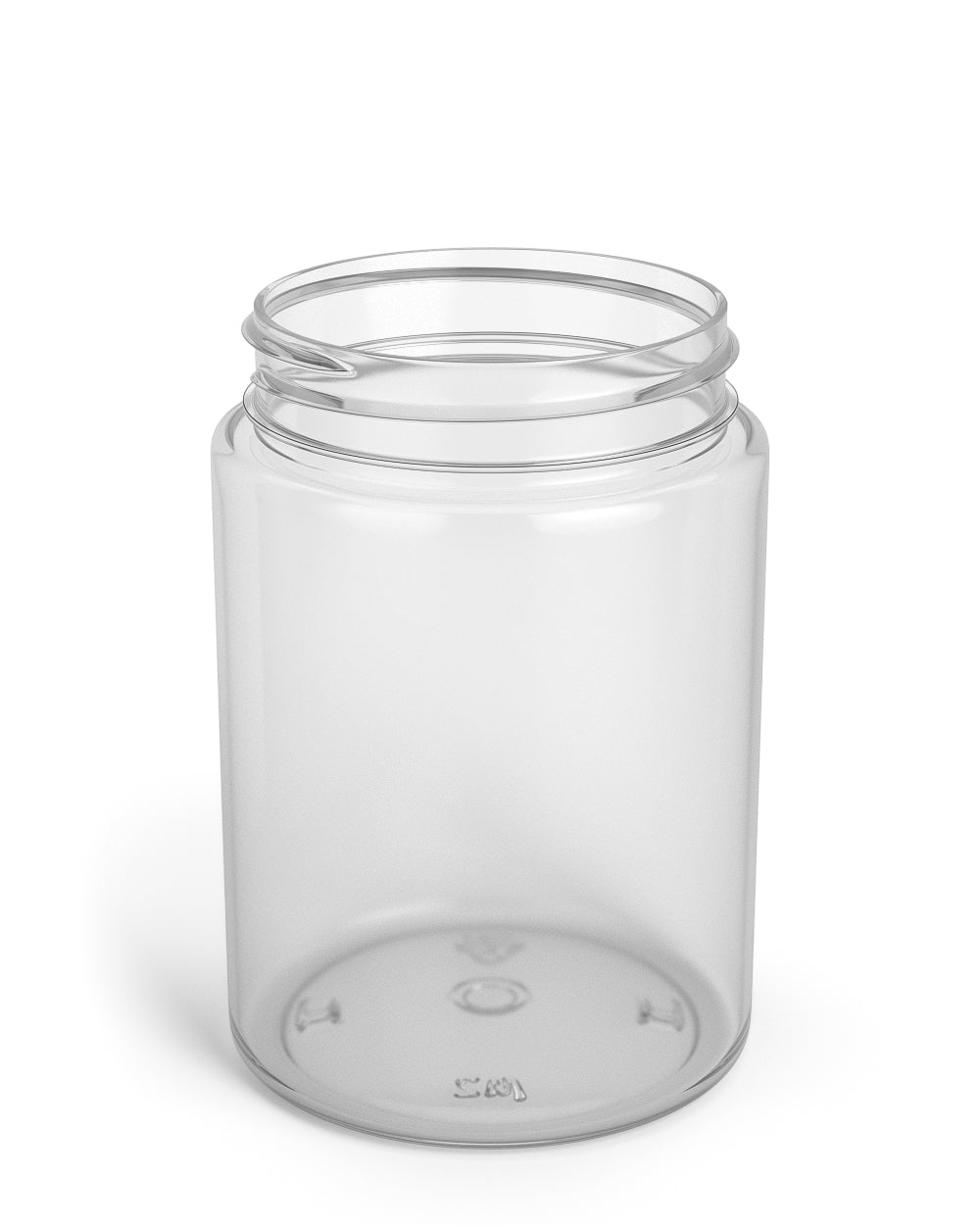
Plastic cannabis jars provide lightweight, impact-resistant packaging for cannabis flower, pre-rolls, edibles, and other products requiring rigid retail containers. Marijuana Packaging supplies wholesale plastic weed jars in clear and opaque finishes, with straight-sided, wide-mouth, and specialty designs for cannabis brands, cultivators, processors, manufacturers, and dispensaries. Available packaging configurations include empty plastic jars, options made with post-consumer recycled materials, and select jars with compatible child-resistant closures.
For commercial cannabis operations, plastic jars offer practical advantages in shipping, handling, storage, and high-volume packaging. However, choosing the right container requires understanding the plastic material, usable capacity, closure compatibility, sealing performance, and intended product application. When purchasing plastic cannabis jars in bulk, these factors influence not only product protection and retail presentation but also packaging efficiency, regulatory requirements, and total production costs.
Wholesale Plastic Cannabis Jars for Commercial Packaging
Plastic jars are rigid containers manufactured from polymer materials that can be formed into different shapes, capacities, colors, and closure configurations. In cannabis packaging, they are commonly selected when businesses need lightweight containers that maintain their shape, resist breakage during normal handling, and provide suitable surfaces for labels and branding.
Unlike flexible pouches, rigid plastic jars preserve their container geometry whether filled or empty. This structure can help protect cannabis flower from external compression, provide a defined container for solid edibles, and accommodate other finished products when the selected material and closure are appropriate.
Plastic jars serve a specific material preference within the broader cannabis jars category. Their primary advantages concern handling weight, impact resistance, manufacturing versatility, and the range of available container-and-cap designs.
Why Cannabis Businesses Choose Plastic Jars
For commercial packaging operations, material selection affects the entire production process. A lighter container can influence transportation costs, warehouse handling, filling-line operations, and the weight of completed retail units.
Plastic cannabis jars offer several practical characteristics:
- Lightweight construction: Plastic generally weighs less than a comparable glass container, reducing the weight of empty packaging and finished shipments.
- Impact resistance: Many packaging plastics are less likely than glass to shatter during routine handling or accidental drops.
- Rigid product protection: The container maintains its overall shape and helps shield the contents from external compression.
- Versatile designs: Plastic can be manufactured into straight-sided, wide-mouth, thick-wall, and specialty packaging configurations.
- Clear and opaque options: Transparent containers provide product visibility, while opaque finishes conceal the contents and can limit light exposure.
- Closure flexibility: Suitable plastic jars can be paired with threaded caps, child-resistant closures, and compatible sealing components.
- Packaging efficiency: Consistent container designs can support repeatable filling, capping, labeling, and case-packing procedures.
- Wholesale purchasing: Bulk plastic jars can be evaluated according to unit cost, packaging components, case quantities, and repeat supply requirements.
These characteristics do not make every plastic container suitable for every cannabis product. Material compatibility, product fit, barrier requirements, and applicable regulations must still be evaluated for the intended packaging configuration.
Plastic Jars Compared With Glass Containers
Glass and plastic jars both provide rigid packaging, but they differ in weight, impact performance, material properties, and handling requirements.
Glass offers a nonporous container wall, substantial weight, and strong resistance to gas and moisture transmission through the material itself. Plastic generally provides lower weight and greater resistance to shattering, although its barrier properties depend on the polymer and container construction.
For brands emphasizing a heavier retail presentation or the particular material characteristics of glass, glass cannabis jars may be more suitable. Plastic containers can be advantageous when weight, breakage resistance, handling efficiency, or specific molded packaging designs are higher priorities.
Neither material is inherently airtight, child-resistant, or appropriate for every formulation. Those characteristics depend on the complete packaging system.
Plastic Jar Materials: PET, Polypropylene, and PCR Plastic
The term plastic jar describes a broad category rather than one material. Different polymers have different characteristics involving transparency, rigidity, flexibility, chemical compatibility, gas transmission, moisture transmission, and temperature resistance.
For commercial cannabis packaging, identifying the actual plastic material helps buyers evaluate whether a container is appropriate for its intended product, closure, and production environment.
PET Plastic Jars
Polyethylene terephthalate, commonly abbreviated PET, is a packaging polymer frequently used in rigid transparent containers.
PET can provide clarity, dimensional stability, and a relatively lightweight structure. Its transparency makes it useful in packaging applications where the contents should remain visible, while its rigidity supports conventional labeling and container handling.
However, PET should not be treated as universally suitable for every concentrate, edible, or other cannabis formulation. Product-contact compatibility, temperature exposure, and barrier performance depend on the actual container and its intended conditions of use.
The presence of a clear plastic wall does not establish that the material is PET. Commercial buyers should confirm the specified resin rather than identifying the polymer solely by appearance.
Polypropylene Plastic Jars
Polypropylene, abbreviated PP, is another widely used packaging polymer. It can be manufactured into rigid or semi-rigid containers and closure components with different finishes and mechanical characteristics.
Polypropylene is particularly relevant to packaging systems because of its molding versatility and its use in many types of caps and closures.
Depending on the formulation and manufacturing process, polypropylene containers may be opaque, translucent, or otherwise finished to achieve a particular appearance.
As with PET, the material's suitability depends on the intended contents, product-contact requirements, temperature conditions, and complete closure system.
Post-Consumer Recycled Plastic Jars
Post-consumer recycled plastic, commonly called PCR plastic, contains material recovered from products after their previous use and processed for incorporation into new products.
PCR describes the origin of some or all of the material used in a container. It does not, by itself, identify the underlying polymer. Recycled-content jars may be manufactured using different plastic resins, depending on the product and recycling process.
For brands incorporating recycled content into their packaging programs, PCR plastic jars may provide an alternative to containers made entirely from virgin resin.
However, a recycled-content claim should be evaluated according to the actual material specification and documented percentage of recycled material, where available.
The suitability of recycled plastic for direct product contact must also be considered separately from its recycled-content designation.
Important: Not all plastic cannabis jars have the same material properties. PET and polypropylene identify different plastic polymers, while PCR identifies post-consumer recycled content rather than a separate resin. Material selection affects transparency, rigidity, barrier performance, product-contact suitability, and handling. Before purchasing plastic jars wholesale, verify the actual material, intended product application, compatible closure, and available supporting documentation instead of assuming that all plastic containers perform alike.
Why the Exact Plastic Resin Matters
Different resins can respond differently to product ingredients, environmental exposure, mechanical stress, and temperature. The material also influences the container's moisture and oxygen barrier characteristics.
For cannabis packaging, resin selection should reflect the contents and the expected conditions between filling and final use.
Relevant considerations include:
- The chemical composition of the finished cannabis product.
- Whether the jar will have direct contact with flower, food products, or concentrated formulations.
- The expected duration of storage.
- Exposure to heat, sunlight, or other environmental conditions.
- Required resistance to impact and handling stress.
- Compatibility with labels, inks, adhesives, and decorative treatments.
- Suitability for the intended cap, liner, or sealing process.
- Applicable product-contact documentation and material requirements.
Container suitability should be established using the actual material specification and intended application, not generalized assumptions about plastic packaging.
Plastic Jar Shapes, Openings, and Construction
Plastic can be molded into different jar geometries, each influencing product access, filling efficiency, closure selection, label application, and finished-package appearance.
For cannabis brands and manufacturers, container shape should be selected according to the product's physical characteristics and the requirements of the packaging line.
Straight-Sided Plastic Jars
Straight-sided plastic jars have relatively uniform exterior walls, commonly creating a cylindrical profile with a defined labeling surface.
This construction can be useful for cannabis flower packaging and other products requiring consistent container positioning during filling and labeling.
The straight-sided design also supports visual consistency when a brand uses related jar formats across several product lines.
Nevertheless, containers with similar exterior shapes can have different usable capacities, wall thicknesses, openings, and closure requirements. These specifications should be evaluated independently.
Wide-Mouth Plastic Jars
Wide-mouth plastic jars provide larger openings relative to their body dimensions. A wider opening can simplify filling, reduce unnecessary product handling, and make removing the contents more convenient.
This can be particularly relevant when packaging larger cannabis buds, pre-roll multipacks, or solid edible products that may be difficult to insert through narrow openings.
Opening width must be considered separately from total capacity. A container may provide sufficient volume but still be inconvenient to fill or empty because of its opening geometry.
The larger opening must also be matched with a suitable closure and sealing configuration.
Thick-Wall and Specialty Plastic Jars
Plastic jar construction can vary in wall thickness, overall weight, shape, and surface finish.
Thicker walls may create a more substantial feel or different structural characteristics, while specialty designs can provide distinctive retail presentations.
However, wall thickness alone does not establish superior barrier performance, child resistance, or suitability for every product.
Commercial buyers should consider how the container construction affects:
- Rigidity during filling and handling.
- Resistance to deformation under expected conditions.
- Container weight and freight requirements.
- Closure engagement and sealing-surface consistency.
- Label application and usable decoration area.
- Storage and finished-case packing.
- Consumer access to the packaged product.
Jar-Only Containers and Jars With Caps
Plastic containers may be sold as empty jars without closures or as configurations that include a corresponding lid.
Jar-only purchasing provides flexibility when a manufacturer already uses a particular approved cap or requires a specialized closure. It also requires the buyer to verify component compatibility independently.
Where both components are needed together, cannabis jars with lids provide an alternative purchasing configuration. The included cap should still be evaluated for child resistance, liner construction, and sealing performance.
A jar supplied with a lid is not automatically airtight, tamper-evident, or child-resistant. These characteristics depend on the specific completed system.
Plastic Jar Capacities, Flower Weight, and Headspace
Plastic cannabis jars are available in different capacities, but selecting the appropriate container requires understanding the intended product's physical volume rather than relying solely on a nominal size designation.
This is especially important for cannabis flower, which is commonly packaged and sold by weight even though container capacities are frequently expressed in fluid ounces or milliliters.
Understanding Plastic Jar Capacity
Nominal container volume describes the capacity associated with the jar itself. The amount of cannabis flower that fits inside depends on bud density, flower structure, and the usable space remaining after accounting for the closure.
Consequently, a fluid-ounce rating should not be interpreted as an equivalent weight of cannabis flower.
Two plastic jars with similar nominal capacities may also have different internal shapes or openings, creating different practical fill conditions.
For commercial packaging programs, the intended fill should be tested using the actual product rather than inferred from the container's capacity label.
Plastic Jars for Different Flower Weights
Smaller retail flower portions generally require less internal space than larger quantities. However, flower density and bud dimensions affect how much space a measured portion occupies.
A compact flower sample may fit differently from larger, less dense buds at the same weight.
This becomes particularly important for brands that use one packaging format across multiple strains.
The appropriate jar should allow the entire intended portion to fit without excessive compression, while still providing clearance for any closure components or internal accessories.
Headspace and Closure Clearance
Headspace refers to the unfilled area between the contents and the underside of the lid or sealing system.
Insufficient headspace may compress flower or interfere with proper cap engagement. Excessive headspace can create an undesirable retail appearance and permit additional movement during transportation.
Some child-resistant closures or sealing components may extend into the container opening, affecting usable space.
For accurate capacity testing, evaluate the plastic jar with the intended closure installed rather than considering the open container alone.
Fill Testing Before Commercial Production
A production-representative test helps determine whether a plastic jar is appropriate for the intended cannabis product.
During testing, packaging teams should verify:
- The actual product fits without forcing or compression.
- The opening accommodates the intended filling process.
- The finished fill leaves suitable headspace.
- The closure can be installed and removed correctly.
- The container maintains its intended shape during normal handling.
- The product does not interfere with any liner or internal sealing component.
- The finished package has an appropriate retail appearance.
- The same configuration performs consistently across representative production batches.
Testing the finished package can reveal practical limitations that are not apparent from the empty jar's appearance or nominal capacity.
Plastic Jars for Flower, Pre-Rolls, Edibles, and Concentrates
Plastic jars can serve multiple packaging applications, but the product being packaged determines which material, shape, opening, and closure characteristics are appropriate.
Cannabis flower, pre-rolls, edibles, and concentrates have different physical properties and product-contact considerations. A container suitable for one category should not automatically be treated as appropriate for another.
Plastic Jars for Cannabis Flower
Plastic jars provide rigid packaging for loose cannabis flower while generally weighing less than comparable glass containers.
The container walls help protect buds from external compression during normal handling, while the closure helps keep the contents enclosed.
For flower packaging, the most important considerations include usable internal capacity, opening width, headspace, sealing performance, and the characteristics of the selected plastic material.
Brands using plastic jars for multiple strains should test the containers with flower of different densities and bud structures to ensure consistent packaging results.
The wider cannabis flower packaging category also includes other packaging formats and related supplies, but plastic jars are specifically suited to operations seeking a lightweight rigid-container format.
Plastic Jars for Pre-Rolls
Some plastic jar configurations can accommodate multiple finished pre-rolls in a single rigid container.
For this application, usable internal height, opening width, and product arrangement are particularly important.
The jar should accommodate the finished joints, including their filters or tips, without bending the cones or interfering with cap installation.
A lightweight plastic container may also provide practical advantages during transportation and repeated handling.
The specific jar should be tested with the intended pre-roll dimensions and pack count rather than selected by nominal container volume alone.
Plastic Jars for Cannabis Edibles
Plastic jars may be suitable for certain cannabis-infused edible products, including gummies, candies, tablets, and other solid formulations, when the selected material and complete packaging system meet the applicable requirements.
Edible packaging introduces additional considerations involving food-contact suitability, serving count, moisture sensitivity, opacity, and child resistance.
Not every plastic container is suitable for direct food contact. The actual resin, additives, recycled-content process, and intended conditions of use can affect the material's suitability.
The U.S. Food and Drug Administration's information on packaging and food-contact substances explains the framework for evaluating materials intended to contact food.
When selecting plastic jars for edible packaging, brands should obtain relevant material documentation and verify that the intended container, closure, and any liner are appropriate for the finished product.
Food-contact suitability and compliance with cannabis-specific packaging requirements should be assessed separately.
Plastic Jars for Cannabis Concentrates
Some plastic containers may be considered for particular cannabis concentrate applications, but concentrate formulations can place different demands on packaging materials than dried flower.
Concentrates vary in consistency, viscosity, composition, and the types of compounds they contain. These differences may affect material compatibility, product adhesion, permeability, or interactions with the container and closure.
For direct-contact concentrate packaging, manufacturers should confirm that the selected plastic resin and any liners or sealing components are suitable for the specific formulation.
Glass or other specialized concentrate containers may be preferable where the product's characteristics create material-compatibility concerns.
Plastic flower jars should not automatically be repurposed for concentrates without appropriate evaluation.
Plastic Jar Caps and Child-Resistant Closures
A plastic jar's closure affects product access, sealing, child resistance, and the overall function of the finished package.
Some plastic jars are supplied without caps, while others are offered with matching closures. For jar-only packaging, cap selection must account for the exact neck finish and compatible closure design.
Threaded Plastic Jar Caps
Threaded closures are commonly used with rigid plastic jars because they provide a reclosable connection between the container opening and its cap.
However, closures must match the intended neck finish, thread configuration, and sealing surface.
Two caps with similar appearances may have different thread profiles or internal constructions, making them unsuitable substitutes for one another.
When selecting cannabis jar lids and closures, commercial buyers should evaluate:
- Compatibility with the exact jar neck finish.
- Correct thread engagement and closure retention.
- The intended opening and reclosing procedure.
- Any included liner or sealing component.
- Compatibility with manual or automated capping equipment.
- Required child-resistant performance and supporting documentation.
- Availability for future production and replacement orders.
A cap should be verified with the actual container before the combination is approved for commercial packaging.
Child-Resistant Plastic Jar Systems
Child-resistant packaging uses mechanisms designed to make opening significantly difficult for young children while remaining usable by adults.
Plastic closures are well suited to a variety of engineered opening mechanisms because they can incorporate threads, locking features, flexible components, and coordinated-action designs.
Common child-resistant mechanisms include push-down-and-turn closures and other systems requiring coordinated pressure, rotation, or alignment.
Not every plastic jar is child-resistant. A container sold without a closure should not be considered child-resistant on its own, and an ordinary screw cap does not become child-resistant merely because it fits the jar.
Child-Resistant Testing and Senior-Friendly Performance
Under the Poison Prevention Packaging Act, certain products must use special packaging designed to restrict access by young children while remaining reasonably accessible to adults.
The framework under 16 CFR Part 1700 includes performance testing for child resistance and adult accessibility. Packaging systems are evaluated according to prescribed procedures rather than their appearance or marketing description alone.
The U.S. Consumer Product Safety Commission's guidance on special packaging describes the testing procedures and explains how child-resistant and senior-friendly performance are assessed.
The CPSC does not pre-approve individual packaging products. Cannabis packaging requirements also vary by jurisdiction and finished product category.
For cannabis operations, qualification should be verified using the actual jar-and-closure system and documentation applicable to the intended market.
Initial and Reclosable Child Resistance
Some regulatory frameworks distinguish between packaging that is child-resistant before its first opening and packaging that maintains child resistance after repeated opening and closing.
This distinction is important when selecting reusable plastic jars for cannabis products intended to be accessed over multiple occasions.
A container with a reclosable lid is not automatically lifetime child-resistant. The mechanism and complete packaging configuration must satisfy the relevant requirements.
Businesses evaluating child-resistant cannabis jars should distinguish the closure's intended function from the performance qualification required for their specific product.
Documentation for Plastic Jar and Closure Systems
Child-resistant claims should be supported by documentation corresponding to the relevant packaging components and configuration.
A testing report covering one jar and cap combination should not automatically be applied to another container, closure, material, or manufacturing variation.
Marijuana Packaging's product certifications resource includes available documentation for certain packaging configurations. Buyers should verify that the records apply to the specific system they intend to use.
Packaging teams should also confirm whether the finished product requires tamper evidence, opacity, or additional features independent of child resistance.
Cap Liners, Airtight Seals, and Odor Control
The performance of a plastic jar depends on the container walls, cap, liner, sealing surfaces, and how the components are assembled.
Plastic can provide effective protective packaging, but different resins have different gas and moisture transmission characteristics. The closure creates an additional consideration because an unsuitable seal can allow air or moisture exchange even when the jar itself is otherwise appropriate.
Are Plastic Cannabis Jars Airtight?
Not every plastic cannabis jar is airtight. A screw-on lid creates a mechanical closure, but it does not necessarily establish an airtight barrier.
The degree of sealing depends on the cap design, liner, jar rim, application method, and consistency of the assembled package.
Some plastic resins also allow different levels of gas or moisture transmission through the container walls. As a result, the performance of the complete package cannot be established from the closure alone.
For packaging programs requiring particular barrier characteristics, material and closure performance should be evaluated together.
Pressure-Sensitive and Heat Induction Cap Liners
Cap liners may be used to improve sealing contact or provide additional protection across the jar opening.
Different liner constructions serve different purposes:
- Foam liners: Compressible materials used in certain caps to help establish contact between the closure and container rim.
- Pressure-sensitive seals: Components designed to adhere to a suitable sealing surface under specified application conditions.
- Heat induction seals: Compatible multilayer sealing materials that require appropriate induction equipment and container compatibility.
- Specialty liners: Constructions intended for particular sealing, product-contact, or barrier requirements.
The suitability of a liner depends on the plastic resin, opening geometry, closure design, contents, and intended sealing procedure.
Some cap liners and induction seals are intended for specific container configurations rather than universal use across all plastic jars.
Manufacturers should verify compatibility and application requirements before incorporating a liner into their production process.
Odor Resistance and Cannabis Flower
Cannabis flower contains volatile aromatic compounds that contribute to its characteristic scent.
Limiting odor escape depends on the entire packaging system, including the plastic material, cap, liner, and seal integrity.
Some materials and closure systems may perform differently under the same storage conditions. A thicker jar wall or tighter-feeling cap should not automatically be interpreted as proof of smell-proof performance.
Descriptions such as airtight plastic weed jars and smell-proof plastic cannabis jars should be supported by the actual characteristics of the assembled package.
Brands with defined odor-containment requirements should establish suitable performance criteria and evaluate the complete configuration accordingly.
Moisture and Humidity Control
Moisture exchange can affect the physical condition of cannabis flower during storage and distribution.
Plastic container-wall properties, closure performance, the product's condition at filling, and the storage environment all influence moisture management.
Some cannabis flower packaging programs incorporate cannabis humidity-control packs to help manage relative humidity inside the completed package.
These accessories should be selected according to the intended product and packaging conditions. They do not replace the need for an appropriate container and closure.
Any internal humidity-control component also occupies space and should be accounted for when determining usable jar capacity and headspace.
Tamper-Evident Plastic Jar Packaging
Tamper-evident features are intended to provide visible evidence that a package has been opened or interfered with.
Depending on the configuration, a plastic jar may use a compatible inner seal, shrink band, breakable closure feature, or another suitable mechanism.
Child resistance, tamper evidence, and airtight sealing are separate packaging characteristics. A child-resistant closure does not automatically provide visible evidence of opening, and a tamper-evident seal does not necessarily restrict access by children.
When more than one function is required, the completed plastic jar system must be evaluated for each requirement.
Clear and Opaque Plastic Jars, Labeling, and Branding
Plastic jars can be manufactured with different levels of transparency, colors, surface finishes, and exterior geometries. These characteristics influence how the packaged cannabis product appears at retail and how easily branding and regulatory information can be applied.
Clear Plastic Cannabis Jars
Clear plastic containers allow the contents to remain visible without opening the package.
This can be useful for cannabis flower products where the appearance of the buds contributes to the intended retail presentation.
Transparent packaging also makes fill levels visible. Brands using clear plastic jars should pay particular attention to flower density, headspace, and consistent portion presentation across production batches.
However, clear plastic may allow light to reach the contents. The material's optical properties and the intended storage or display environment should be considered when selecting it for light-sensitive products.
Black and Opaque Plastic Jars
Black and other opaque plastic jars conceal the contents and provide a different foundation for packaging design.
Opaque containers may also reduce light transmission, depending on the material and finish, but should not be assumed to block all ultraviolet or visible light without appropriate specifications.
Colored plastic can support a coordinated retail identity, particularly when several cannabis strains or product categories use related container shapes.
Surface finish affects appearance and labeling performance. Matte, glossy, and textured surfaces may require different label materials, adhesives, or decoration techniques.
Labeling Plastic Cannabis Jars
Plastic jars provide surfaces for branded labels and required product information, but not every container shape offers the same usable labeling area.
Curved shoulders, changes in diameter, raised features, and closure overhang can affect label placement.
For regulated cannabis products, labels may need to accommodate:
- Brand and product identification.
- Applicable net weight or volume declarations.
- Strain, cultivar, or product-variant information.
- Cannabinoid information and relevant testing details.
- Required warnings and cannabis identification symbols.
- Batch, lot, or tracking information.
- Responsible licensee or manufacturer details.
- Other market-specific labeling requirements.
The suitability of the label material and adhesive should be verified against the selected plastic surface.
Because some plastics have different surface-energy and adhesion characteristics, labels that perform well on one jar material may not produce the same results on another.
Artwork and labeling should be evaluated on actual containers under the intended production and storage conditions.
Custom Branded Plastic Cannabis Jars
Plastic packaging can support various branding approaches, including adhesive labels, compatible printing methods, coordinated jar-and-cap colors, and specialty decoration.
Depending on the customization program, custom branded cannabis jars can help businesses establish a consistent appearance across product lines.
Customization should be planned around the selected resin, container geometry, available decoration area, closure mechanism, and production requirements.
Printing, labels, or decorative treatments should not interfere with child-resistant opening mechanisms, closure engagement, or mandatory product information.
For recurring wholesale programs, brands should also consider artwork consistency, minimum order requirements, lead times, and availability of the intended packaging components.
Recycled Plastic, Reusability, and Recycling Considerations
Environmental considerations are increasingly relevant to cannabis packaging procurement. Plastic jar selection can involve recycled-content materials, potential reuse, package weight, and the availability of appropriate recycling systems.
These characteristics should be evaluated individually rather than relying on broad claims that a package is automatically sustainable because it is lightweight, recyclable in theory, or made with some recycled content.
Understanding PCR Content
Post-consumer recycled content comes from recovered plastic that has already completed a previous use cycle.
Using PCR material can reduce reliance on virgin resin for the recycled portion of a container, but the actual environmental implications depend on the sourcing, processing, manufacturing, and distribution system.
PCR does not mean the container is made entirely from recycled plastic. The recycled-content percentage should be verified when it matters to the purchasing decision or a marketing claim.
Likewise, a PCR designation does not automatically mean that the material is suitable for direct food contact or that the finished jar will be accepted by local recycling programs.
PCR Plastic and Food-Contact Applications
Recycled plastics intended for direct food-contact packaging require particular attention to material history, contamination controls, processing methods, and the intended conditions of use.
The FDA's guidance on recycled plastics in food packaging explains the agency's concerns involving potential contaminants and the evaluation of recycled polymer materials intended for food-contact applications.
For cannabis edible packaging, buyers should therefore verify food-contact suitability using documentation applicable to the actual recycled-content material and finished packaging application.
A plastic jar's recycled-content designation is not a substitute for this evaluation.
Can Plastic Cannabis Jars Be Recycled?
The recyclability of a plastic jar depends on its resin, design, condition after use, and whether the relevant recycling program accepts that type of container.
The resin identification code can help indicate the plastic category, but it is not a guarantee that the item is accepted for recycling in a particular location.
The U.S. Environmental Protection Agency's recycling guidance emphasizes that accepted plastic types and recycling procedures vary by community.
For cannabis packaging, additional considerations may include residual product, labels, liners, closures made from different materials, and rules governing used cannabis containers.
Packaging brands should verify local acceptance before making consumer-facing recyclability claims.
Reusable Plastic Jars
Some plastic jars may be suitable for repeated noncommercial storage use when they remain intact, clean, and appropriate for the intended contents.
However, the ability to reopen a jar does not mean the container or closure is qualified for unlimited reuse.
Repeated handling, exposure to cleaning agents, temperature changes, and mechanical stress can affect some plastic materials or closure components.
Commercial reuse programs require additional evaluation of cleaning, inspection, product-contact suitability, and any applicable regulations.
Single-use liners and tamper-evident features may need to be replaced, and previously used packaging should not be returned to commercial production without an approved procedure.
Storage and Handling of Empty Plastic Jars
Plastic containers generally resist breakage better than glass, but they can still become damaged, distorted, contaminated, or unsuitable for production.
Empty jars should be stored according to the material manufacturer's recommendations and the packaging operation's quality procedures.
Excessive heat, prolonged environmental exposure, mechanical pressure, or unsuitable cleaning procedures may affect certain polymers.
Before filling, operators should inspect containers for visible defects, contamination, and damage to the opening or sealing surfaces.
Plastic jars should not automatically be assumed sterile or suitable for every direct-product-contact application upon arrival. Any required cleaning or preparation should follow the operation's validated procedures.
Buying Wholesale Plastic Jars in Bulk
Wholesale plastic jar purchasing involves more than selecting a container by appearance or listed unit price. Commercial buyers need packaging that performs consistently during filling, closure application, labeling, storage, and distribution.
At Marijuana Packaging, plastic cannabis jars are available for bulk purchasing across different materials and packaging configurations. The appropriate choice depends on the requirements of the finished product and the economics of the complete packaging system.
Calculating Total Plastic Jar Packaging Costs
The cost of an empty plastic jar is only one part of the finished packaging expense.
Where caps, liners, labels, or sealing components are required, their costs must be included in the purchasing calculation.
Important cost considerations include:
- Jar unit price: The container's cost at the intended wholesale quantity.
- Closure cost: Compatible caps, including child-resistant designs where required.
- Sealing components: Pressure-sensitive liners, induction seals, or other protective materials.
- Labels and decoration: Artwork, printing, adhesives, and label application.
- Freight and handling: Transportation weight, shipment volume, warehouse storage, and packaging protection.
- Production compatibility: Filling, capping, sealing, and labeling equipment requirements.
- Quality control: Container inspection, compatibility testing, and documentation verification.
- Inventory allowances: Components needed for samples, setup, production losses, and repeat orders.
Plastic's lower weight can be beneficial for freight and handling, but the full cost advantage depends on the actual container, closure system, and purchasing requirements.
The lowest empty-jar price does not necessarily deliver the lowest cost per completed retail package.
Closure and Inventory Planning
Some plastic jars are sold without caps, while others include a matching closure. This distinction should be confirmed before ordering.
When caps are purchased separately, packaging teams should ensure that the selected closure is available in sufficient quantities and matches the approved container.
Inventory planning should account for all required components, including liners, seals, labels, and any accessories needed during filling.
For recurring production runs, maintaining consistent container and closure specifications can help reduce substitution errors and unexpected packaging changes.
Standardizing Plastic Jar Packaging
Cannabis brands with multiple flower strains or product lines may benefit from using related plastic jar formats.
Standardization can simplify purchasing, labeling, production setup, and closure inventory when the chosen containers share appropriate specifications.
For example, a brand may use similar exterior container styles across several retail products while differentiating individual offerings through label graphics and finishes.
However, a common jar family should only be adopted after verifying that each container accommodates the intended product and meets its particular packaging requirements.
Material compatibility, usable capacity, and closure performance should take priority over visual uniformity.
Plastic Jar Pre-Production Checklist
Before approving a wholesale plastic jar configuration, evaluate the following:
- The intended plastic resin is identified and suitable for the packaged cannabis product.
- Any PCR content claim is supported by appropriate material information.
- The container provides sufficient usable volume for the intended product fill.
- The opening accommodates normal filling and product removal.
- Appropriate headspace remains beneath the closure.
- The selected cap is compatible with the jar's neck finish and sealing surface.
- Any required child-resistant performance is supported by documentation for the qualifying system.
- Any required liner, inner seal, or tamper-evident feature is compatible with the container.
- The material and closure provide suitable protection for the intended storage conditions.
- Any food-contact requirements are supported by relevant documentation.
- The container's transparency or opacity meets the product's presentation and applicable regulatory needs.
- The jar surface supports the required labeling and decoration.
- The container is compatible with the intended filling, capping, and labeling workflow.
- Handling and storage procedures account for the properties of the selected plastic.
- Wholesale quantities and component availability support the production schedule.
- Representative finished-package samples have been evaluated before large-volume purchasing.
Product Documentation and Packaging Verification
Technical documentation can help businesses confirm material identity, packaging characteristics, compatible closure configurations, and applicable child-resistant performance.
The level of documentation required depends on the intended product and jurisdiction.
Testing or qualification records should be reviewed against the actual finished packaging configuration. A report covering one jar-and-cap combination should not automatically be applied to a different material, closure, or container design.
Packaging teams should also distinguish material documentation from regulatory approval. A plastic resin, recycled-content claim, or child-resistant mechanism does not automatically establish that the finished package meets every requirement of the intended market.
Wholesale Plastic Cannabis Jars for Your Packaging Operation
Plastic cannabis jars offer a combination of lightweight construction, impact resistance, versatile designs, and practical handling characteristics for commercial packaging operations.
Marijuana Packaging supplies wholesale plastic weed jars for cannabis brands, cultivators, processors, manufacturers, and dispensaries seeking rigid packaging for suitable flower, pre-roll, edible, and other product applications.
By evaluating the material, usable capacity, closure system, barrier requirements, labeling needs, and total packaging cost together, businesses can select plastic jars that support efficient production and a consistent finished retail presentation.
Frequently Asked Questions About Plastic Jars
Plastic cannabis jars are generally lighter and more resistant to breakage than glass, making them practical for wholesale packaging, transportation, and high-volume handling. They can also be manufactured in different shapes, colors, and closure configurations. Glass provides different material characteristics, including strong container-wall barrier properties and a more substantial feel. The better option depends on the cannabis product, packaging requirements, shipping considerations, and total cost.
Not all plastic weed jars are airtight or smell-proof. Their sealing performance depends on the plastic resin, jar construction, compatible cap, liner, and integrity of the assembled closure. Different plastics also have different gas and moisture transmission characteristics. Businesses requiring odor-resistant or airtight packaging should verify the performance of the complete jar-and-closure system rather than relying on the material alone.
PET and polypropylene are different plastic polymers with distinct material properties. PET is commonly used for rigid transparent packaging, while polypropylene is frequently used in molded containers and closures. PCR stands for post-consumer recycled plastic and describes recycled material content rather than a specific polymer. The appropriate choice depends on product compatibility, barrier requirements, appearance, and any applicable food-contact or regulatory requirements.
Yes. Plastic cannabis jars can form part of child-resistant packaging systems when paired with qualifying closures. Common mechanisms include push-down-and-turn designs and other coordinated-action systems. However, an empty plastic jar is not automatically child-resistant, and an included cap does not establish compliance by itself. Child-resistant performance must be verified for the applicable completed packaging configuration and intended regulatory market.
Yes. Marijuana Packaging supplies wholesale plastic cannabis jars, including available PCR plastic options and containers suitable for different branding approaches. Depending on the packaging program, customization may involve labels, coordinated jar-and-cap colors, or other compatible decoration methods. Buyers should verify recycled-content claims, material suitability, closure requirements, minimum order conditions, and production lead times before placing a bulk order.