

Caps for Jars
Child-resistant jar caps provide the secure closure needed to help protect products while meeting industry compliance requirements. Shop a wide selection of caps for glass and plastic jars, including child-resistant closures available in multiple sizes, colors, and styles. Whether you need replacement caps or complete packaging solutions, our durable jar lids are designed to preserve product freshness, enhance safety, and complement your brand with stock and custom options.
Filters
46 products


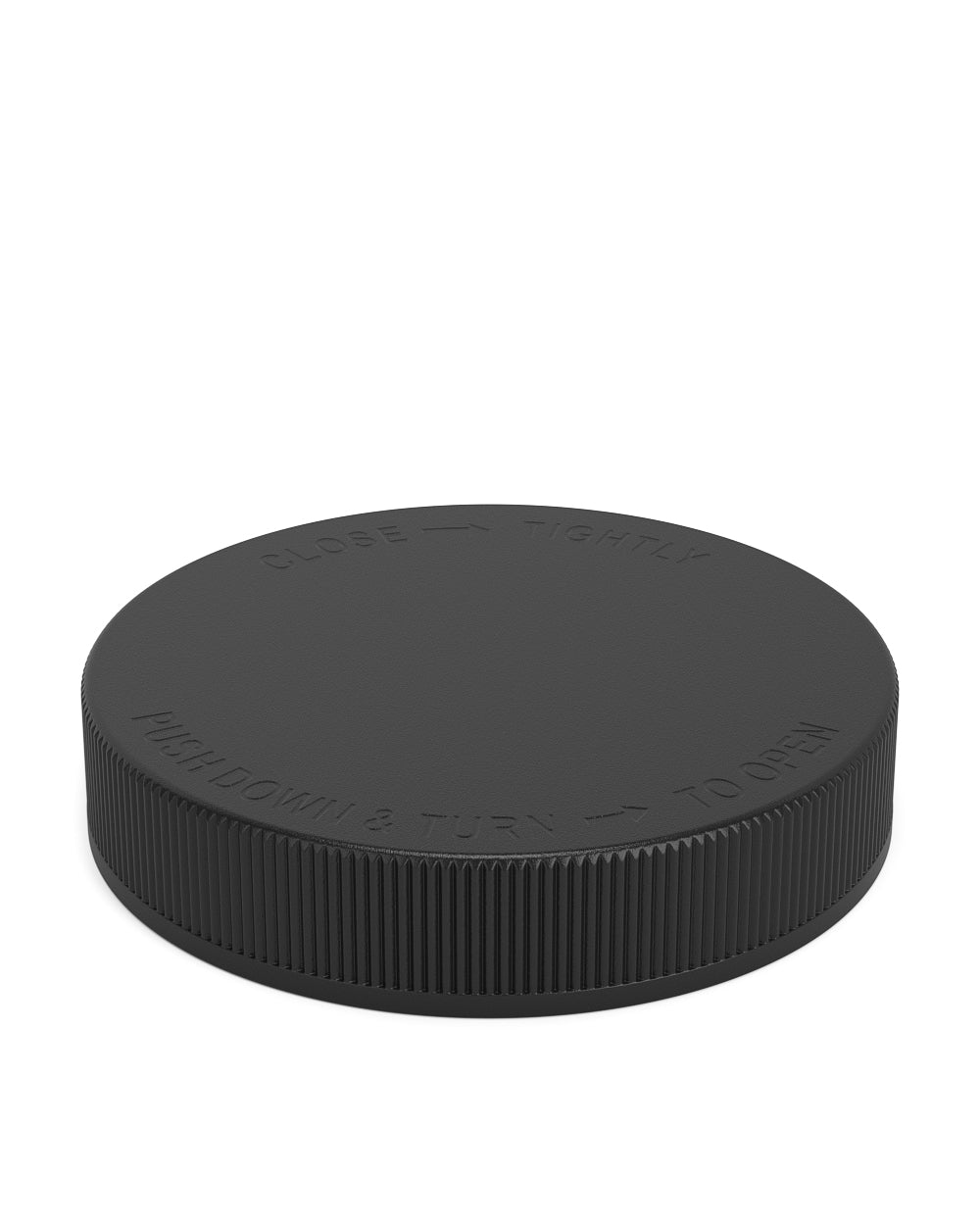
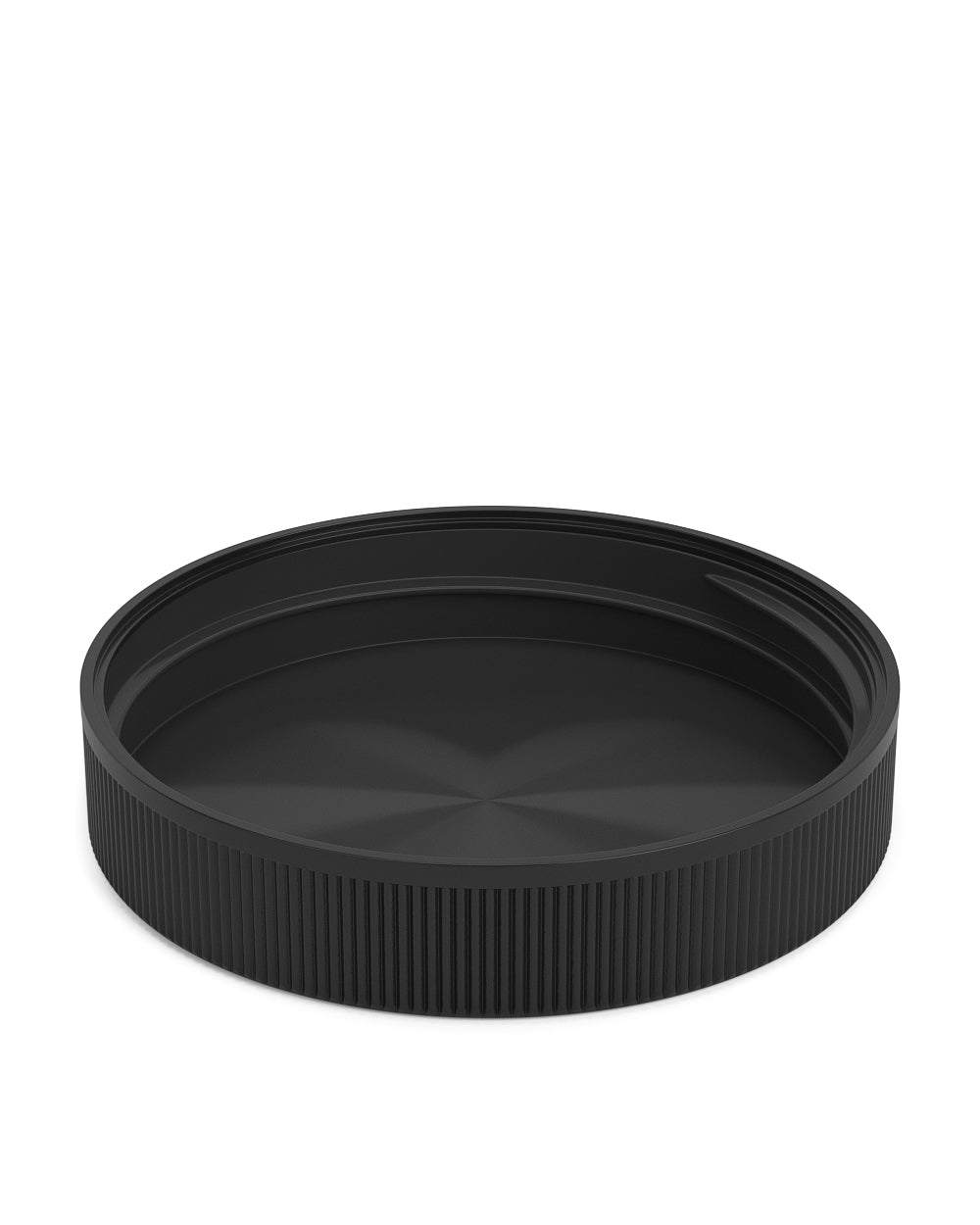


Cannabis jar lids are essential closure components for glass and plastic containers used to package marijuana flower, concentrates, pre-rolls, edibles, and other suitable cannabis products. Marijuana Packaging supplies wholesale jar caps and closures for cultivators, processors, manufacturers, cannabis brands, dispensaries, and other commercial packaging operations. Our selection includes child-resistant caps, smooth and ribbed closures, different cap profiles, and options with foam, foil, and specialty liners.
The right cannabis jar cap must do more than fit over a container opening. Neck-finish compatibility, thread engagement, child-resistant functionality, liner construction, sealing performance, and cap application all influence the finished package. When purchasing wholesale cannabis jar lids, businesses should evaluate the cap together with its intended jar, packaged product, and production process. Selecting compatible closures helps maintain packaging consistency, supports the required opening and resealing functions, and reduces problems during filling, capping, storage, and distribution.
Wholesale Cannabis Jar Lids and Caps
Jar caps are removable closures designed to engage the openings of compatible rigid containers. They help enclose the packaged product, provide access during use, and may incorporate specialized functions such as child resistance, liner-based sealing, or coordinated opening mechanisms.
For commercial cannabis packaging, the cap is not simply an accessory. It is a functional component of the completed container. A jar with suitable capacity and material properties may still be inappropriate for production if its closure cannot be installed reliably, maintain the intended seal, or provide the required opening mechanism.
Many cannabis jars are supplied as empty containers, allowing manufacturers to select matching lids separately. This approach can provide flexibility in closure design, liner selection, color coordination, and inventory management, provided the components are compatible.
What Cannabis Jar Caps Do
Depending on the design, a cannabis jar lid may perform several functions within the finished packaging system:
- Container closure: Secure the opening of a compatible jar and retain the packaged contents.
- Controlled access: Provide the intended opening and reclosing procedure for consumers and packaging personnel.
- Child resistance: Incorporate a locking mechanism designed to make access significantly difficult for young children when used in a qualifying packaging system.
- Sealing contact: Establish contact between the cap, liner, and container rim to support the intended barrier performance.
- Product protection: Help limit unwanted exposure to external conditions according to the complete package's characteristics.
- Retail presentation: Complement the jar's appearance through color, texture, shape, and other available finishes.
- Repeatable production: Support consistent closure application across commercial packaging runs.
- Packaging standardization: Allow compatible container families to use coordinated closure designs where appropriate.
Not every lid provides every function. A standard screw cap may be suitable for one application, while another product requires a qualifying child-resistant closure or additional sealing components.
Caps Sold Separately From Jars
Purchasing caps independently can be useful when a cannabis operation already maintains inventory of an approved jar or wants to select a particular closure finish or liner construction.
However, the closure must be matched to the actual container. Two lids with a similar appearance may differ in their thread design, locking mechanism, sealing surface, or compatibility with a specific jar.
Commercial buyers should verify the intended jar-and-cap combination before committing to a bulk order, especially when child resistance or sealing performance is required.
Choosing a Cap for the Finished Package
Cap selection should begin with the requirements of the product and container.
A cannabis flower jar may require a reclosable lid with suitable liner contact. A concentrate container may place greater emphasis on compatibility with the formulation and sealing components. An edible package may require multiple-use child resistance and an appropriate food-contact configuration.
The right closure balances these requirements with adult accessibility, production efficiency, and the cost of the completed package.
Types of Jar Caps and Closure Mechanisms
Cannabis jar caps differ in how they open, how they engage the container, and how their external surfaces are constructed. These distinctions influence the package's operation, consumer usability, labeling opportunities, and suitability for commercial production.
Push-Down-and-Turn Child-Resistant Caps
Push-down-and-turn caps are an important closure category for cannabis jars. They require the user to apply downward pressure while rotating the cap to disengage the locking mechanism.
This coordinated movement distinguishes the design from a conventional screw cap that opens through rotation alone.
For the mechanism to work as intended, the cap must be paired with the appropriate container and installed correctly. The locking components need to engage reliably, and the closure must remain usable by adults according to its intended opening procedure.
Push-down-and-turn functionality should be evaluated as part of the complete jar-and-cap system. The presence of this mechanism does not automatically establish that every compatible-looking container has qualified under a particular child-resistant standard.
Standard Threaded Jar Caps
Conventional threaded caps open and close through rotation without a separate child-resistant unlocking action.
These closures may be appropriate for packaging applications that do not require the cap itself to provide child resistance, or where the jar serves as one component of a separately qualifying packaging system.
Standard threaded closures may still incorporate liners or other sealing components, but their barrier performance depends on the actual configuration.
Commercial buyers should distinguish straightforward screw-cap functionality from child-resistant operation rather than assuming that all jar lids serve the same purpose.
Smooth and Ribbed Jar Caps
The outer surface of a cap influences its appearance and the way it can be gripped during opening and closing.
Smooth jar caps have relatively uniform exterior walls, creating a clean visual profile that can work well with minimal labeling and coordinated container finishes.
Ribbed jar caps incorporate exterior texture that can help users grip the closure during the intended opening action.
These surface characteristics do not independently establish child resistance or sealing performance. A smooth cap may incorporate a child-resistant mechanism, and a ribbed cap may have a different opening design.
The preferred style depends on the actual closure system, user interaction, available finishes, and branding objectives.
Flat, Dome, Round, and Specialty Cap Profiles
Cap profile describes the exterior shape of the closure. Flat-top, rounded, domed, and other specialty designs can create different visual and handling characteristics.
A relatively flat cap top may provide space for certain compatible branding treatments, while a rounded profile creates a different overall package appearance.
Square or other specialty closure shapes may be intended for jars with corresponding exterior geometry.
Cap profile should be selected after confirming mechanical compatibility. Exterior appearance does not establish that a particular closure will engage a jar correctly.
Opening Instructions and Consumer Use
Some child-resistant caps include molded, embossed, or otherwise incorporated opening instructions.
These markings can help communicate the intended coordinated action, particularly when consumers may be unfamiliar with the mechanism.
When selecting a cap for a branded cannabis package, businesses should consider whether decorative treatments or labeling might obscure necessary opening instructions.
Any additional branding should preserve the closure's intended operation and allow users to identify the required opening action.
Jar Neck Finishes, Threading, and Cap Compatibility
Correct cap compatibility is one of the most important technical requirements in cannabis jar packaging. A lid must fit the jar's opening and engage its closure features as designed.
Matching components solely by visual appearance can create problems with threading, sealing, or child-resistant functionality.
Understanding Jar Neck Finishes
The neck finish describes the opening and closure-attachment characteristics of a jar, including its nominal diameter and thread configuration.
Jar caps are manufactured for particular neck finishes. Commercial specifications commonly identify the opening diameter together with a thread-series designation.
The complete finish specification matters because two jars with similar opening widths can have different threads or sealing surfaces.
A cap selected by diameter alone may not seat properly, engage securely, or provide the intended performance.
Thread Engagement and Cap Fit
Thread engagement is the interaction between the cap's internal threads and the corresponding features on the jar neck.
Correct engagement allows the closure to be installed according to its design. Incompatible threads may cause cross-threading, incomplete seating, unusual resistance, or an unreliable closure.
For child-resistant caps, thread compatibility can also influence whether the locking mechanism operates correctly.
A cap that appears to attach to a container should not be considered approved for that container without verifying its intended compatibility.
Sealing Surfaces and Liner Contact
The jar rim and cap's internal sealing components determine how the closure contacts the container opening.
A suitable liner may compress against the rim or function through a different engineered sealing process. In either case, the geometry and condition of the contact surfaces are important.
Damage, deformation, manufacturing differences, or residue around the opening can interfere with the intended seal.
When changing either the cap or jar, packaging teams should confirm that the sealing arrangement remains appropriate for the finished product.
The most important rule when purchasing cannabis jar lids is to match the cap to the exact jar and required packaging function. A matching nominal diameter does not guarantee compatible threading, reliable sealing, or child-resistant performance. Verify the complete neck finish, intended closure mechanism, liner configuration, and applicable documentation for the actual jar-and-cap system before ordering wholesale quantities.
Compatibility Checklist for Jar Caps
Before approving a closure, packaging teams should verify:
- The cap is intended for the specific jar and neck finish.
- The threads engage correctly without cross-threading.
- The cap seats as designed against the container opening.
- Any liner contacts the intended sealing surface.
- The opening mechanism functions correctly.
- The closure can be resecured according to its intended procedure.
- The cap is compatible with the packaged product and expected storage conditions.
- Any required child-resistant qualification applies to the intended system.
- The configuration works with the operation's capping and inspection procedures.
Compatibility should be established with actual packaging components rather than assumed from general cap descriptions.
Child-Resistant Caps, PPPA Testing, and Compliance
Child resistance is a major consideration when selecting cannabis jar closures. Many jar caps are designed to provide controlled access through coordinated opening mechanisms, but the applicable qualification relates to the completed packaging system.
For commercial buyers, understanding the distinction between child-resistant cap design and demonstrated package performance is essential.
Child-Resistant Closures and the PPPA
The Poison Prevention Packaging Act, or PPPA, established a federal framework for special packaging used with certain regulated household substances.
Under 16 CFR Part 1700, special packaging is intended to be significantly difficult for children under five years of age to open while remaining usable by adults.
The U.S. Consumer Product Safety Commission administers these requirements and provides the corresponding performance-testing framework.
The CPSC's official guidance on child-resistant and senior-friendly special packaging explains the requirements and procedures used to evaluate qualifying packages.
These federal standards are referenced by certain state cannabis packaging regulations. They should not be interpreted as a universal federal approval of every cannabis jar cap marketed as child-resistant.
16 CFR § 1700.15 and § 1700.20
Two commonly referenced provisions address the performance of special packaging:
- 16 CFR § 1700.15: Establishes special-packaging performance standards and related requirements.
- 16 CFR § 1700.20: Specifies the procedures for evaluating child-resistant and adult-accessible packaging.
Under the CPSC performance framework, at least 85% of tested children must be unable to open qualifying packaging during the initial five-minute test period, and at least 80% must remain unable to open it during the full ten-minute period.
The adult accessibility requirements include successful opening by at least 90% of the tested adults within the prescribed period, with additional resecuring requirements where applicable.
These are performance criteria, not instructions for choosing a cap solely by appearance or opening mechanism.
Child-Resistant Does Not Mean Child-Proof
The term child-proof caps is sometimes used to describe jar closures with locking mechanisms. However, child-resistant is the more accurate technical terminology.
Child-resistant packaging is designed to make opening significantly difficult for young children under prescribed conditions. It is not a guarantee that no child can ever open the package.
For cannabis brands, packaging claims should reflect the demonstrated performance of the qualifying system rather than suggest absolute protection.
Senior-Friendly and Adult-Accessible Closures
A qualifying child-resistant package must balance restricted child access with reasonable adult usability.
This is especially important for reclosable cannabis jars because adults may need to open and resecure the cap repeatedly.
Grip characteristics, required pressure, coordinated opening movements, and the ability to reclose the package correctly all influence the user experience.
The most difficult cap to open is not necessarily the most suitable child-resistant closure. Packaging should be selected according to both its applicable performance requirements and intended adult use.
ASTM D3475 and Closure Classification
ASTM D3475, Standard Classification of Child-Resistant Packages, identifies categories of child-resistant packaging according to the movements, skills, or actions required to open them.
The classification is useful for describing closure mechanisms, but it is not a substitute for the child-resistant performance testing required under an applicable regulation.
ASTM classification also does not mean that ASTM has approved or endorsed an individual jar cap or completed package.
Commercial buyers should distinguish the type of opening mechanism from the actual testing results supporting a particular jar-and-cap combination.
Initial and Multiple-Use Child Resistance
Cannabis packaging requirements can distinguish between a package that provides child resistance before first opening and a reclosable package that must maintain child resistance after repeated use.
For example, the California Department of Cannabis Control's child-resistant packaging guidance recognizes different requirements for cannabis flower and certain manufactured cannabis products.
Under California's stated framework, qualifying initial child-resistant packaging can be used for certain products, including flower, while edibles and certain orally consumed products generally require multiple-use child-resistant packaging.
A reclosable jar cap should not automatically be described as providing lifetime child resistance merely because it can be screwed back onto the container.
The qualifying child-resistant jar and closure system must support the requirements applicable to the specific product and jurisdiction.
Child-Resistance Documentation
The CPSC does not pre-approve, certify, or endorse individual special-packaging designs.
Supplier testing reports and other supporting documents can nevertheless help establish the performance of particular packaging configurations.
For a cannabis jar cap, the available records should be checked against the intended jar, closure construction, tested configuration, and applicable protocol.
A test report for one combination should not automatically be treated as covering another jar or a substituted closure.
Foam, Foil, PTFE, and Other Cap Liner Options
Cap liners are components positioned inside certain closures to provide sealing contact or another intended protective function.
They can influence how a jar closes, how the package responds to storage conditions, and whether an additional first-opening barrier is provided.
The liner supplied with a cap should be evaluated separately from the child-resistant mechanism. A cap can be child-resistant without providing a particular airtight seal, and a liner can support sealing without making the package child-resistant.
Foam-Lined Jar Caps
Foam liners are compressible materials used inside certain jar closures. When properly selected and installed, they can help establish contact between the cap and the container rim.
The liner's thickness, material construction, compression behavior, and compatibility with the jar all influence its performance.
Foam-lined caps may be useful for reclosable cannabis jars, but the presence of a foam liner does not automatically guarantee an airtight or smell-proof seal.
Packaging teams should confirm the liner's suitability for the intended product and required sealing characteristics.
Foil-Lined Jar Caps
Foil liners and foil-faced sealing constructions are used in packaging applications where a particular barrier or sealing function is required.
The term foil liner can describe different material constructions. Not every foil-lined cap is intended for induction sealing, and the presence of foil does not independently establish tamper evidence or a leakproof package.
The actual liner specification should identify its intended function and compatibility with the jar and packaged product.
For cannabis concentrates and other formulation-sensitive applications, material-contact compatibility is especially important.
PTFE and Specialty Liner Materials
Some jar caps use PTFE-based liners, sometimes described using the Teflon trade name.
These specialty liners may be selected for applications where the material's chemical characteristics are relevant to the packaging requirements.
However, a PTFE liner should not automatically be assumed suitable for every cannabis concentrate or other formulation.
The complete liner construction, any backing material, expected product contact, and storage conditions should all be evaluated.
Material compatibility is a property of the actual packaging configuration, not simply the liner's commercial description.
Pressure-Sensitive Seals
Pressure-sensitive liners are designed to adhere to compatible container surfaces under specified application conditions.
They may be incorporated into an appropriate cap-and-jar arrangement to provide an additional seal across the opening.
The suitability of a pressure-sensitive seal depends on the liner material, container rim, application conditions, and intended contents.
Buyers should also distinguish the performance of the unopened seal from the remaining cap after the seal has been removed.
Heat Induction Seals
Heat induction sealing uses suitable equipment and compatible multilayer sealing materials to create a barrier across an appropriate container opening.
The process requires the correct relationship between the container material, liner construction, closure, and induction equipment.
Not every jar or foil liner can be induction sealed. Glass and plastic containers may require different sealing approaches or materials.
The cap liners and jar sealing components category is relevant when a packaging program requires separately selected pressure-sensitive or other compatible sealing materials.
Comparing Cap Liner Functions
| Liner Type | Potential Packaging Function | Important Verification |
|---|---|---|
| Foam liner | Compressible contact between cap and container rim | Material compatibility, compression, and assembled seal performance |
| Foil liner | Barrier or sealing function depending on construction | Actual laminate, product contact, and intended sealing method |
| PTFE-based liner | Specialty contact surface for suitable applications | Complete liner construction and chemical compatibility |
| Pressure-sensitive liner | Adhesive seal across a compatible container opening | Rim compatibility, application conditions, and first-opening behavior |
| Induction-compatible liner | Equipment-applied inner sealing barrier | Container compatibility, induction process, and seal integrity |
These liner categories are not universal substitutes for one another. The correct option depends on the intended jar, cap, product, and packaging process.
Airtight Sealing, Odor Control, and Tamper Evidence
Jar caps can contribute to several protective functions, but airtightness, odor resistance, moisture protection, child resistance, and tamper evidence are not equivalent characteristics.
A closure should be evaluated according to the specific functions required by the finished package.
Are Cannabis Jar Caps Airtight?
Not all cannabis jar lids create airtight seals.
A cap can engage the jar and retain the contents without completely preventing air exchange through the sealing interface.
Airtight performance depends on the jar material, cap construction, liner, contact surfaces, and closure application.
Even a closure marketed as airtight should be evaluated with the intended container rather than treated as universally airtight across multiple jar designs.
Odor-Resistant Jar Closures
Cannabis flower contains volatile aromatic compounds that can escape when the packaging system allows air or vapor movement.
A compatible cap and suitable liner may help limit aroma transmission through the container opening.
However, a child-resistant lid is not automatically smell proof, and a standard threaded cap should not be described as providing complete odor containment without supporting evidence.
For odor-sensitive packaging, the assembled jar-and-closure system should be evaluated under the intended storage and handling conditions.
Jar caps used with odor-resistant cannabis jars are especially important because the closure can be a primary pathway for aroma escape even when the container walls provide strong barrier properties.
Moisture and Oxygen Protection
Closure integrity can also influence the movement of moisture and oxygen between a packaged cannabis product and its surrounding environment.
The degree of protection depends on the complete package, including its material properties and any sealing components.
A suitable liner may help limit exchange through the jar opening, but it cannot automatically establish a particular product shelf life or preserve every quality characteristic.
Packaging teams should evaluate the cap as part of the intended storage system rather than relying on a single protective claim.
Tamper-Evident vs. Tamper-Resistant Closures
Tamper-evident packaging provides visible evidence that a package has been opened or interfered with.
Some jar caps can be paired with inner seals, shrink bands, or other components to create a first-opening feature.
However, an ordinary screw cap or child-resistant cap does not automatically provide tamper evidence.
A separate tamper-evident packaging component may be appropriate when the selected cap does not provide the required first-opening indication.
The finished package should be evaluated for both functions when child resistance and tamper evidence are required.
Sealing After the First Opening
Some packaging systems use an inner seal that is removed or disrupted when the consumer first opens the jar.
After that seal is removed, the reusable cap may provide a different degree of sealing performance.
This distinction matters for products that are intended to be opened and reclosed repeatedly.
When a brand requires ongoing odor or moisture protection, the closure should be evaluated in its reclosed condition rather than only while the original inner seal remains intact.
Cap Materials, Colors, Finishes, and Branding
Cannabis jar caps are functional packaging components, but they are also visible elements of the finished retail package.
Material, exterior texture, color, and cap profile can affect grip, brand presentation, product-contact considerations, and the appearance of the closed jar.
Plastic Jar Cap Materials
Many threaded jar caps are manufactured from plastic materials selected for their molding characteristics and intended mechanical performance.
Polypropylene and other suitable packaging polymers can be used in closure constructions that incorporate threads, locking features, liners, and decorative surfaces.
The material should be evaluated according to the intended application, including closure durability, compatibility with the jar, and any relevant product-contact requirements.
A plastic cap's material alone does not establish its child resistance, sealing performance, or regulatory suitability.
Post-Consumer Recycled Plastic Caps
Some cannabis jar closures incorporate post-consumer recycled plastic, commonly called PCR plastic.
PCR describes recycled material content rather than a distinct type of polymer. The underlying resin and manufacturing process continue to influence the closure's physical properties and intended use.
Where a brand requires recycled-content packaging components, the material specification and applicable recycled-content claims should be verified.
Using PCR material does not automatically establish that the cap is recyclable, food-contact suitable, or qualified for use with every child-resistant jar.
Black, White, Matte, and Glossy Caps
Cap color and finish influence how the closure integrates with the rest of the package.
Black caps may provide contrast against clear jars, while white closures can support a lighter visual presentation. Matte, glossy, and semi-gloss finishes create different surface appearances.
Coordinating cap color with jar finish can help maintain a consistent identity across several cannabis flower strains or product lines.
However, closure appearance should be selected after confirming technical compatibility and any required child-resistant performance.
Specialty and Decorative Cap Finishes
Some packaging programs use specialty cap textures or decorative finishes to create a distinctive retail appearance.
Depending on the available configuration, these may include wood-look surfaces or other treatments that differ from conventional smooth plastic closures.
The decorative appearance should not be confused with the cap's underlying construction material or sealing performance.
Packaging teams should verify whether a particular finish is compatible with their labeling, decoration, handling, and regulatory requirements.
Custom Branding on Jar Caps
Branding opportunities may include compatible decoration, printed elements, color coordination, or other treatments supported by the closure design.
However, the functional surfaces of a cap must remain unobstructed. Decoration should not interfere with the threads, locking mechanism, sealing components, or instructions necessary for proper opening and closing.
For a child-resistant closure, changes affecting its structure, material, or operating characteristics may require additional evaluation of the qualifying package.
Cap customization should therefore be developed around an approved closure configuration rather than altering the mechanism solely to achieve a particular appearance.
Cannabis Jar Caps for Flower, Concentrates, Pre-Rolls, and Edibles
Different cannabis products create different demands on a jar cap. The closure should be selected according to the contents, required opening mechanism, expected storage conditions, and whether the package is intended to be accessed repeatedly.
Caps for Cannabis Flower Jars
For cannabis flower packaging, the cap helps keep the product enclosed and may contribute to limiting air, moisture, and aroma exchange through the jar opening.
The selected lid must provide sufficient clearance over the finished flower fill. Buds or loose plant material should not interfere with thread engagement or liner contact.
Where child resistance is required, the cap and jar must form an appropriate qualifying packaging system.
Flower packaging teams may also need to consider repeated opening and reclosing, particularly when the consumer is expected to use the jar over several occasions.
Caps for Concentrate Jars
Concentrate packaging can place greater emphasis on sealing integrity and compatibility with the formulation.
Different cannabis concentrates have different consistencies and compositions, which may affect the suitability of materials used in the cap and liner.
For these applications, buyers should verify whether the closure and its internal components are appropriate for possible product contact.
The cap should also allow practical access to the contents without compromising the intended sealing function.
A closure suitable for dried flower should not automatically be considered appropriate for every concentrate formulation.
Caps for Pre-Roll Jars
Pre-roll multipack jars require closures that secure the finished joints without interfering with their length or arrangement inside the container.
The cap should engage correctly while leaving enough internal clearance to avoid bending or compressing the pre-rolls.
Because pre-roll packaging can involve different quantities and container shapes, closure compatibility should be assessed using the intended finished product.
Any required child-resistant or tamper-evident characteristics should be verified independently of the jar's capacity.
Caps for Cannabis Edible Jars
Edible packaging may require reclosable child resistance, appropriate product-contact materials, and packaging characteristics that differ from those used for loose flower.
Caps for edible jars should be evaluated for the intended opening frequency, food-contact suitability, sealing requirements, and interaction with the container.
Where products contain multiple servings, a repeatedly usable child-resistant closure may be required by the relevant jurisdiction.
The cap alone cannot establish that the finished edible package satisfies opacity, labeling, or other cannabis-specific packaging rules.
Choosing Caps Based on the Product
Across these applications, commercial buyers should evaluate:
- The product's physical characteristics and expected use.
- Whether a standard or child-resistant closure is appropriate.
- The required opening and reclosing behavior.
- Any likelihood of contact between the contents and liner.
- The intended moisture and odor-control performance.
- Any separately required tamper-evident feature.
- Compatibility with the selected container and filling process.
- The applicable packaging requirements of the intended market.
The correct closure should support the actual product application rather than be chosen solely because it fits the jar opening.
Choosing Closures for Glass and Plastic Jars
Jar material influences closure selection because glass and plastic containers differ in rigidity, wall construction, manufacturing characteristics, and compatibility with certain sealing methods.
Although a cap may be described using a standard neck finish, its suitability should be confirmed with the exact container material and design.
Caps for Glass Cannabis Jars
Glass jars have rigid necks and well-defined sealing surfaces, but they still require appropriately matched closures.
For glass cannabis jars, cap selection should account for the neck finish, rim condition, liner contact, and any child-resistant mechanism.
Because the glass wall provides strong resistance to gas and moisture transmission, the cap and sealing interface may be especially important to the overall barrier performance.
Damaged rims or inappropriate closure application can compromise that interface even when the cap appears securely attached.
Caps for Plastic Cannabis Jars
Plastic jars can have different mechanical and sealing characteristics depending on their resin and construction.
For plastic cannabis jars, buyers should consider the neck-finish geometry, potential deformation under application conditions, and compatibility with any intended liner or heat-sealing process.
Plastic closures and jars may provide lightweight packaging combinations, but they still require appropriate threading and correct cap installation.
The exact materials should be evaluated where temperature, chemical compatibility, or specialized sealing procedures are relevant.
Can One Cap Fit Multiple Jar Styles?
Some jar families may share compatible neck finishes and closure specifications, making it possible to use coordinated cap designs across multiple container formats.
This can simplify inventory management for brands packaging different flower weights or product categories.
However, a common neck finish does not automatically establish that a cap is qualified with every jar in the family for child-resistant or sealing performance.
When a shared closure is intended for several containers, each applicable combination should be verified against its technical specifications and supporting documentation.
Cap Application, Production Quality, and Troubleshooting
Reliable jar-cap performance depends on consistent production procedures. Even an appropriately selected closure may not function as intended if it is incorrectly installed, damaged, or applied to a contaminated container opening.
For wholesale cannabis packaging operations, cap application should be incorporated into the quality-control process rather than treated as a minor final step.
Manual and Automated Capping
Jar caps may be applied manually or with suitable capping equipment, depending on the packaging operation and production volume.
For manual capping, the operator must install the closure using the intended procedure and verify that it engages correctly.
Automated equipment introduces additional considerations involving container positioning, cap feeding, application settings, and the operation of any child-resistant mechanism.
Not every cap design is equally compatible with every capping process. Smooth, ribbed, specialty-shaped, and coordinated-action closures may require different handling or equipment arrangements.
Closure Application Torque
Application torque describes the rotational force used when installing a threaded closure.
Correct torque is relevant because insufficient application may prevent the cap from seating properly, while excessive force may damage threads, deform components, or interfere with intended operation.
There is no universal torque setting suitable for all cannabis jar caps. The appropriate procedure depends on the actual jar, closure, material, liner, and equipment.
Manufacturers should follow the relevant component specifications and validate their capping process rather than applying one arbitrary setting across different packaging systems.
Common Jar Cap Problems
Several practical problems can indicate that a closure or capping process needs further evaluation:
- Cross-threading: The cap does not follow the intended thread path during installation.
- Incomplete seating: The lid remains incorrectly positioned or fails to engage fully.
- Inconsistent liner contact: The cap does not establish the intended interface with the jar rim.
- Closure resistance: The cap requires unexpected force to install or remove.
- Locking-mechanism problems: A child-resistant feature does not engage or release according to its intended procedure.
- Product contamination at the rim: Flower fragments, concentrate residue, or other materials interfere with the sealing surfaces.
- Damaged components: Cracked caps, deformed threads, or damaged liners affect the finished package.
- Unexpected seal performance: The package does not provide the intended protection after assembly.
These issues may arise from component incompatibility, application procedures, damaged materials, or unsuitable packaging equipment.
Corrective action should address the actual cause rather than assuming that installing the cap more tightly will solve every problem.
Inspecting Completed Jar-and-Cap Systems
Packaging quality-control procedures should verify that the correct components were used and that the completed package functions as intended.
Depending on the operation, inspections may include:
- Confirming the approved jar and cap configuration.
- Inspecting the closure for visible defects.
- Checking the jar rim and sealing surfaces.
- Verifying correct closure seating and thread engagement.
- Confirming the child-resistant locking action where required.
- Checking the presence and condition of required liners or seals.
- Confirming that labels do not obstruct opening instructions or mechanisms.
- Evaluating the package against applicable quality and performance criteria.
Routine production checks support consistent assembly but do not replace any required child-resistant performance testing or other formal packaging qualifications.
Buying Cannabis Jar Caps Wholesale
Wholesale cannabis jar caps are purchased as components of a larger packaging system. For manufacturers, processors, cultivators, brands, and dispensaries, the purchasing decision should account for compatibility, closure function, repeat availability, and total packaging cost.
Buying caps separately can provide flexibility in selecting materials and finishes, but the approved configuration must remain consistent throughout procurement and production.
Wholesale Jar Lid Purchasing Considerations
Before placing a bulk order, buyers should establish the requirements of the intended container and finished product.
Important considerations include:
- Cap compatibility: The specific jar and complete neck finish for which the closure is intended.
- Opening mechanism: Standard threaded or qualifying child-resistant functionality.
- Cap construction: Material, exterior profile, grip texture, and finish.
- Liner configuration: Included liner type or additional sealing components required.
- Regulatory requirements: Applicable child-resistant, tamper-evident, and other packaging obligations.
- Product-contact suitability: Compatibility with the intended cannabis product and potential contact surfaces.
- Equipment requirements: Ability to install the closure using existing or planned production equipment.
- Volume pricing: Available wholesale pricing and purchasing quantities.
- Inventory coordination: Availability of the matching jars and any additional components.
- Documentation: Technical information and testing records relevant to the completed package.
Caps Purchased Separately vs. Jars With Caps
For businesses with an established jar inventory, purchasing closures separately may simplify replacement orders or allow a more specific choice of cap style or liner.
Other operations may prefer jars with caps supplied as matched configurations to reduce the need to select compatible components independently.
The better purchasing approach depends on whether the business needs only closures or an entire container-and-cap system.
In both cases, the completed package must be verified for its intended use. Buying components together does not automatically establish child-resistant, airtight, or tamper-evident performance.
Calculating the Cost of Jar Caps in Bulk
The listed unit price of a cannabis jar lid is only one part of its commercial cost.
The complete purchasing evaluation may include:
- The cap's unit price at the intended wholesale quantity.
- Any liner or sealing component not included with the closure.
- Compatible jar purchasing requirements.
- Freight, case handling, and warehouse storage.
- Capping equipment and application labor.
- Packaging inspection and quality-control procedures.
- Samples and allowances for production setup or damaged components.
- Required testing documentation or packaging qualification work.
- Repeat-order availability and the risk of component substitution.
A low-cost cap may not offer the best overall value if it requires additional components, creates production difficulties, or does not meet the required packaging function.
Commercial buyers should calculate the cost of the approved completed package rather than treating closure price as an isolated purchasing decision.
Maintaining Approved Closure Specifications
Consistent component specifications are particularly important when child-resistant or specialized sealing performance is required.
For recurring packaging runs, the approved jar, cap, liner, and application procedure should be documented.
Substituting a visually similar lid may introduce differences in thread engagement, opening mechanism, liner material, or the scope of available testing documentation.
Marijuana Packaging maintains a product certifications resource with available supporting documents for various packaging categories, including certain jar-and-closure systems.
Buyers should confirm that any documentation corresponds to the actual intended configuration and the requirements applicable to their finished cannabis product.
Pre-Production Jar Cap Checklist
Before approving cannabis jar caps for wholesale purchasing or commercial use, verify the following:
- The cap matches the intended jar's complete neck finish.
- The closure installs and removes using its designated procedure.
- Any required child-resistant function is supported by applicable package documentation.
- The closure can be resecured correctly when repeated use is intended.
- The cap material is appropriate for the intended application.
- Any foam, foil, PTFE, or other liner is compatible with the jar and product.
- Required sealing and barrier characteristics have been evaluated.
- Any needed tamper-evident feature has been addressed separately.
- The cap does not interfere with the finished product or required headspace.
- The closure's exterior design supports practical handling and adult access.
- Branding and decoration do not obstruct the locking mechanism or opening instructions.
- The cap can be applied consistently using the intended production process.
- Inspection procedures address closure engagement and component condition.
- Wholesale quantities align with the available jar and liner inventory.
- Representative completed packages have been evaluated before full-scale production.
Wholesale Cannabis Jar Lids for Commercial Packaging
The right cannabis jar lid brings together compatible threading, reliable closure operation, appropriate liner construction, and the functional characteristics required by the finished package.
Marijuana Packaging supplies wholesale cannabis jar caps and closures for brands, cultivators, processors, manufacturers, dispensaries, and other cannabis businesses. Available closure categories include child-resistant designs, smooth and ribbed profiles, recycled-content plastic options, and caps incorporating different liner materials.
By selecting jar caps according to the exact container, intended product, closure mechanism, sealing requirements, and production workflow, businesses can establish consistent packaging configurations that support efficient wholesale purchasing and reliable commercial production.
Frequently Asked Questions About Caps for Jars
The correct cannabis jar lid must match the container's complete neck finish, including its nominal diameter, thread configuration, and intended sealing interface. Two caps with similar dimensions may not be interchangeable. Commercial buyers should verify compatibility with the exact jar and evaluate the assembled package before purchasing closures in bulk, particularly when child resistance or sealing performance is required.
No. Although many cannabis jar caps use child-resistant opening mechanisms, some closures are conventional threaded designs. Child-resistant caps commonly require coordinated actions such as pushing down while turning. The qualifying child-resistant performance depends on the complete jar-and-cap system and its applicable testing documentation, not the closure's appearance alone.
Foam liners are compressible materials that can help establish contact between a cap and jar rim. Foil liners may provide specific barrier or sealing functions depending on their construction. PTFE-based liners are specialty materials used in applications where their contact properties are appropriate. None is universally suitable for every cannabis jar or product. Selection depends on compatibility, sealing requirements, and the intended packaging process.
Not automatically. Child resistance controls access through an engineered opening mechanism, while airtightness depends on the container, closure, liner, and seal. Tamper evidence provides visible indication of opening or interference and may require a separate inner seal or other component. Cannabis businesses should verify each required function independently for the completed packaging system.
Yes. Marijuana Packaging supplies wholesale cannabis jar lids and closures for cultivators, processors, manufacturers, dispensaries, and brands. Available options include child-resistant caps, smooth and ribbed designs, different finishes, and several liner constructions. Buyers should confirm jar compatibility, applicable child-resistant documentation, included sealing components, and production requirements before placing a bulk order.